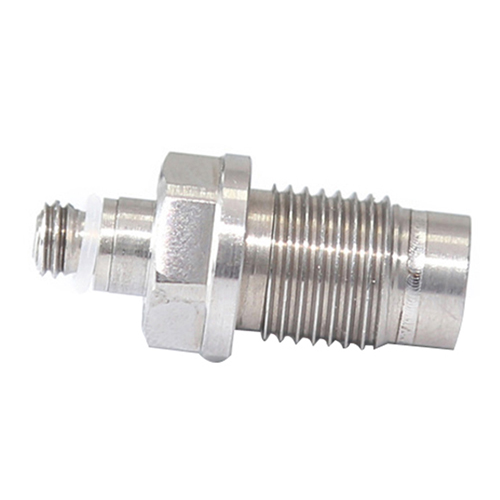
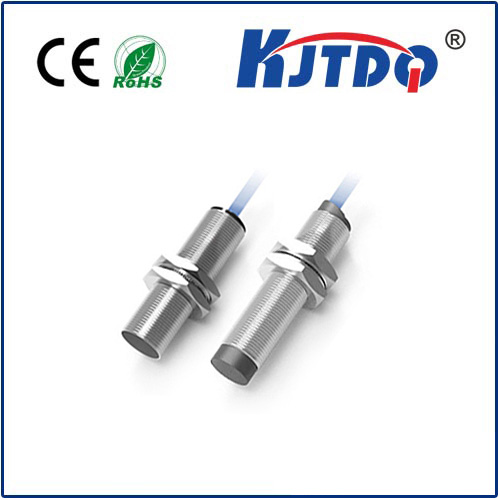
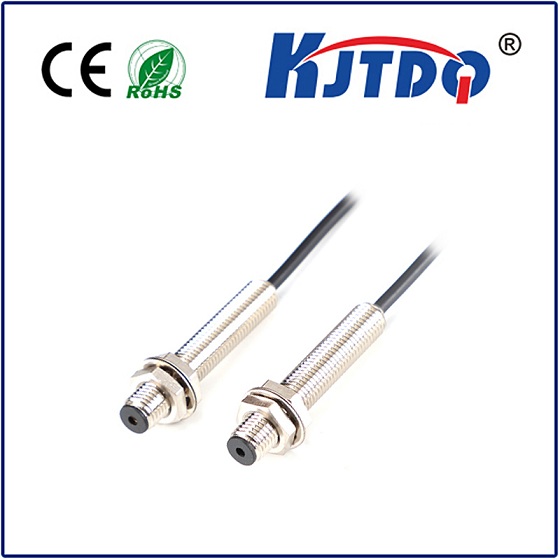
In the dynamic landscape of industrial automation, the demand for reliable, non-contact sensing solutions continues to grow. Among the various technologies available, the capacitive barrel-style proximity sensor stands out as a pivotal component for numerous applications. This sensor type, characterized by its cylindrical, barrel-shaped housing, operates on the principle of capacitive sensing to detect the presence or absence of objects without any physical contact.
The fundamental working mechanism involves generating an electrostatic field from the sensor's active face. When a target object enters this field, it causes a detectable change in capacitance. This change is precisely measured by the internal circuitry, triggering an output signal. Unlike inductive sensors that primarily detect metals, capacitive barrel-style sensors can detect a wide range of materials, including liquids, plastics, wood, and granular substances. This versatility is a key driver behind their widespread adoption.
A significant advantage of the barrel-style design is its robustness and ease of installation. The standardized cylindrical form factor allows for straightforward mounting in drilled holes, facilitating seamless integration into machinery, conveyor systems, and process equipment. These sensors are often built to withstand harsh industrial environments, featuring ratings for high levels of dust, moisture, and temperature fluctuations. This durability ensures consistent performance and reduces maintenance downtime, contributing directly to operational efficiency.
The applications for capacitive barrel-style proximity sensors are extensive. In packaging lines, they are indispensable for monitoring material levels in hoppers or detecting the presence of bottles and containers, ensuring smooth workflow and preventing jams. Within the food and beverage industry, their ability to sense through non-metallic walls makes them ideal for liquid level detection in tanks and pipes. Furthermore, in woodworking and plastics manufacturing, they provide precise positioning control for cutting and assembly processes.
When selecting a capacitive barrel-style proximity sensor, several technical parameters require careful consideration. The sensing range, typically a few millimeters to several centimeters, must be matched to the application's requirements. Factors such as the target material's dielectric constant, size, and the required response time also influence performance. Modern sensors often come with adjustable sensitivity potentiometers, allowing fine-tuning on-site to ignore background interference or detect specific materials reliably.
Integration into control systems is typically straightforward, with common output options including NPN, PNP, analog, or IO-Link digital communication. The IO-Link variant, in particular, offers advanced diagnostics and parameterization capabilities, aligning with Industry 4.0 initiatives for smarter, data-driven factories. This enables predictive maintenance by monitoring sensor health and performance metrics remotely.
Looking ahead, the evolution of capacitive barrel-style sensors focuses on enhancing precision, miniaturization, and connectivity. Developments in chip technology allow for more stable and immune designs, capable of ignoring environmental contaminants like condensation or build-up on the sensor face. This improves reliability in challenging conditions. The ongoing trend towards miniaturization enables their use in increasingly compact machinery without sacrificing detection capability.
In conclusion, the capacitive barrel-style proximity sensor is a fundamental and adaptable tool in modern industrial sensing. Its non-contact operation, material versatility, and rugged design make it a cornerstone for automation tasks requiring reliable object detection. As industries strive for greater efficiency and intelligence, these sensors will continue to evolve, offering even more precise and connected solutions to meet the complex demands of tomorrow's automated systems.