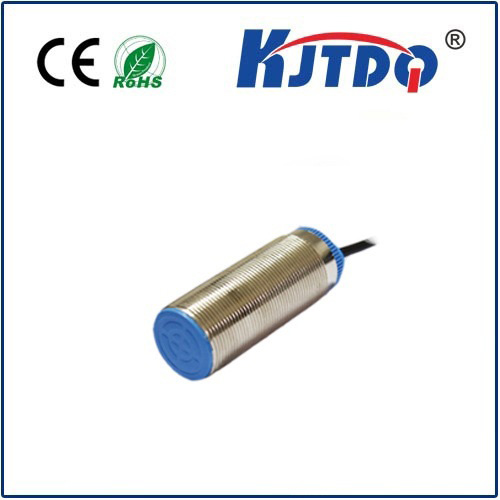
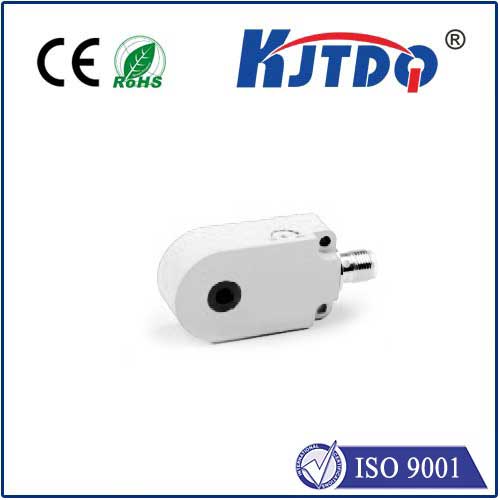
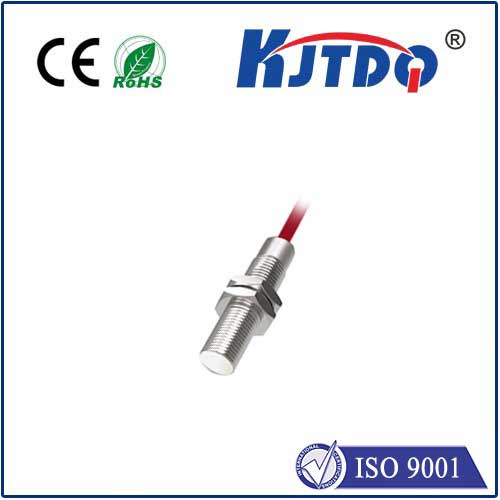
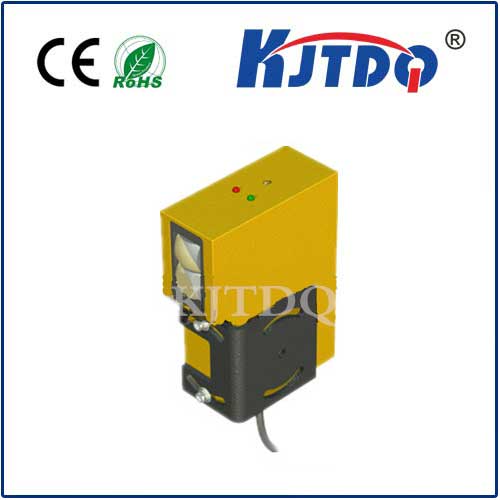
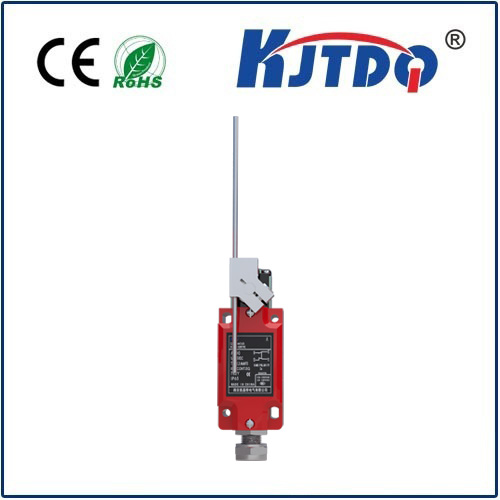
In the dynamic landscape of industrial automation, the demand for precise, durable, and reliable sensing solutions is paramount. The inductive proximity switch sensor PS1 emerges as a cornerstone technology, designed to meet the rigorous challenges of modern manufacturing and control systems. Unlike traditional mechanical switches, the PS1 operates on a non-contact principle, detecting the presence or absence of metallic objects without physical interaction. This fundamental characteristic not only minimizes wear and tear but also significantly extends the operational lifespan of equipment, reducing maintenance costs and downtime.
The core functionality of the inductive proximity sensor PS1 hinges on electromagnetic induction. It generates an oscillating electromagnetic field from its active face. When a metallic target, such as steel, aluminum, or copper, enters this field, eddy currents are induced on the target's surface. This interaction alters the oscillation amplitude within the sensor, which is then processed by its internal circuitry to trigger a solid-state switching signal. This process is exceptionally fast, allowing for high-speed detection crucial in applications like conveyor belt monitoring, robotic arm positioning, and automated assembly lines.
One of the standout features of the PS1 series is its robust construction. Typically housed in a stainless steel or nickel-plated brass body, these sensors are engineered to withstand harsh industrial environments. They are resistant to dust, moisture, oils, and coolants, often boasting high IP (Ingress Protection) ratings such as IP67 or IP68. This makes them ideal for deployment in automotive plants, food and beverage processing, packaging machinery, and metalworking facilities where exposure to contaminants is common. The PS1's design also often includes LED status indicators, providing immediate visual feedback for operational diagnostics and simplifying installation and troubleshooting.
When integrating the inductive proximity switch PS1 into a system, several technical parameters require careful consideration. The sensing range, typically a few millimeters to tens of millimeters, must be selected based on the application's requirements. It is crucial to note that the effective sensing distance can vary slightly depending on the target material's properties; ferrous metals like iron generally allow for the longest range. Factors such as switching frequency, output type (e.g., NPN or PNP, normally open or normally closed), and supply voltage compatibility (commonly 10-30V DC) must align with the control system's specifications. Proper mounting and ensuring a stable power supply are essential to avoid false triggers and ensure consistent performance.
The advantages of employing the PS1 sensor are multifaceted. Its non-contact nature eliminates the risk of mechanical failure associated with moving parts, leading to higher reliability. The absence of physical contact also means no target damage, which is vital when handling delicate or finished products. Furthermore, these sensors offer exceptional repeat accuracy, ensuring that detection occurs at the exact same position every cycle, which is critical for precision manufacturing and quality control. Their fast response time enables synchronization with high-speed machinery, boosting overall production throughput.
In practical applications, the inductive proximity switch PS1 proves its versatility. On a bottling line, it can detect the presence of metal caps on moving bottles, ensuring proper capping before packaging. In CNC machining centers, it serves as a limit switch to verify the position of a tool turret or a workpiece pallet. Within automated storage and retrieval systems, it helps in counting metallic totes or confirming the position of shuttle carts. Its role in safety interlocks is also significant, where it can confirm that a protective guard is securely in place before machinery activation.
Looking ahead, the evolution of inductive sensors like the PS1 continues alongside Industry 4.0 trends. Modern variants may incorporate advanced diagnostics, such as condition monitoring features that can predict potential failures by analyzing signal stability. Integration with industrial networks via IO-Link is becoming more prevalent, allowing for remote configuration, parameterization, and seamless data exchange with higher-level control systems for smarter, more adaptive automation.
Selecting the right inductive proximity sensor is a strategic decision. The PS1 model, with its proven track record, offers a balance of performance, durability, and cost-effectiveness. Engineers and system integrators should thoroughly assess their specific environmental conditions, target materials, and performance needs. Consulting technical datasheets and manufacturer guidelines ensures optimal sensor selection and installation, paving the way for enhanced operational efficiency, reduced waste, and a more resilient automation infrastructure. Ultimately, the inductive proximity switch sensor PS1 stands as a reliable and intelligent component, silently driving productivity and precision in the background of countless industrial processes worldwide.