Проверка
Проверка
Проверка
Проверка
Проверка
Проверка
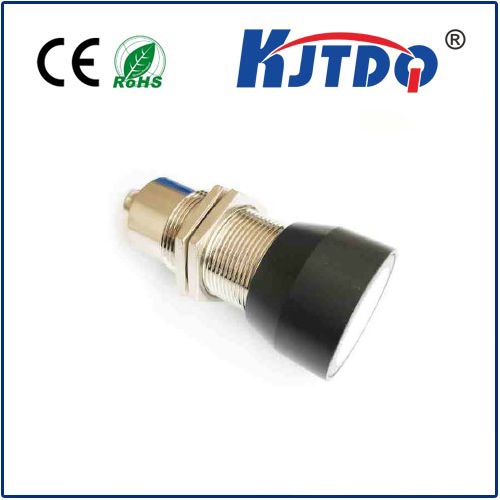
In the demanding world of industrial automation, where machinery operates under extreme pressures and in unforgiving conditions, sensor failure is not an option. It can lead to catastrophic downtime, costly repairs, and significant safety hazards. This is where the KNYT2-M14-PA-41 High Pressure Proximity Sensor steps in, engineered to be the definitive answer for reliability and precision where it matters most. Unlike standard sensors that falter under stress, the KNYT2-M14-PA-41 is built from the ground up to thrive.
The core challenge in high-pressure applications is the immense physical force exerted on equipment. Standard inductive or capacitive proximity sensors often have housings or sensing faces that can deform, crack, or allow media ingress when subjected to pressures exceeding 100 bar or more. The KNYT2-M14-PA-41 directly confronts this with a rugged, all-stainless-steel housing rated for exceptionally high pressure thresholds. This robust construction ensures the internal electronics and sensing coil are completely shielded, maintaining integrity and performance even when submerged in hydraulic fluids or exposed to powerful jets in washdown areas. Its M14 x 1.5 threaded barrel allows for secure and sealed installation directly into high-pressure lines or vessel walls, providing a reliable detection point for piston position, valve actuation, or presence monitoring within pressurized systems.
Precision detection is non-negotiable. The KNYT2-M14-PA-41 utilizes a high-performance inductive sensing principle optimized for metal targets. It delivers a consistent and accurate switching signal with minimal hysteresis, ensuring repeatable detection of components like metal pistons, gears, or flags. This accuracy is crucial for closed-loop control systems in hydraulic presses, injection molding machines, or heavy-duty test stands, where knowing the exact position of a component under load is vital for process quality and cycle timing. The sensor is designed to resist the influence of electromagnetic interference (EMI) commonly found in industrial settings with large motors and variable frequency drives, guaranteeing a stable signal without false triggers.
Durability extends beyond just pressure resistance. The KNYT2-M14-PA-41 is built for the broader spectrum of industrial harshness. It typically boasts high IP (Ingress Protection) ratings, such as IP67 or IP69K, making it resistant to dust, oils, coolants, and high-pressure, high-temperature steam cleaning. This makes it an ideal choice for food and beverage processing, chemical plants, and offshore applications where corrosion and frequent cleaning are daily realities. The temperature operating range is also extended, allowing it to function reliably in both freezing cold and scorching hot environments without drift in its sensing characteristics.
Integration into existing control architectures is seamless. The sensor is available with various output options, including PNP, NPN, or Namur configurations, and standard connection methods like M12 connectors or cable outlets. This flexibility allows engineers to easily incorporate it into PLCs, safety circuits, or other control systems without requiring special interfaces or complex wiring. Its LED status indicator provides immediate visual feedback for commissioning and troubleshooting, reducing maintenance time.
For engineers and plant managers, the value proposition is clear: reduced total cost of ownership. By specifying the KNYT2-M14-PA-41 High Pressure Proximity Sensor for critical high-pressure points, facilities dramatically lower the risk of unplanned stoppages. Its longevity and reliability mean fewer replacements, less inventory for spares, and minimized maintenance labor. It enhances overall equipment effectiveness (OEE) by ensuring sensors are the last thing to worry about in a complex automated process.
From monitoring hydraulic cylinder end positions in steel mills to detecting valve closure in high-pressure pumping stations, the KNYT2-M14-PA-41 proves its mettle. It represents not just a component, but a commitment to operational resilience. When the pressure is on, and failure is not an option, this sensor provides the dependable, precise, and rugged detection needed to keep industry moving forward safely and efficiently.