Проверка
Проверка
Проверка
Проверка
Проверка
Проверка
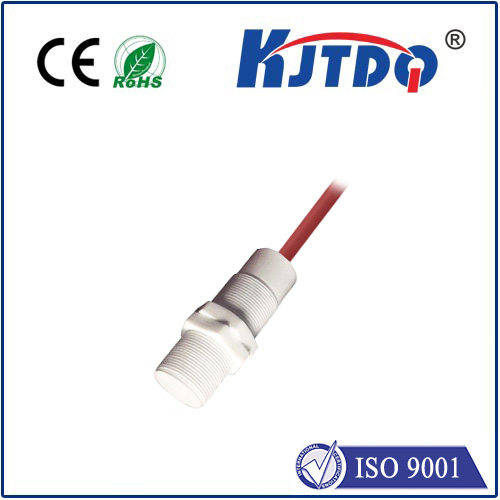
In the relentless world of industrial automation, where machinery operates under extreme pressures and within tight tolerances, the reliability of every component is non-negotiable. Sensor failure in such conditions is not merely an inconvenience; it can lead to catastrophic downtime, compromised safety, and significant financial loss. This is where specialized components like the KNYT1.8-M12-NAH-93 High Pressure Proximity Sensor prove their indispensable value. Engineered to excel where standard sensors falter, this device represents a critical advancement in monitoring and control technology for high-pressure applications.
The core challenge in high-pressure environments, such as hydraulic systems, die-casting machines, plastic injection molding, and heavy-duty press lines, is the immense physical stress exerted on equipment. Conventional inductive proximity sensors, while robust in general factory settings, can suffer from housing deformation, seal failure, or internal damage when subjected to sustained pressures exceeding hundreds of bars. The KNYT1.8-M12-NAH-93 is specifically designed to withstand these forces. Its defining feature is a housing and sensing face constructed from high-grade, pressure-resistant stainless steel. This robust construction ensures the sensor's mechanical integrity remains intact, preventing ingress of hydraulic fluid or other media and guaranteeing long-term operational stability.
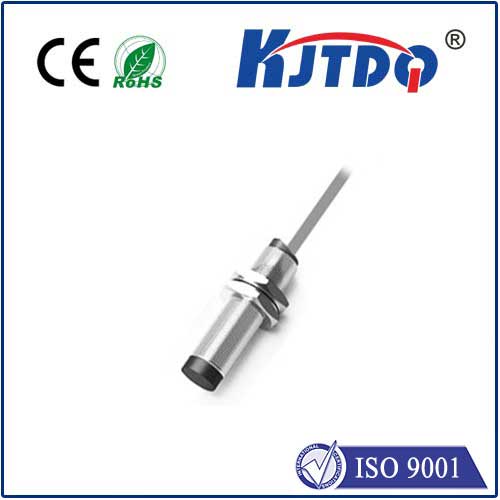
Beyond its rugged build, the sensor's technical specifications are tailored for precision in harsh conditions. The "1.8" in its designation typically refers to the 1.8mm flush-mountable sensing distance, a common and reliable range for detecting metal targets. The M12 connector provides a industry-standard, quick-disconnect interface, renowned for its vibration resistance and environmental sealing, which simplifies installation and maintenance. The "NAH" suffix often indicates a normally open (NO) switching function and specific output configuration, ensuring seamless integration into existing control systems like PLCs. This combination allows for the accurate detection of piston position, valve actuation, or mold closure even when the target is immersed in or exposed to high-pressure fluids.
Operational reliability is further enhanced by the sensor's advanced sensing technology. Utilizing a damped-oscillator circuit, it generates an electromagnetic field at its active face. When a ferrous metal target enters this field, eddy currents are induced, causing the oscillation to dampen. This change is detected and converted into a clear digital switch signal. The design of the KNYT1.8-M12-NAH-93 ensures this process is immune to the presence of non-metallic materials like oils, coolants, or dirt, a common byproduct in high-pressure systems. This immunity to environmental interference drastically reduces false triggers and ensures consistent, repeatable detection cycles.
The practical benefits of deploying this high-pressure proximity sensor are substantial. First and foremost is enhanced system safety. By providing reliable feedback on the position of critical components, it helps prevent machine cycles from proceeding unless conditions are safe, protecting both equipment and personnel. Secondly, it drives operational efficiency. Minimizing unexpected failures and associated downtime keeps production lines running smoothly, optimizing output and reducing maintenance costs. The sensor's durability translates into a lower total cost of ownership, as replacement intervals are extended far beyond those of standard sensors. Finally, its precision contributes to higher product quality by ensuring processes like clamping or injection occur at the exact correct moment and position.
Installation and integration are straightforward. The compact, cylindrical M12 housing allows for easy mounting in confined spaces typical of hydraulic blocks or machine tools. Technicians appreciate the standardized wiring and connector, which streamline the setup process. When selecting a sensor for a high-pressure application, engineers must verify key parameters: the maximum pressure rating (which for this sensor series is significantly higher than standard models), the temperature range, the required sensing distance, and the output type compatible with the control system. The KNYT1.8-M12-NAH-93 is specifically catalogued for applications where these factors are critical.
In conclusion, the KNYT1.8-M12-NAH-93 is far more than just a sensor; it is a dedicated reliability component for the most challenging industrial sectors. Its pressure-resistant design, precise inductive sensing, and robust construction address the specific pain points of high-pressure automation. For engineers and plant managers seeking to eliminate a common point of failure, boost production uptime, and safeguard their investments, specifying a purpose-built sensor like this is a strategic decision. It represents a commitment to operational excellence, ensuring that control systems receive the accurate, unwavering data they need to perform under pressure, day in and day out.