Проверка
Проверка
Проверка
Проверка
Проверка
Проверка
In the world of industrial automation and machinery, precision and reliability are non-negotiable. The E3F-DS50C4 photoelectric switch stands as a cornerstone component for countless applications demanding accurate object detection. This comprehensive guide delves into the specifics of this sensor, exploring its operation, key features, and the diverse scenarios where it proves indispensable.
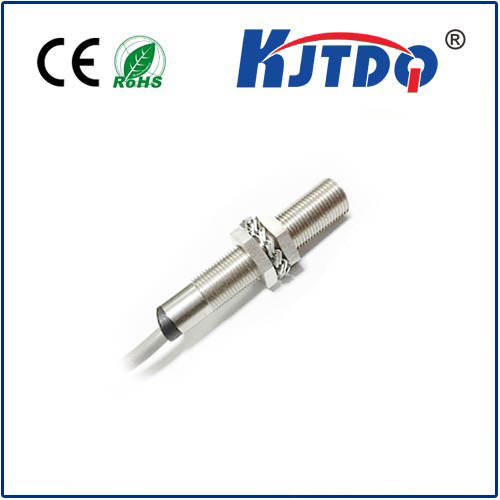
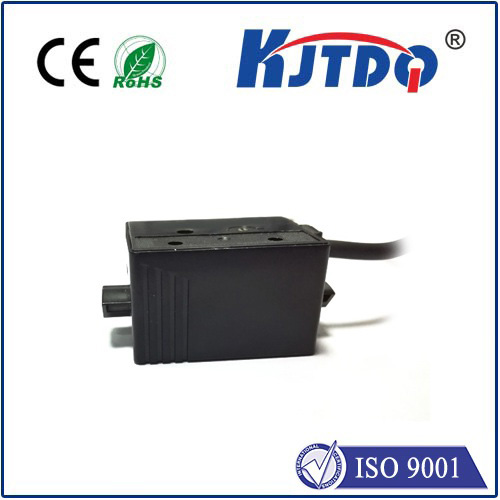
At its core, the E3F-DS50C4 is a diffuse reflective photoelectric sensor. Unlike through-beam sensors that require separate emitter and receiver units, this model houses both within a single, compact housing. It operates by emitting a beam of modulated infrared light from its built-in LED. When this light strikes an object within its sensing range, a portion of the light is reflected back to the sensor's receiver. The internal circuitry then processes this signal to trigger an output switch. This self-contained design simplifies installation, reduces wiring complexity, and is ideal for applications where mounting space is limited or where installing two separate units is impractical.
The "DS50C4" designation reveals critical specifications. It typically offers a standard sensing distance, often around 50 centimeters, though this can vary slightly depending on the target object's color, material, and surface finish. Lighter, more reflective surfaces are detected at greater ranges than dark, absorbent ones. The "C4" often relates to its output configuration, commonly indicating a solid-state NPN normally-open (NO) transistor output, compatible with a wide range of programmable logic controllers (PLCs) and control systems. This output type is known for its fast switching speed and longevity, with no moving parts to wear out.
What sets the E3F-DS50C4 apart in a crowded market? First is its robust construction. Housed in a durable, often cylindrical metal or high-grade plastic body, it is designed to withstand the harsh environments common in factories—resisting dust, moisture (with appropriate IP ratings), and minor physical impacts. Second is its operational stability. Advanced circuitry minimizes interference from ambient light, such as factory overhead lighting or sunlight, ensuring false triggers are rare. Many models also feature a visible red or green LED indicator that provides immediate status feedback for power and output state, drastically simplifying setup and troubleshooting.
The practical applications for the E3F-DS50C4 are vast. It is frequently employed on conveyor lines for counting bottles, boxes, or parts, ensuring precise inventory control and process flow. In packaging machinery, it detects the presence of a product to initiate sealing or labeling sequences. It can act as a safety interlock, confirming a guard door is closed before a machine cycle begins. Further uses include level detection in silos or bins, edge guiding in web processing, and detecting the presence of objects in automated assembly stations. Its versatility makes it a go-to solution for engineers and maintenance technicians across industries like food and beverage, automotive, material handling, and pharmaceuticals.
Selecting and installing the E3F-DS50C4 requires attention to detail. Key considerations include the sensing distance required for your specific target, the response time needed for your application's speed, and the electrical requirements (voltage range, current draw, output type) to ensure compatibility with your existing control system. During installation, it is crucial to align the sensor correctly relative to the target's expected path and to account for the background. Since it uses reflected light, a highly reflective background behind the target area could cause unreliable operation. Proper mounting and adjustment using the sensor's sensitivity potentiometer, if available, are essential for optimal performance.
Maintenance is generally minimal due to the solid-state design. Regular cleaning of the lens to remove dust, oil, or debris that could attenuate the light beam is the primary task. Periodically verifying the sensing performance and checking electrical connections will ensure years of trouble-free service. When issues arise, such as failure to detect, consistent false triggers, or no output signal, a systematic approach—checking power supply, inspecting the lens, verifying alignment, and testing with a known-good target—will quickly isolate the problem.
In conclusion, the E3F-DS50C4 photoelectric switch represents a perfect blend of simplicity, durability, and effectiveness. Its diffuse reflective sensing principle offers a practical balance between performance and ease of use for a multitude of detection tasks. By understanding its capabilities, specifications, and ideal application environments, technicians and system designers can leverage this reliable component to enhance automation efficiency, improve safety, and ensure consistent production quality. For any project requiring dependable non-contact detection, the E3F-DS50C4 remains a trusted and proven choice.