Проверка
Проверка
Проверка
Проверка
Проверка
Проверка
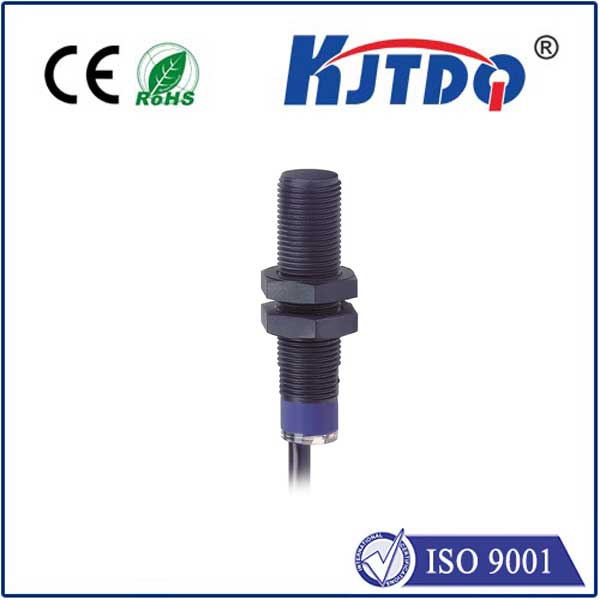
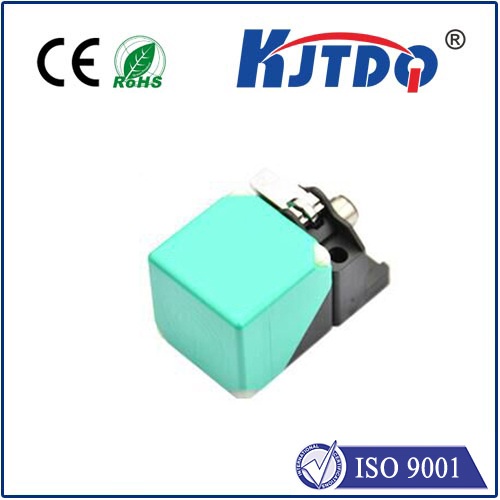
In the complex world of industrial automation, where safety and precision are non-negotiable, the Namur limit switch stands as a critical yet often understated component. Unlike standard mechanical limit switches, a Namur sensor is a specialized proximity device designed for use in hazardous areas. Its core function is to provide a intrinsically safe signal to a control system, typically a safety barrier or an intrinsically safe (IS) interface module, indicating the presence or absence of a target.
The term "NAMUR" originates from the German user association "Normenarbeitsgemeinschaft für Mess- und Regeltechnik in der chemischen Industrie" (Standardization Association for Measurement and Control in Chemical Industries). This defines its primary domain: explosive or potentially explosive atmospheres commonly found in chemical, pharmaceutical, oil and gas, and paint manufacturing plants. A standard switch generating sparks could be catastrophic here. The Namur limit switch solves this by operating on a very low energy principle. It does not directly switch a high-power load. Instead, it acts as a variable resistor, changing its internal resistance based on target proximity. This small, safe change in current (typically within a range of 1-2 mA for "target present" and 6-8 mA for "target absent") is then interpreted by an associated evaluating unit located in a safe area.
The operational principle is elegantly simple. When a ferromagnetic target (like a metal flag on a valve or door) approaches the sensing face of the switch, it dampens the oscillator's amplitude within the switch. This damping causes a significant drop in the output current. The control system monitors this current. A current drop below a threshold (e.g., 1.2 mA) signals "target present" or "actuation." When the target moves away, the current rises above a higher threshold (e.g., 2.1 mA), signaling "target absent." This two-wire, analog current signal is remarkably robust against electromagnetic interference and voltage drops over long cable runs.
The advantages of implementing Namur limit switches are substantial for operations in hazardous zones. First and foremost is enhanced safety. By keeping energy levels in the hazardous area below the threshold required for ignition, they are a cornerstone of intrinsic safety protection methods (Ex ia or Ex ib). This design significantly reduces the risk of fire or explosion. Secondly, they offer high reliability and durability. With no mechanical contacts to wear out or arc, they are ideal for high-cycle applications or environments with heavy vibration. Their solid-state design ensures a long service life with minimal maintenance. Furthermore, the continuous analog signal allows for advanced diagnostics. The evaluating unit can monitor for wire breaks (current falls to near zero) or short circuits (current rises to a maximum), enabling predictive maintenance and preventing unexpected downtime.
Choosing the right Namur limit switch requires careful consideration of several factors. The housing material is crucial; stainless steel (like 316L) is standard for corrosive environments. The sensing distance, though typically short (a few millimeters), must be specified correctly for the application. Temperature ratings must match the operational environment, both ambient and process temperatures. Finally, the correct associated apparatus—the safety barrier or IS interface—must be selected to match the switch's parameters and provide the necessary certification for the zone (Zone 0, 1, or 2 for gas atmospheres).
Installation and wiring, while straightforward, demand attention to detail. The switch is always connected in series with its dedicated evaluating unit. Proper grounding and the use of certified, shielded cables are essential to ensure signal integrity and maintain the intrinsic safety loop. Regular functional testing, as part of a site's safety instrumented system (SIS) protocols, is mandatory to verify the switch and the entire safety circuit are operating within specified parameters.
From monitoring the open/closed position of explosion-proof valves and doors to controlling the end positions of pneumatic actuators in spray booths, the applications are vital. They are the silent sentinels on rotary feeders, fill-level controls in silos, and safety interlocks on access hatches. Their role is to provide a failsafe, reliable signal that larger automation and safety systems depend on to make critical decisions.
In conclusion, the Namur limit switch is far more than just a sensor. It is a fundamental engineering solution that bridges the gap between necessary mechanical detection in hazardous locations and the imperative of electrical safety. Its adoption represents a commitment to operational integrity, personnel safety, and asset protection. For engineers and plant managers overseeing facilities with classified areas, understanding and correctly applying Namur technology is not an option—it is a fundamental requirement for safe, efficient, and compliant industrial operation. By ensuring these components are properly selected, installed, and maintained, industries can safeguard their most critical processes against inherent risks.