Проверка
Проверка
Проверка
Проверка
Проверка
Проверка
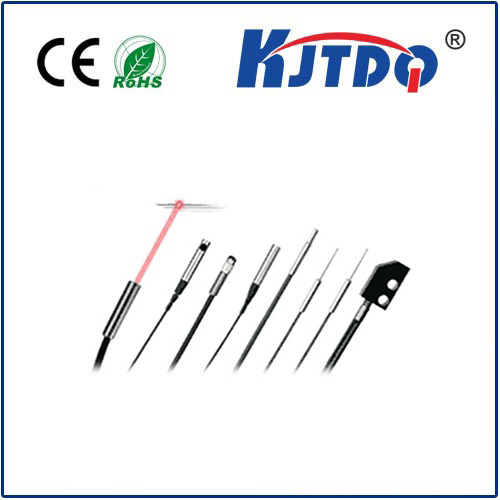
In today's rapidly advancing technological landscape, the demand for accurate, reliable, and non-contact measurement solutions is higher than ever. Laser sensor distance measuring technology stands at the forefront of this demand, offering unparalleled precision across a diverse range of industries. From automated manufacturing lines and robotics to construction, logistics, and even consumer electronics, these sensors provide the critical data needed for efficiency, safety, and quality control.
At its core, a laser distance sensor operates on the principle of time-of-flight or phase-shift measurement. It emits a focused laser beam towards a target object. The sensor then precisely calculates the time it takes for the reflected light to return. This time interval, when combined with the known speed of light, allows for the exact calculation of distance. Modern iterations of this technology achieve remarkable accuracy, often down to sub-millimeter levels, even over substantial distances. This non-contact method is a significant advantage, eliminating physical wear and tear and enabling measurements of delicate, hot, moving, or otherwise inaccessible objects.
The applications for laser distance measuring sensors are vast and transformative. In industrial automation, they are indispensable for tasks such as precise positioning of robotic arms, monitoring product dimensions on conveyor belts, and controlling fill levels in tanks. The automotive industry relies on them for assembly line robotics and vehicle guidance systems. In the construction sector, these devices have revolutionized tasks like land surveying, building layout, and volume calculation, replacing cumbersome tape measures with instant, digital readings. Furthermore, they are integral to the development of autonomous vehicles, providing essential data for LiDAR systems to perceive and navigate the environment.
When selecting a laser distance sensor, several key specifications must be considered to ensure optimal performance for a specific task. Measurement range defines the minimum and maximum distances the sensor can accurately cover. Accuracy and resolution determine the smallest detectable change in distance. The response time, or how quickly the sensor can take and output a measurement, is critical for high-speed applications. Environmental factors like ambient light, dust, fog, and the reflectivity of the target surface can also impact performance, making features like background suppression and robust housing important for challenging conditions.
Beyond basic distance measurement, advanced laser sensors offer multifunctional capabilities. Some models can continuously track the position of an object, providing real-time data streams for dynamic control systems. Others are equipped to measure speed by calculating the rate of distance change over time. Profile scanning sensors use a laser line instead of a single point to capture the complete contour or deformation of an object, opening doors for complex 3D inspections and reverse engineering.
The integration of laser distance sensors with the Internet of Things (IoT) and Industry 4.0 frameworks is a significant trend. These smart sensors can now communicate data directly to central control systems, cloud platforms, or mobile devices. This connectivity enables predictive maintenance, where sensor data can forecast potential equipment failures before they occur, and facilitates large-scale data analytics for process optimization. The result is smarter, more responsive, and more efficient operational ecosystems.
Looking ahead, the evolution of laser sensor technology points toward even smaller form factors, lower power consumption, and enhanced robustness for extreme environments. Innovations in beam shaping and signal processing algorithms will continue to improve accuracy and mitigate interference from challenging surfaces. As costs decrease, these high-precision tools will become accessible to an ever-broader spectrum of applications, from professional-grade tools to integrated components in everyday smart devices.
In conclusion, laser sensor distance measuring is far more than a simple tool for determining length. It is a foundational enabling technology that drives precision, automation, and intelligence in modern engineering and industry. By providing fast, accurate, and reliable spatial data without physical contact, these sensors empower innovations that enhance productivity, ensure quality, and pave the way for the automated systems of the future. Their continued development will undoubtedly remain a critical component in the technological progress of countless fields.