Проверка
Проверка
Проверка
Проверка
Проверка
Проверка
In today's rapidly advancing technological landscape, the demand for accurate, reliable, and non-contact measurement solutions is higher than ever. Among the various tools available, the laser sensor module stands out as a cornerstone of modern automation, robotics, and quality control systems. This guide delves into the core principles, diverse applications, and key selection criteria for these powerful devices, providing a comprehensive overview for engineers, hobbyists, and industry professionals.
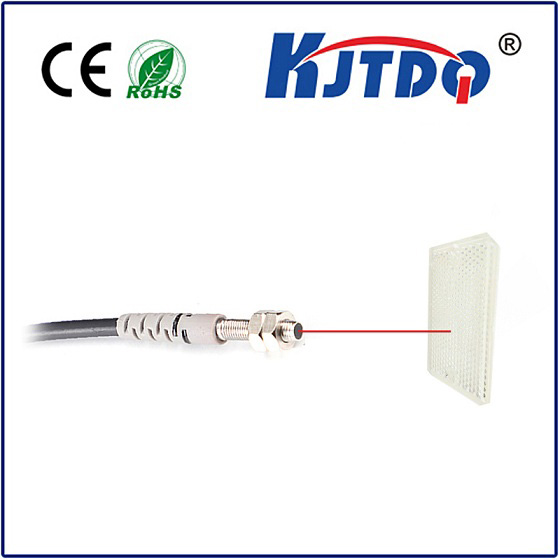
At its heart, a laser sensor module operates on the principle of optical triangulation or time-of-flight measurement. It emits a focused beam of coherent light—a laser—towards a target object. The reflected light is then captured by a receiver within the module. By analyzing the properties of this returned light, such as the position of the beam on a sensor (for triangulation) or the time it takes to return (for time-of-flight), the module can calculate precise distance, displacement, or presence data. This non-contact method is crucial for applications where physical touch could damage the object or the sensor itself, or where high-speed, repeated measurements are necessary.
The applications for laser sensor modules are vast and continually expanding. In industrial automation, they are indispensable for precise positioning on assembly lines, controlling robotic arm movements, and measuring part dimensions with micron-level accuracy. They ensure consistent quality by detecting minute defects, checking fill levels in containers, and monitoring thickness in continuous production processes like paper or metal rolling. Beyond the factory floor, these modules are integral to autonomous vehicles for obstacle detection and navigation, in consumer electronics for features like autofocus and gesture recognition, and in security systems for perimeter monitoring. Their ability to function in challenging environments—coping with dust, varying light conditions, and different surface materials—makes them exceptionally versatile.
When selecting a laser sensor module for a specific project, several critical factors must be considered. Measurement Range and Accuracy are paramount; a module must cover the required distance while delivering the necessary precision for the task. Response Speed determines how quickly the sensor can take readings, which is vital for high-speed production lines. The Type of Output (analog, digital, serial communication) must be compatible with the existing control system. Environmental Robustness is another key consideration, including the module's ingress protection (IP) rating against dust and water, its operating temperature range, and its resistance to ambient light interference or vibrations. Finally, the Size and Form Factor can be a deciding factor in space-constrained applications.
Modern laser sensor modules often come with advanced features that enhance their utility. Programmable switching outputs allow users to set specific detection windows. Teach-in functions simplify setup by allowing the sensor to learn reference points directly from the application. Some models offer background suppression technology, which ignores objects beyond a set distance, or precise focus adjustment for targeting very small objects. Understanding these features can unlock greater potential and solve more complex measurement challenges.
Implementing a laser sensor module successfully also involves proper installation and maintenance. Ensuring stable mounting to minimize vibration, aligning the beam correctly with the target, and considering the target's surface properties (color, reflectivity, texture) are essential steps for optimal performance. Regular cleaning of the lens and periodic verification of calibration help maintain long-term accuracy and reliability.
From streamlining complex manufacturing processes to enabling the next generation of smart devices, the laser sensor module is a fundamental component driving innovation. Its blend of precision, speed, and adaptability makes it an invaluable tool across countless sectors. As technology progresses, we can expect these modules to become even smaller, more energy-efficient, and smarter, integrating further with IoT systems and AI-driven analytics to provide not just data, but actionable insights. Choosing and applying the right laser sensor module is a strategic decision that can significantly enhance efficiency, quality, and capability in any project requiring precise spatial awareness.