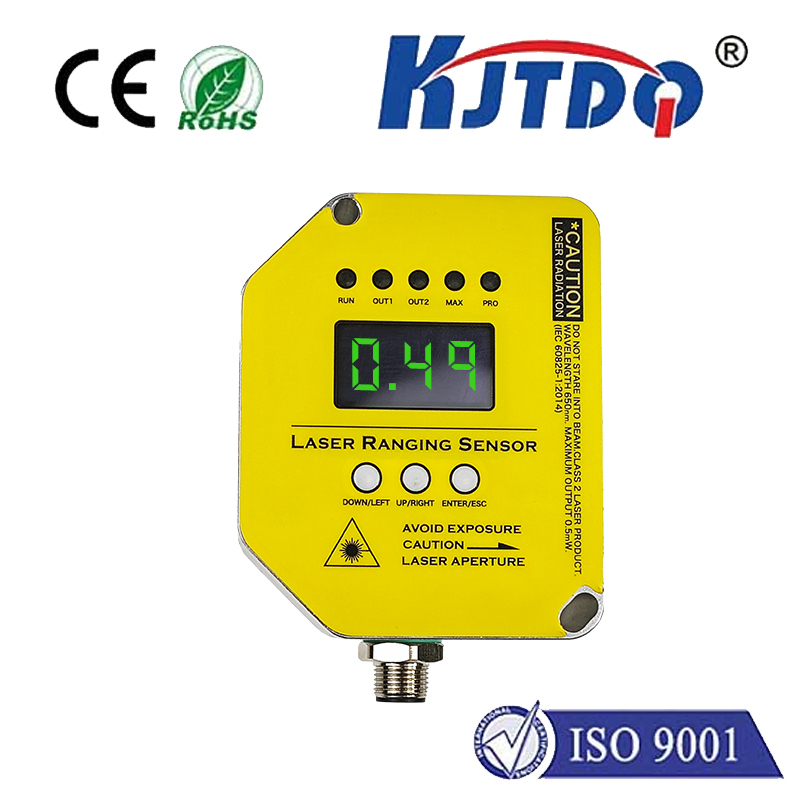
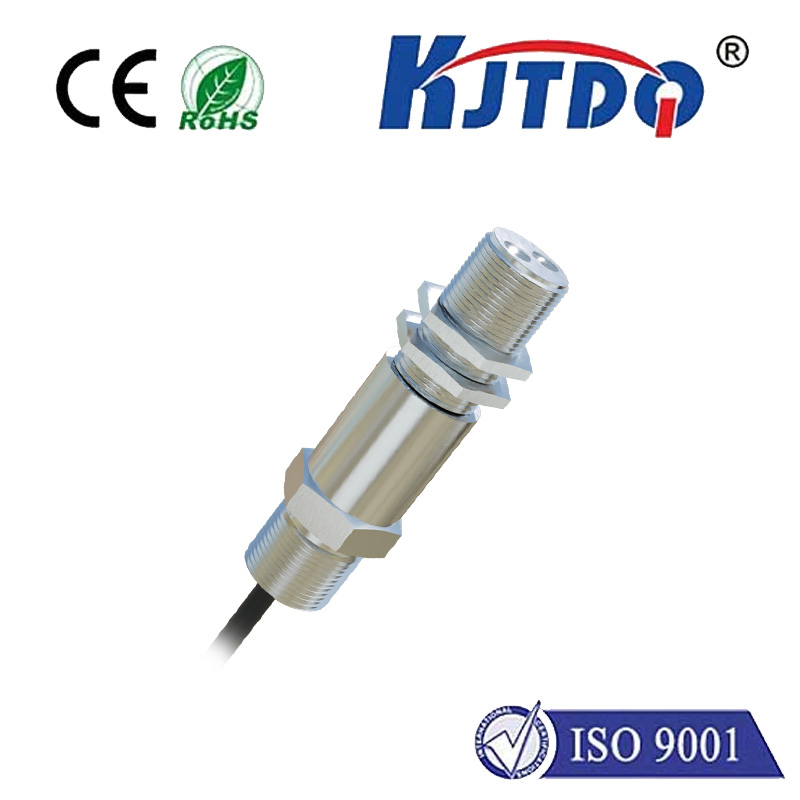
In today's fast-paced industrial and technological landscape, precision measurement is non-negotiable. Enter the laser optical sensor, a cornerstone of modern automation and quality control. Unlike traditional mechanical or ultrasonic sensors, laser optical sensors utilize focused light beams to deliver unparalleled accuracy in detecting, measuring, and positioning objects. Their working principle is elegantly straightforward: a laser diode emits a coherent light beam towards a target. The sensor then analyzes the properties of the reflected light—such as intensity, phase, or time-of-flight—to calculate precise distance, presence, or surface characteristics. This non-contact method is its superpower, eliminating wear and tear and allowing for interaction with delicate, hot, or moving objects where physical touch is impossible or detrimental.
The applications of laser optical sensors are vast and transformative. In manufacturing, they are the eyes of robotic arms, ensuring components are placed with micron-level precision on assembly lines. They perform critical roles in quality inspection, scanning for microscopic defects on semiconductor wafers or verifying fill levels in pharmaceutical packaging with absolute consistency. Beyond the factory floor, they enable the environmental monitoring systems that measure particulate matter in the air and are integral to the navigation and obstacle avoidance systems in autonomous vehicles and drones. Their speed, often operating in the microsecond range, makes them indispensable for high-throughput processes where every millisecond counts.
When selecting a laser optical sensor for a specific application, several key parameters demand careful consideration. Resolution, or the smallest change the sensor can detect, determines its fineness of measurement. Repeatability defines its consistency in delivering the same result under unchanged conditions—a critical factor for reliable automation. The sensing range must match the operational distance, while the spot size of the laser beam affects the minimum detectable object size and edge detection capability. Environmental factors are equally crucial; industrial settings may require sensors with robust housings rated IP67 or higher to withstand dust, moisture, and vibration. Furthermore, the choice between visible red lasers and Class 1 infrared lasers depends on the material being sensed and necessary safety classifications.
The advantages of implementing laser optical sensors are compelling. Their high accuracy and resolution directly translate to improved product quality and reduced waste. Non-contact sensing ensures zero contamination and no damage to products, extending the sensor's own lifespan by avoiding mechanical degradation. They offer remarkable flexibility, easily reprogrammed for different tasks within a production line. However, it's important to acknowledge their limitations. Certain materials, like transparent glass or deeply absorbent black surfaces, can challenge reflection-based detection. Ambient light interference, especially strong infrared sources, can also affect performance, though modern sensors incorporate sophisticated filters and modulation techniques to mitigate this.
Looking ahead, the evolution of laser optical sensing technology continues to accelerate. Miniaturization is making powerful sensors smaller and more integrable into compact devices. The integration of smart features, such as IO-Link communication, allows for real-time data exchange, predictive maintenance alerts, and remote parameter adjustment, paving the way for Industry 4.0 smart factories. Furthermore, advancements in 3D profiling using laser triangulation or time-of-flight principles are opening new frontiers in complex surface inspection and volumetric measurement. For any engineer, system integrator, or decision-maker aiming to enhance precision, efficiency, and reliability in their operations, understanding and leveraging the capabilities of the laser optical sensor is not just an option—it's a strategic imperative for staying competitive in a data-driven world.