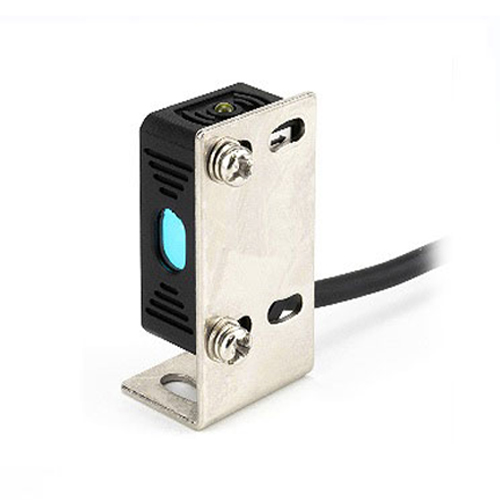
In the rapidly evolving landscape of industrial automation, robotics, and smart devices, the demand for accurate, reliable, and fast distance measurement has never been higher. Enter the Time-of-Flight (TOF) laser distance sensor, a technology that is quietly transforming how machines perceive and interact with their environment. Unlike traditional ultrasonic or infrared sensors, TOF laser sensors operate on a simple yet powerful principle: they emit a pulsed laser beam towards a target and precisely measure the time it takes for the reflection to return. This elapsed time, multiplied by the speed of light, yields an exceptionally accurate distance reading.
The core advantage of this method lies in its speed and precision. Measurements can be taken in milliseconds, with accuracy often reaching sub-millimeter levels even over several meters. This makes TOF laser sensors indispensable in applications where both speed and exactitude are non-negotiable. For instance, in automated guided vehicles (AGVs) navigating dynamic warehouse floors, these sensors provide real-time, centimeter-perfect data for obstacle avoidance and path planning, ensuring smooth and collision-free operations. Similarly, in logistics, they enable high-speed volume measurement of packages for optimal storage and shipping cost calculation.
Beyond logistics, the influence of TOF technology extends into manufacturing. On assembly lines, robotic arms equipped with TOF laser distance sensors can perform precise pick-and-place operations, adapt to variably positioned components, and conduct quality control inspections by verifying dimensions without physical contact. This non-contact nature is a critical benefit, eliminating wear and tear on both the sensor and the measured object, which is particularly valuable for delicate surfaces or high-speed production environments.
The construction and surveying sectors have also embraced this technology. Builders and architects utilize handheld devices and stationary systems incorporating TOF sensors for rapid, long-range distance measurement, area calculation, and 3D mapping of structures. The ability to measure from a single point to difficult-to-access areas enhances both safety and efficiency on job sites.
Perhaps one of the most burgeoning applications is in the realm of consumer electronics and the Internet of Things (IoT). From smartphones that can create instant depth maps for photography and augmented reality effects to smart home devices that monitor room occupancy for climate control or security, TOF laser sensors are becoming a key enabler of contextual awareness. They provide the spatial data that allows devices to understand their surroundings in three dimensions.
However, implementing TOF laser distance sensor technology is not without its considerations. Factors such as the reflectivity and color of the target surface, ambient light conditions (especially direct sunlight), and the presence of dust or fog can influence performance. Modern sensors combat these challenges with advanced signal processing algorithms, filters, and sometimes multi-echo detection capabilities that can distinguish the true target signal from background noise.
When selecting a TOF laser distance sensor, engineers must evaluate key specifications like measurement range, resolution, update rate, beam spot size, and the sensor's ingress protection (IP) rating for durability in harsh conditions. The choice between a compact, integrated module for embedded designs and a more robust, industrial-grade housing depends entirely on the application's demands.
Looking ahead, the trajectory for TOF laser distance sensors points toward even greater miniaturization, lower power consumption, and enhanced intelligence. Integration with artificial intelligence for object recognition and classification based on distance profiles is already on the horizon. As costs continue to decrease and performance scales new heights, adoption will proliferate across sectors from agriculture and drones to automotive safety systems.
In conclusion, the TOF laser distance sensor is far more than just a measuring tool; it is a fundamental sensory component driving the next wave of automation and intelligent systems. By delivering high-speed, high-precision, and contactless distance data, it empowers machines with a crucial layer of spatial understanding, paving the way for smarter, safer, and more efficient interactions between technology and the physical world. The revolution in precision is underway, and it is being measured one laser pulse at a time.