Проверка
Проверка
Проверка
Проверка
Проверка
Проверка
In industrial automation and manufacturing environments, reliable object detection is non-negotiable. Among the myriad of sensing technologies available, the laser through-beam sensor stands out for its unparalleled accuracy, long range, and exceptional reliability. This guide delves into the core principles, key advantages, and diverse applications of this critical component, providing a clear understanding of why it is often the preferred choice for demanding tasks.
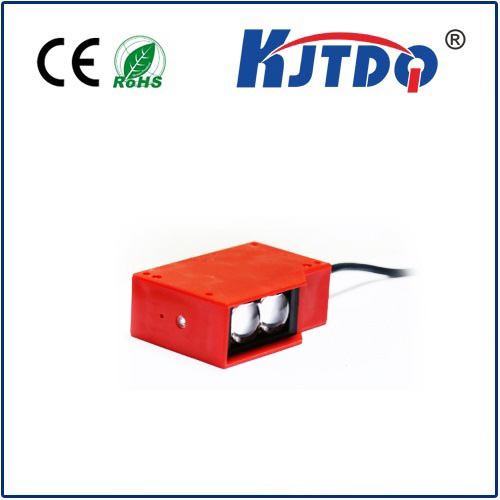
At its heart, a laser through-beam sensor operates on a simple yet powerful principle. It consists of two separate units: a laser transmitter and a receiver. The transmitter emits a focused, coherent beam of laser light, which is precisely aimed at the receiver unit. The receiver continuously monitors the intensity of this incoming light beam. When an object passes between the two units, it interrupts the beam. The receiver detects this drop in light intensity and sends an immediate electrical signal to the connected control system, such as a PLC. This binary "beam broken" or "beam present" signal forms the basis for detection, counting, positioning, or safety interlocking functions.
The fundamental design grants laser through-beam sensors several decisive benefits over other technologies like diffuse reflective or proximity sensors. First and foremost is their exceptional sensing range. Capable of reliably detecting objects over distances of tens or even hundreds of meters, they are ideal for large-scale applications. Secondly, they offer extremely high precision. The sharply focused laser beam allows for the detection of very small objects or precise edges, with resolutions down to sub-millimeter levels. This makes them perfect for tasks like verifying the presence of tiny components on a circuit board or controlling the precise cut-off point on a production line.
Environmental robustness is another key strength. Unlike systems that rely on reflecting light off a target, the through-beam method is largely immune to factors like the object's color, reflectivity, surface texture, or material. Whether detecting a transparent glass bottle, a shiny metal part, or a matte black plastic piece, the sensor performs consistently. It is also less susceptible to ambient light interference when properly configured, ensuring stable operation in varied lighting conditions.
The applications for laser through-beam sensors are vast and span numerous industries. In material handling and logistics, they are used for high-speed package counting on conveyor belts, pallet presence verification, and controlling the filling levels in storage systems. Within the automotive sector, they ensure precise robot guidance during assembly and verify the correct placement of parts. The electronics industry relies on them for wafer handling, component insertion verification, and PCB positioning. Furthermore, their reliability makes them a cornerstone in safety systems, such as perimeter guarding for hazardous machinery, where any beam interruption triggers an immediate machine shutdown.
Selecting the right laser through-beam sensor requires careful consideration of several parameters. The required sensing distance is primary. It's crucial to choose a model rated for a range greater than the actual installation distance to account for potential alignment shifts or environmental dust. The size of the smallest object to be detected determines the necessary beam diameter and receiver sensitivity. The operating environment must also be assessed; models with higher IP ratings (Ingress Protection) are necessary for dusty, damp, or washdown conditions. Finally, the output type (e.g., NPN, PNP, analog) must be compatible with the host control system.
Installation and alignment, while straightforward, are critical for optimal performance. The transmitter and receiver must be securely mounted and precisely aligned so that the laser beam hits the center of the receiver's lens. Many modern sensors feature built-in alignment aids like visual beam spots or LED indicators that signal optimal reception strength, simplifying this process. Regular maintenance involves keeping the lenses clean from dust and debris, which can attenuate the beam signal, and periodically checking the alignment stability of the mounts.
In conclusion, the laser through-beam sensor remains a fundamental and highly effective solution for non-contact detection where long range, high precision, and environmental immunity are paramount. Its straightforward principle translates into reliable performance in counting, positioning, safety, and inspection roles across automation landscapes. By understanding its operational advantages and proper selection criteria, engineers and system integrators can leverage this technology to enhance the efficiency, accuracy, and safety of their automated processes, ensuring smooth and uninterrupted production flow.