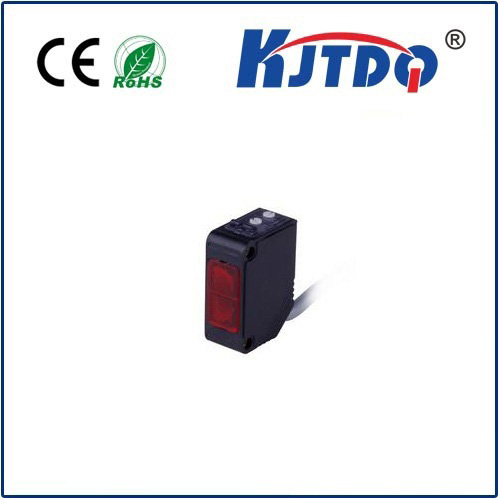
In today's fast-paced industrial landscape, efficiency, safety, and accuracy are paramount. The integration of advanced sensing technology has become a cornerstone for achieving these goals. Among these technologies, the infrared temperature sensor laser, often represented by models like the KJTDQ series, stands out as a revolutionary tool for non-contact temperature measurement. This article delves into the core principles, diverse applications, and significant advantages of this sophisticated equipment.
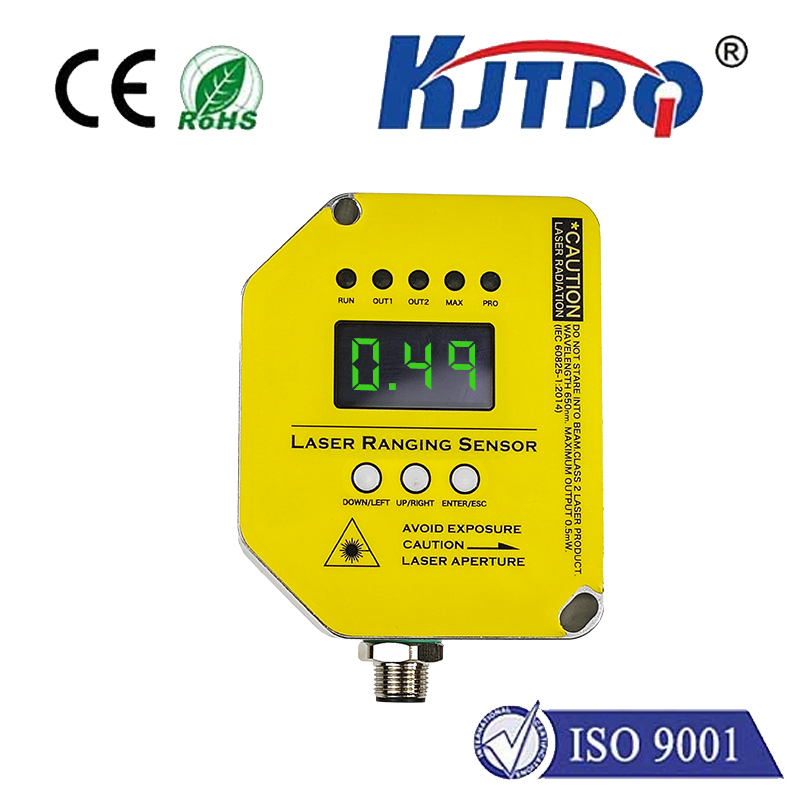
At its heart, an infrared temperature sensor laser operates on the fundamental principle of detecting infrared radiation emitted by all objects above absolute zero. Every object with a temperature emits this invisible radiation, and the intensity and wavelength of this emission are directly correlated to its surface temperature. The sensor's optical system, often enhanced by a precise laser pointer (the "laser" in its name), focuses this infrared energy onto a sensitive detector. This detector then converts the radiant power into an electrical signal, which is processed and displayed as a temperature reading. The integrated laser sighting mechanism is crucial—it provides a highly visible reference point, ensuring the operator is measuring the exact intended spot, thereby eliminating guesswork and enhancing measurement accuracy.
The applications for infrared temperature sensor laser devices are vast and span numerous sectors. In manufacturing and industrial maintenance, they are indispensable for predictive maintenance. Engineers can safely scan electrical components like circuit breakers, transformers, and motor bearings from a distance, identifying overheating issues before they lead to costly failures or unplanned downtime. Within the food processing industry, these sensors ensure strict hygiene and quality control by monitoring temperatures of products on conveyor belts or in storage without any physical contact, preventing contamination. The building and construction sector utilizes them for energy audits, detecting heat loss through insulation gaps, windows, and doors. Furthermore, in automotive diagnostics, technicians use them to quickly assess engine performance, exhaust system issues, or brake disc temperatures.
The benefits of employing a high-quality infrared temperature sensor laser, such as the KJTDQ series, are compelling. First and foremost is safety. Operators can measure temperatures of hazardous, moving, or extremely hot surfaces (like molten metal or high-voltage equipment) without any risk of injury or exposure. This non-contact nature also means there is no contamination of the object being measured, which is critical in sterile environments like pharmaceutical labs or cleanrooms. Speed is another major advantage; readings are obtained almost instantaneously, allowing for rapid scanning of large areas or multiple points. This leads to improved operational efficiency and productivity. Modern sensors also offer features like data logging, adjustable emissivity settings for different materials, and connectivity options for integrating measurements into larger control or monitoring systems.
When selecting an infrared temperature sensor laser, several key specifications should be considered. The distance-to-spot ratio (D:S ratio) is vital, determining the size of the measurement area at a specific distance—a higher ratio allows for measuring smaller targets from farther away. The temperature range must suit the intended applications, from sub-zero freezing points to extreme heats exceeding thousands of degrees Celsius. Spectral response and emissivity compensation are technical factors that ensure accuracy when measuring different materials. Ruggedness, battery life, and the clarity of the display are also practical considerations for field use.
In conclusion, the infrared temperature sensor laser, exemplified by advanced units like the KJTDQ, is more than just a thermometer; it is a critical diagnostic and quality assurance instrument. By enabling fast, safe, and precise non-contact temperature measurements, it empowers professionals across industries to optimize processes, enhance safety protocols, prevent equipment failures, and maintain stringent quality standards. As technology continues to evolve, these sensors will undoubtedly become even more integrated, intelligent, and essential to the smart factories and infrastructures of the future.