Проверка
Проверка
Проверка
Проверка
Проверка
Проверка
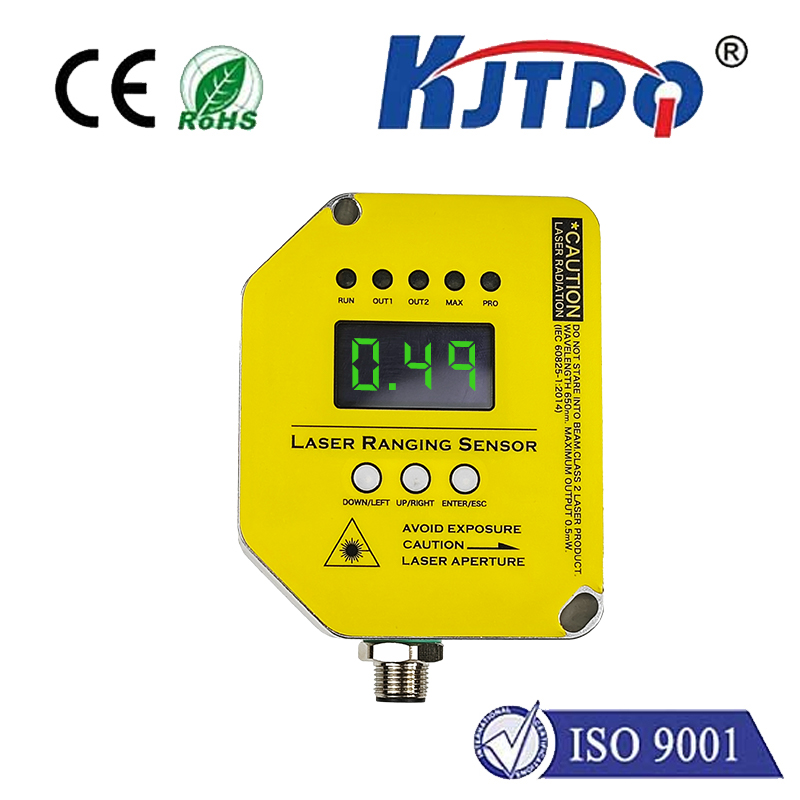
In modern industrial automation, photoelectric sensors have become indispensable components for object detection, positioning, and quality control. Among various types, diffuse photoelectric sensors stand out for their versatility and reliability in diverse applications. Unlike through-beam or retro-reflective sensors that require separate emitters and receivers or reflectors, diffuse sensors integrate both emitter and receiver in a single housing. This design simplifies installation and reduces maintenance requirements, making them ideal for environments where space constraints or complex setups pose challenges.
The operating principle of diffuse photoelectric sensors involves emitting a light beam—typically infrared, visible red, or laser—toward a target object. When the beam strikes the object, a portion of the light scatters and reflects back to the sensor's receiver. The sensor detects this reflected light and triggers an output signal based on predefined thresholds. This reflection-based method allows diffuse sensors to detect objects without needing a separate reflector or receiver unit, offering flexibility in dynamic industrial settings. However, the effectiveness of detection depends on factors like object color, surface texture, and material composition. Light-colored or reflective surfaces tend to produce stronger signals, while dark or absorbent materials may require sensors with higher sensitivity or adjustable settings.
One key advantage of diffuse sensors is their ability to detect objects at varying distances, thanks to adjustable sensing ranges. Modern models incorporate background suppression technology, which uses triangulation principles to ignore objects beyond a set distance. This feature prevents false triggers from distant surfaces like conveyor belts or machine walls, ensuring accurate detection even in cluttered environments. For instance, in packaging lines, diffuse sensors reliably identify cardboard boxes regardless of print patterns or minor surface variations, maintaining consistent throughput without manual intervention.
Industrial applications of diffuse photoelectric sensors span multiple sectors. In automotive manufacturing, they monitor component presence on assembly lines, such as verifying gasket placement or detecting engine parts. In logistics, these sensors facilitate parcel sorting by identifying package sizes on conveyor systems, optimizing warehouse automation. Food and beverage industries utilize them for fill-level control in bottling processes, where they detect liquid heights through transparent containers without direct contact. Additionally, diffuse sensors enhance safety systems by acting as presence detectors in machinery guards, halting equipment when workers approach hazardous zones.
When selecting a diffuse photoelectric sensor, engineers consider parameters like sensing range, response time, and environmental durability. Standard models offer ranges from a few centimeters to several meters, with response times as fast as milliseconds for high-speed applications. For harsh conditions—such as areas with dust, moisture, or temperature fluctuations—sensors with IP67 or higher ingress protection ratings ensure longevity. Advanced features like IO-Link connectivity enable real-time diagnostics and parameter adjustments via industrial networks, supporting predictive maintenance and reducing downtime.
Despite their robustness, diffuse sensors face limitations in detecting low-reflectivity objects or operating in highly reflective backgrounds. Solutions include using models with polarized filters to minimize glare or employing fiber-optic variants for confined spaces. Regular calibration and cleaning of lenses also maintain optimal performance, as contamination from oil or debris can attenuate light signals.
Innovations in diffuse sensor technology continue to drive industrial efficiency. Smart sensors with embedded algorithms now distinguish between object types, reducing errors in mixed-material production lines. Energy-efficient designs lower power consumption, aligning with sustainable manufacturing goals. As Industry 4.0 evolves, the integration of diffuse sensors with IoT platforms enables data-driven insights, such as tracking production trends or predicting component wear.
In summary, diffuse photoelectric sensors represent a critical tool for modern automation, balancing simplicity with advanced functionality. Their adaptability across industries underscores their role in enhancing precision, safety, and productivity. By understanding their operational nuances and selecting appropriate models, businesses can leverage these sensors to streamline processes and maintain competitive edges in fast-paced industrial landscapes.