In industrial and commercial environments, ensuring the safety of personnel and machinery is a paramount concern that cannot be overlooked. Among the myriad of safety solutions available, one technology stands out for its reliability, versatility, and effectiveness: the retro-reflective photoelectric beam sensor. This sophisticated device has become a cornerstone in modern safety systems, offering a robust method for area guarding, access control, and hazard detection.
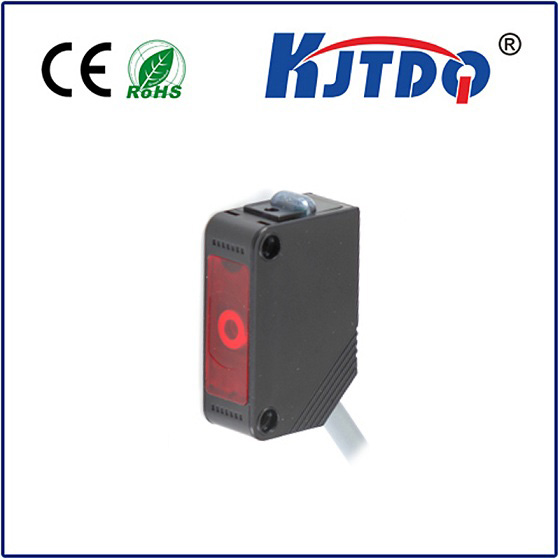
A retro-reflective photoelectric beam sensor operates on a straightforward yet highly effective principle. The sensor unit emits a beam of light, typically infrared or laser, directed towards a specialized reflector. This reflector, often a prismatic type, is designed to return the light beam directly to its source regardless of the angle of incidence. A receiver within the sensor unit constantly monitors for this returned beam. When an object or person interrupts this beam, the receiver detects the break in the signal, triggering an immediate safety response. This response is typically a signal to a machine's control system to initiate a stop, sound an alarm, or activate other predefined safety protocols. The key advantage of the retro-reflective setup over other types is its simplicity in installation and alignment, as it requires only a single sensor unit and a reflector, unlike through-beam systems that need separate, precisely aligned emitter and receiver units.
The applications for these safety beam sensors are extensive and critical. They are commonly deployed as safety light curtains at the perimeters of robotic work cells, press brakes, and automated assembly lines to prevent operators from entering hazardous zones while machinery is in motion. They safeguard points of entry to restricted areas, such as around large industrial ovens or testing facilities. In material handling, they can detect the presence of personnel near conveyor belts or loading docks, preventing accidents. The "safety" designation is crucial, as these sensors are built and certified to meet stringent international safety standards like IEC 61496 and ISO 13849. This certification ensures high reliability, fault detection capabilities, and a defined Safety Integrity Level (SIL) or Performance Level (PL), meaning they are designed to fail in a safe manner and are resistant to common failures like short circuits or lamp deterioration.
When selecting a safety retro-reflective photoelectric beam sensor for a specific application, several technical factors must be carefully evaluated. The sensing range is primary; models are available for short-range perimeter guarding of a few meters to long-range area monitoring exceeding 50 meters. The resolution, or the minimum object size the beam can detect, is vital for ensuring even small body parts like fingers are protected. Response time, the speed at which the sensor signals a beam break, must be fast enough to stop machinery before a hazard occurs. Environmental robustness is another key consideration. High-quality sensors feature rugged housings with ratings like IP67 or IP69K, making them resistant to dust, water jets, and vibrations commonly found in industrial settings. They must also be immune to optical interference from ambient light, including sunlight and welding arcs, and electrical interference from nearby motors or drives.
The integration of these sensors into a broader safety system is a critical step. They are typically connected to a dedicated safety relay or a Safety Programmable Logic Controller (Safety PLC). These controllers are responsible for processing the sensor's signal and executing the safe shutdown of equipment. Regular testing and maintenance are mandated to ensure ongoing integrity. Many modern sensors include built-in diagnostic functions, such as LED status indicators for alignment, beam strength, and fault conditions, simplifying upkeep.
Beyond the core safety function, advancements in sensor technology are adding significant value. Features like muting functions allow temporary, controlled suspension of the safety field to permit the passage of materials without compromising overall safety. Blanking functions enable specific sections of the beam to be ignored to allow for fixed obstructions, like machine supports, while maintaining protection around them. Some systems now offer configurable fields, allowing multiple protection zones with different response protocols from a single sensor array.
Implementing a reliable safety system with retro-reflective photoelectric beams is not merely a regulatory compliance issue; it is a fundamental investment in human welfare and operational continuity. It protects the most valuable asset—the workforce—from life-altering injuries. Simultaneously, it minimizes costly downtime, damage to expensive machinery, and liability associated with workplace accidents. By creating a physical, invisible barrier of light, these sensors provide a non-contact, immediate, and highly dependable layer of protection that is essential for any operation where man and machine interact.
In conclusion, the safety retro-reflective photoelectric beam sensor represents a mature, proven, and indispensable technology in the industrial safety landscape. Its ability to provide reliable, certified protection for a wide array of hazards makes it a first-choice solution for engineers and safety managers aiming to build a safer, more productive, and compliant working environment. As automation continues to advance, the role of such precise and dependable safety detection will only grow in importance.