Проверка
Проверка
Проверка
Проверка
Проверка
Проверка
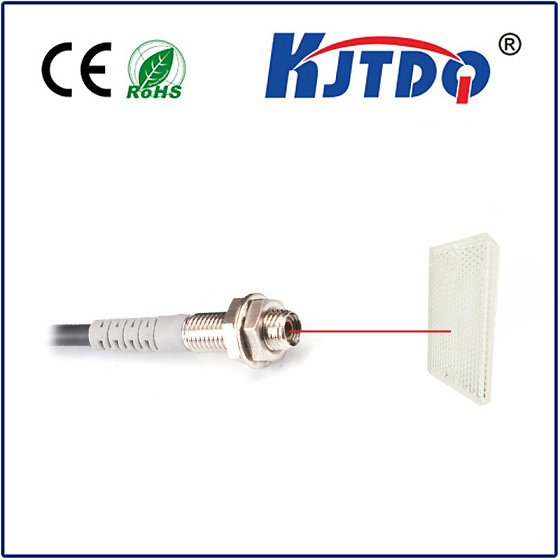
In the realm of industrial automation, precision and reliability are non-negotiable. Among the myriad of sensing solutions available, the laser through-beam photoelectric sensor stands out as a cornerstone technology for applications demanding the highest levels of accuracy and stability. Unlike diffuse or retro-reflective sensors, the through-beam configuration operates on a simple yet powerful principle: a laser emitter and a separate receiver are positioned opposite each other. The sensor detects an object when it interrupts the laser beam traveling from the emitter to the receiver. This fundamental design is the key to its exceptional performance.
The primary advantage of laser through-beam sensors lies in their unparalleled sensing distance and precision. Capable of operating over long ranges—often several meters or more—they provide a highly focused, coherent beam. This results in a precise detection point, minimal beam dispersion, and exceptional resistance to environmental interference such as ambient light, dust, or target surface characteristics (color, texture, reflectivity). Whether it's detecting the presence of a tiny electronic component on a high-speed assembly line, verifying the correct position of a transparent glass bottle, or ensuring safety in hazardous areas with light curtains, these sensors deliver consistent, fail-safe operation.
Modern laser through-beam sensors incorporate advanced features that enhance their versatility. Many models offer adjustable sensitivity, allowing fine-tuning for specific object sizes or materials, including clear films and glass. High-speed response times, in the microsecond range, make them ideal for counting, sorting, and inspection tasks on rapidly moving production lines. Furthermore, robust housing designs with high IP ratings (e.g., IP67, IP69K) ensure reliable performance in harsh industrial environments exposed to moisture, oils, and vibrations.
Integration into complex automation systems is streamlined through various output options (PNP/NPN, analog, IO-Link) and connectivity protocols. The implementation of a through-beam system requires careful alignment during installation, but once set, it typically requires minimal maintenance, offering a high return on investment through reduced downtime and improved quality control. A critical application is in safety systems, where certified laser through-beam arrays create immaterial guarding fields to protect personnel from machinery hazards without impeding workflow.
When selecting a laser through-beam sensor, key parameters to consider include the required sensing distance, the minimum detectable object size, the response speed, the necessary environmental protection, and the output signal type. Proper alignment tools and mounting accessories are essential for optimal performance. Regular maintenance, though minimal, should involve keeping the emitter and receiver lenses clean to prevent false triggers or signal loss.
From packaging and material handling to semiconductor manufacturing and automotive robotics, the laser through-beam photoelectric sensor is an indispensable tool. Its ability to provide reliable, long-range, and precise detection under challenging conditions solidifies its role in driving efficiency, safety, and quality in modern industrial operations. As automation evolves towards greater intelligence and connectivity, these sensors continue to adapt, forming the reliable backbone of countless sensing applications worldwide.