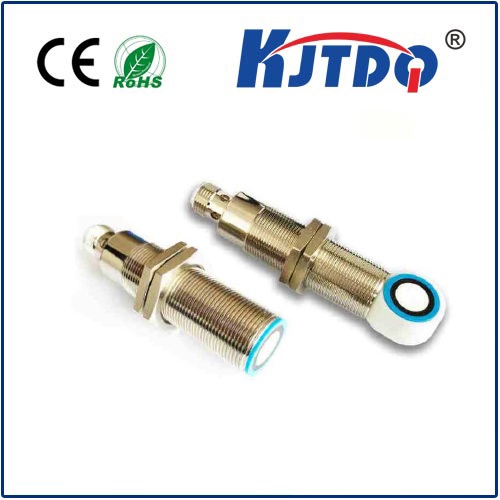
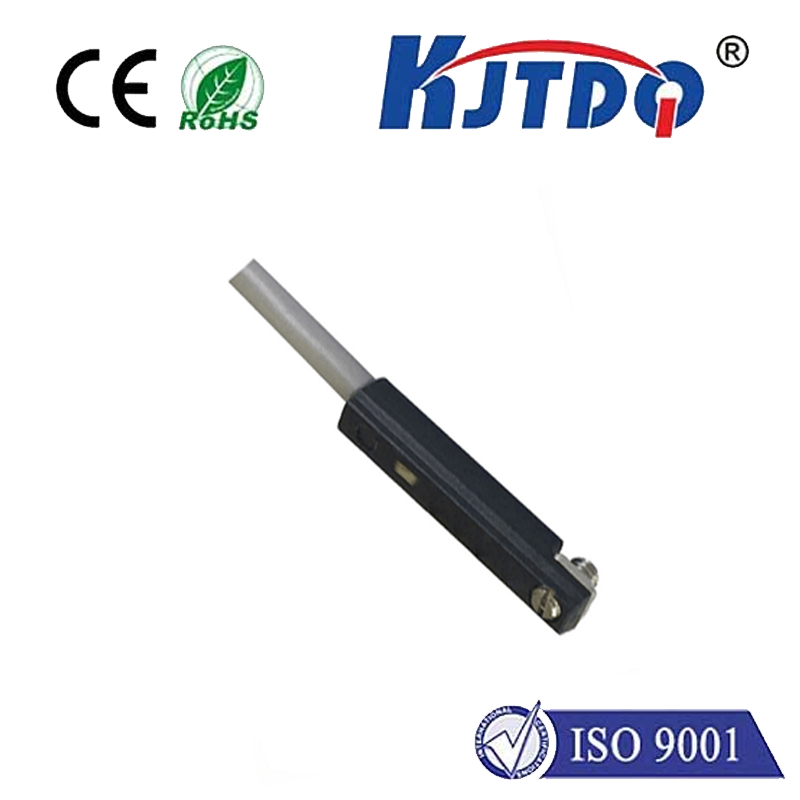
In the intricate world of industrial automation, where precision and reliability are non-negotiable, a quiet yet powerful component plays a pivotal role: the analog proximity sensor. Unlike its digital counterpart that simply signals an object's presence or absence, the analog proximity sensor provides a continuous output signal—typically a voltage or current—that varies proportionally with the distance to the target object. This nuanced capability makes it an indispensable tool for applications demanding more than just a binary on/off switch.
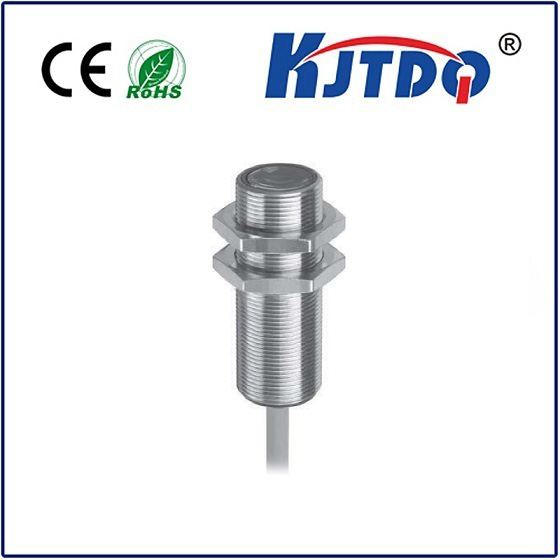
The core technology behind most analog proximity sensors is based on electromagnetic or capacitive principles. Inductive sensors, for instance, generate an oscillating electromagnetic field. When a metallic object enters this field, it induces eddy currents within the target, which in turn dampens the sensor's oscillation. The sensor meticulously measures this damping effect and converts it into a linear analog signal corresponding to the distance. Capacitive sensors operate similarly but can detect both metallic and non-metallic materials by sensing changes in capacitance as an object nears the sensing face. This continuous stream of distance data unlocks a realm of possibilities far beyond simple detection.
One of the most compelling applications is in precision positioning and control. On automated assembly lines, analog sensors are used to monitor the exact position of components, such as robotic arms or elevator platforms, enabling smooth and accurate movement to within micrometer tolerances. They provide real-time feedback for closed-loop control systems, allowing for immediate adjustments and ensuring consistent product quality. In the realm of condition monitoring, these sensors are the watchful eyes on machinery. By continuously measuring the vibration displacement of a rotating shaft or the precise gap between a turbine blade and its casing, they can predict maintenance needs before a catastrophic failure occurs, saving immense costs in downtime and repairs.
Furthermore, analog proximity sensors excel in thickness and dimension measurement. In rolling mills for metal or plastic films, sensors mounted on opposite sides of the material can provide continuous thickness readings, allowing for instant calibration of the rollers. This ensures product uniformity and minimizes material waste. Their ability to differentiate between subtle distance variations also makes them ideal for tasks like liquid level sensing in tanks or tension control in web processing, such as paper, foil, or textile manufacturing.
Choosing the right analog proximity sensor requires careful consideration of several factors. The sensing range, linearity (how accurately the output signal represents the actual distance), resolution, and response time are critical technical parameters. Environmental robustness is equally important; sensors must often withstand extreme temperatures, humidity, oil, coolant immersion, and strong electromagnetic interference prevalent in industrial settings. Modern sensors are increasingly incorporating advanced features like temperature compensation to maintain accuracy, IO-Link communication for digital parameter setting and diagnostics, and enhanced shielding for stable operation in noisy electrical environments.
While the digital revolution dominates conversations, the analog proximity sensor remains a fundamental building block of smart manufacturing. Its strength lies in delivering rich, continuous data—the essential feedback that allows machines to perceive their environment with gradation and nuance. From ensuring the perfect weld seam by tracking part fit-up to controlling the delicate placement of electronic components, these sensors provide the critical information that drives efficiency, safety, and quality. They may not always be in the spotlight, but their unwavering performance forms the backbone of countless automated processes, quietly enabling the precision that modern industry demands. As factories evolve towards greater connectivity and intelligence, the reliable data from these analog workhorses will continue to be a key ingredient in the recipe for industrial excellence.