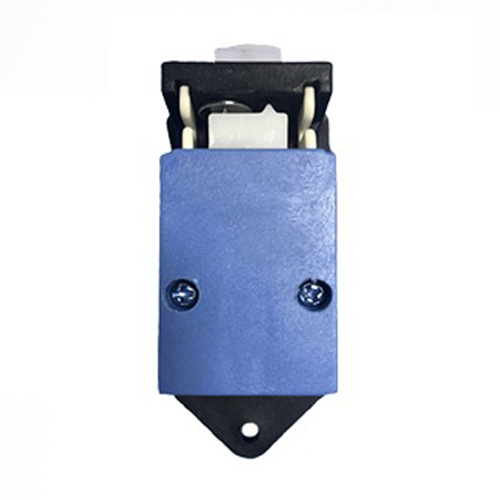
In the intricate world of industrial automation, where precision and reliability are non-negotiable, the choice of sensing technology can dictate the efficiency of an entire production line. Among the myriad of options, PNP 8mm proximity sensors have carved out a critical niche, offering a blend of compact design and robust performance that is indispensable for modern machinery. These sensors, characterized by their PNP (sourcing) output and an 8mm sensing face diameter, are more than just components; they are the silent guardians of seamless operation.
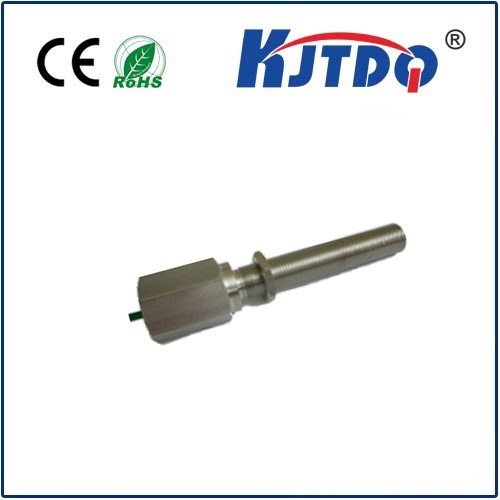
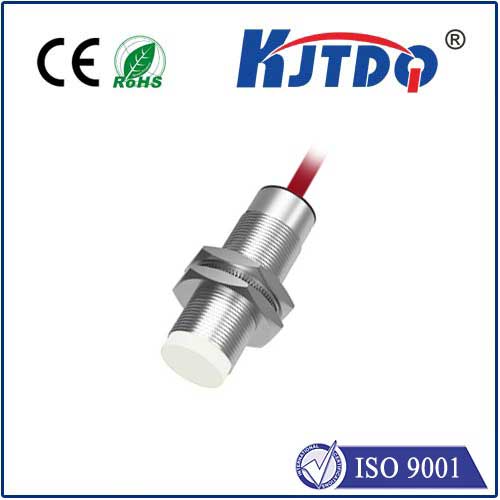
Understanding the core technology is key. A PNP 8mm inductive proximity sensor operates on a simple yet effective principle. It generates an electromagnetic field from its 8mm face. When a metallic target enters this field, it causes a change in oscillation, which the sensor's circuit detects. The "PNP" designation refers to the type of transistor output. In a PNP configuration, the output wire switches to positive voltage when an object is detected, effectively "sourcing" current to the load. This is in contrast to NPN sensors, which sink current to ground. The 8mm form factor is a significant advantage, allowing installation in spaces where larger sensors simply cannot fit, such as in compact assembly robots, intricate conveyor guides, or within tight tooling fixtures.
The applications for these sensors are vast and varied. In packaging machinery, they provide precise bottle cap presence detection on high-speed filling lines. Within CNC machine tools, they serve as accurate homing sensors for axis movement, ensuring repeatable positioning. On automated assembly lines, they verify the correct placement of small metal components, like springs or pins, before the next process step. Their immunity to ambient light, dust (when properly rated, e.g., IP67), and non-metallic materials makes them exceptionally reliable in harsh industrial environments where optical sensors might fail.
Selecting the right PNP 8mm sensor involves considering several technical parameters beyond just the size and output type. The sensing distance, typically rated at 2mm for a standard 8mm ferrous target, is crucial. Engineers must also account for the target material (steel, aluminum, brass), as different materials have different correction factors that affect the actual sensing range. The housing material, often nickel-plated brass or stainless steel, determines resistance to chemicals and physical impact. Frequency response, or the number of switching cycles per second, is vital for high-speed applications. Furthermore, choosing between shielded (flush-mountable) and unshielded versions is important; shielded sensors can be mounted flush in metal without affecting their field, while unshielded types offer a slightly longer range but require non-metallic surroundings.
The benefits of integrating these sensors into a system are compelling. Their compact 8mm diameter enables minimalist and space-efficient machine design. The PNP output is often directly compatible with many programmable logic controllers (PLCs) and standard industrial input cards, simplifying wiring and reducing interface complexity. High switching speeds contribute to faster cycle times, boosting overall productivity. Perhaps most importantly, their solid-state design, with no moving mechanical parts, translates to exceptional longevity and minimal maintenance, reducing total cost of ownership over years of continuous service.
Installation and maintenance, while straightforward, demand attention to detail. Ensuring a stable power supply within the sensor's specified voltage range (commonly 10-30V DC) is fundamental. Proper mounting, with adequate clearance from other metal objects as per the sensor's specifications, prevents false triggering. Regular cleaning of the sensing face from oil, grease, or metal swarf buildup is a simple yet effective practice to maintain optimal performance. For troubleshooting, a basic multimeter can check if the output is switching correctly in response to a target, a quick diagnostic step that can save significant downtime.
As industries push towards smarter, more interconnected systems (Industry 4.0), the role of the humble proximity sensor evolves. Modern PNP 8mm sensors are increasingly available with IO-Link capability, a point-to-point serial communication protocol. This transforms them from simple binary switches into intelligent devices that can report diagnostic data, such as operating temperature, signal strength, or even warnings about potential contamination, enabling predictive maintenance strategies.
In conclusion, the PNP 8mm proximity sensor stands as a testament to the principle that great capability can come in small packages. Its combination of a tiny footprint, reliable PNP switching logic, and rugged construction makes it an unsung hero in automation. For engineers and system integrators designing equipment that demands precision in confined spaces, specifying a high-quality PNP 8mm proximity sensor is not just a component choice—it's a strategic decision for ensuring accuracy, reliability, and long-term operational efficiency on the factory floor.