Проверка
Проверка
Проверка
Проверка
Проверка
Проверка
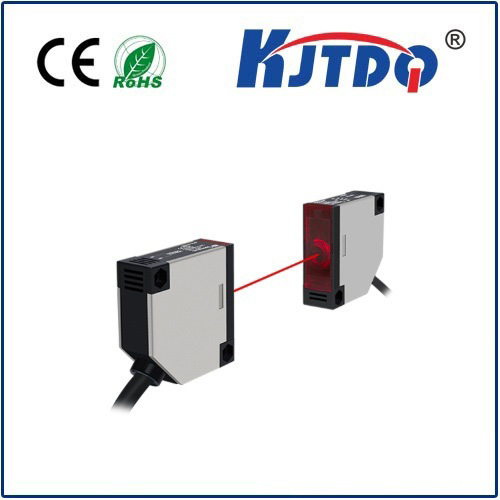
In the realm of modern measurement technology, the accuracy of electro-optical rangefinder sensors stands as a critical factor across diverse applications, from industrial automation to defense systems. These sensors utilize light waves, typically lasers, to determine distances with high precision by measuring the time it takes for a light pulse to travel to a target and back. The core of their performance lies in achieving exceptional accuracy, which directly impacts reliability in tasks such as robotic navigation, construction surveying, and military targeting.
The accuracy of an electro-optical rangefinder sensor is influenced by several key components. First, the quality of the laser source plays a pivotal role; stable, coherent light emission minimizes errors in distance calculations. Advanced sensors often incorporate narrow-beam lasers that reduce dispersion, ensuring clearer signal reflection from targets. Second, the detector's sensitivity is crucial—high-resolution photodetectors can capture faint return signals even in challenging conditions like low visibility or over long ranges. Third, signal processing algorithms enhance accuracy by filtering out noise and compensating for environmental factors such as atmospheric interference or target surface reflectivity. Modern sensors integrate real-time data correction, leveraging digital signal processors to refine measurements down to millimeter-level precision.
Environmental conditions pose significant challenges to sensor accuracy. Factors like fog, rain, or dust can scatter light waves, leading to signal attenuation and measurement inaccuracies. To counter this, manufacturers design sensors with adaptive technologies, such as wavelength optimization or multi-pulse averaging, which improve performance in adverse weather. Additionally, calibration protocols are essential; regular calibration against known standards ensures sustained accuracy over time, preventing drift caused by temperature changes or component wear.
In practical applications, the benefits of high-accuracy electro-optical rangefinder sensors are evident. In autonomous vehicles, for instance, these sensors enable precise obstacle detection and distance mapping, enhancing safety and navigation efficiency. In construction, they facilitate accurate land surveying and structural alignment, reducing errors in large-scale projects. The defense sector relies on them for target acquisition and rangefinding in artillery systems, where even minor inaccuracies can have substantial consequences. By delivering consistent, reliable data, these sensors support decision-making processes that demand exactitude.
Looking ahead, innovations in electro-optical rangefinder sensor technology continue to push the boundaries of accuracy. Emerging trends include the integration of artificial intelligence for predictive error correction and the use of quantum-enhanced methods to achieve unprecedented precision. As industries evolve toward greater automation and data-driven operations, the demand for sensors with superior accuracy will only grow, driving further research and development in this field. Ultimately, the pursuit of enhanced electro-optical rangefinder sensor accuracy not only improves technical outcomes but also fosters advancements in safety, efficiency, and innovation across global sectors.