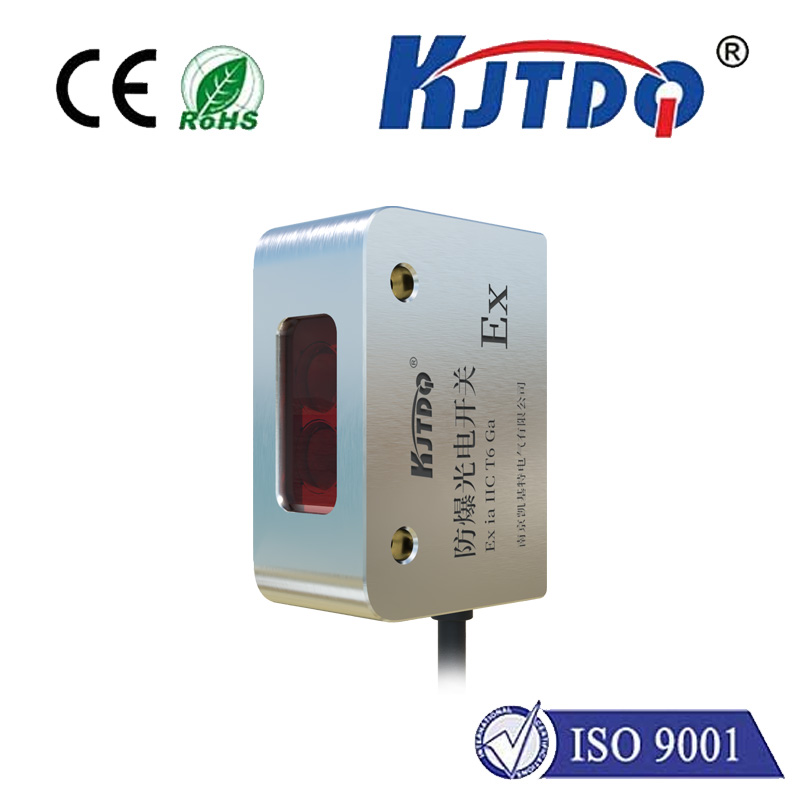
In the intricate world of industrial automation, precision and reliability are not just preferences; they are absolute necessities. The heartbeat of countless production lines, packaging systems, and material handling applications relies on the flawless detection of objects. Enter the E60-20R2PK photoelectric switch, a sophisticated sensor engineered to deliver unwavering performance in the most demanding environments. This device stands as a testament to how advanced photoelectric technology can solve complex detection challenges, ensuring operational continuity and efficiency.
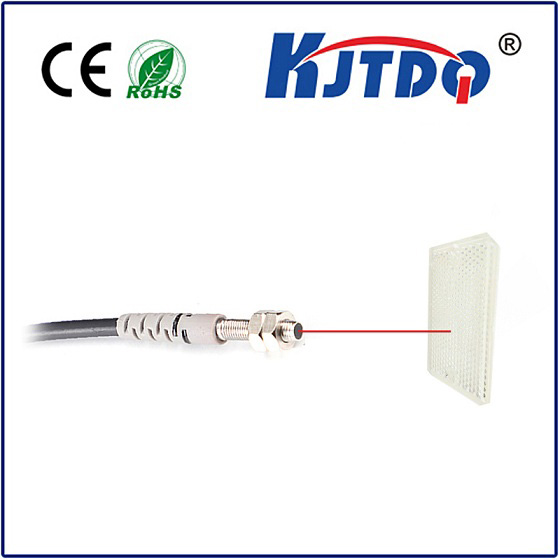
At its core, the E60-20R2PK is a through-beam photoelectric sensor. This design features a physically separate emitter and receiver unit. The emitter projects a focused beam of light—typically infrared or laser—directly towards the receiver. When an object passes between these two components, it interrupts this light beam. The receiver detects this interruption and triggers an electrical output signal. This fundamental principle is renowned for its exceptional sensing range and high reliability, as it is less susceptible to interference from the object's color, surface texture, or reflectivity compared to other sensing modes. The "20" in its model number often denotes a substantial sensing distance, making it ideal for applications requiring detection across conveyors, doorways, or large machinery.
The operational advantages of the E60-20R2PK are manifold. Its long-range detection capability allows for flexible installation in spacious plant layouts. It exhibits remarkable stability, providing consistent performance unaffected by dust, ambient light fluctuations, or vibrations common in industrial settings. The precision of the through-beam method ensures minimal false triggers, which is critical for maintaining synchronized automation processes, counting items accurately on high-speed lines, or ensuring safety in access control systems. For instance, in a bottling plant, these sensors can reliably detect transparent or dark bottles moving rapidly on a conveyor, signaling the filling or capping machinery to activate at the exact right moment.
Deploying the E60-20R2PK effectively requires careful planning. Proper alignment of the emitter and receiver is paramount; even a slight misalignment can lead to failure. Manufacturers often incorporate alignment indicators, such as LED lights that change color or brightness when optimal alignment is achieved, simplifying setup. The sensor housing is typically built to robust industrial standards (like IP67 rating), offering resistance against water and dust ingress. When installing, it is crucial to secure both units on stable mounts to prevent movement from machinery vibration. Regular maintenance involves keeping the lenses clean from dirt or grime buildup to ensure the light beam's integrity. Understanding the electrical specifications, such as its operating voltage (commonly 10-30V DC) and output type (e.g., PNP or NPN transistor), is essential for correct integration with programmable logic controllers (PLCs) or other control systems.
Beyond its basic function, the E60-20R2PK photoelectric switch finds utility in a diverse spectrum of industries. In logistics and warehousing, it is indispensable for parcel dimensioning, pallet detection, and automated guided vehicle (AGV) navigation. Within the automotive sector, it ensures precise positioning of components on assembly robots. In packaging, it controls the cutoff length of materials like plastic or paper. Its robustness also makes it suitable for outdoor applications, such as vehicle detection in parking systems or monitoring objects on outdoor conveyors. By providing a dependable "yes" or "no" signal for object presence, it forms a fundamental building block for smarter, more responsive automated systems.
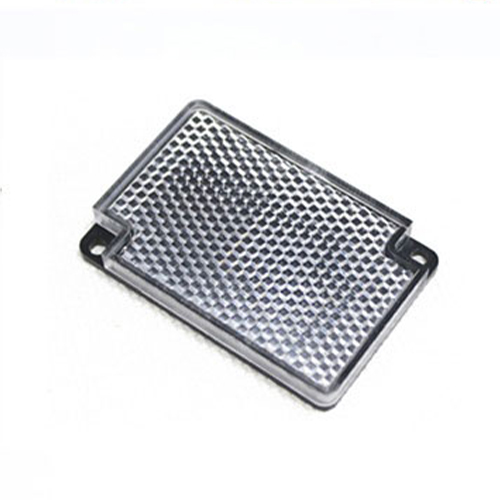
Selecting the right photoelectric sensor hinges on a clear analysis of the application's needs. Key considerations include the required sensing distance, the size and material of the target objects, environmental conditions (presence of dust, moisture, or temperature extremes), and the necessary response speed. The through-beam type, exemplified by the E60-20R2PK, is the go-to choice for long-range, highly reliable detection of opaque objects. However, for applications where installing two separate units is impractical, retro-reflective or diffuse-reflective models might be explored. The E60-20R2PK represents a specific, powerful solution within a broader family of sensors, each designed to tackle unique industrial puzzles.
Ultimately, the integration of components like the E60-20R2PK photoelectric switch is what transforms a collection of machines into a cohesive, intelligent production unit. It provides the essential eyes for the system, enabling precise control, enhancing safety, and preventing costly downtime due to detection errors. For engineers and system integrators seeking a proven, long-range detection solution, understanding and utilizing this sensor's capabilities is a significant step toward optimizing automation performance and achieving higher levels of operational reliability and throughput.