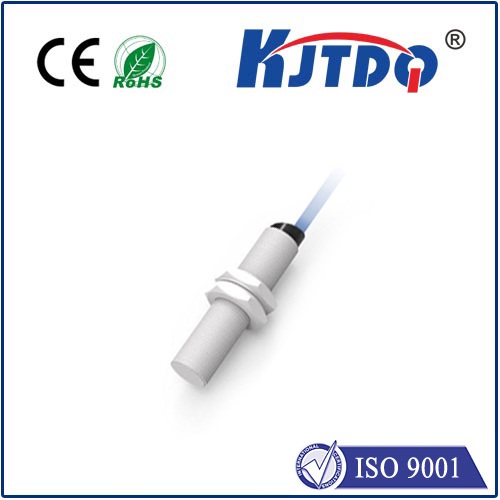
In the demanding landscape of modern industrial automation, precision, reliability, and adaptability are non-negotiable. The CD33-50CNA/CPA laser sensor emerges as a pivotal component engineered to meet these rigorous standards. This advanced sensor technology is designed for applications requiring exact non-contact measurement and detection, offering a robust solution for quality control, positioning, and inspection tasks across diverse sectors including manufacturing, packaging, and logistics.
The core of the CD33-50CNA/CPA's performance lies in its sophisticated laser triangulation principle. It projects a focused, visible red laser beam onto a target object. The reflected light is then captured by a high-resolution receiving element. By calculating the displacement of the light spot on the receiver, the sensor determines the exact distance or presence of the object with exceptional accuracy. This method allows for measurements that are largely unaffected by surface color, texture, or ambient light variations, a common challenge with other optical sensors. The "50" in its designation typically refers to a 50mm sensing range, providing a versatile working distance for many mid-range applications.
Key features distinguish the CD33-50CNA/CPA in a crowded marketplace. It boasts a high response speed, enabling real-time feedback in high-speed production lines. The compact and rugged housing, often rated with a high IP grade for dust and water resistance, ensures durability in harsh industrial environments. Models are available with different output options (like NPN/CPA or PNP/CNA transistor outputs) to seamlessly integrate with PLCs (Programmable Logic Controllers) and other control systems from various global manufacturers. The built-in stability indicator and easy-to-use teach-in functionality (often via a button or remote input) simplify setup and calibration, reducing downtime and operator training requirements.
Practical applications are vast. On an assembly line, the sensor can precisely verify the height of components or detect missing parts. In packaging machinery, it ensures correct fill levels or counts products on a conveyor. It can also be used for edge detection in web guiding systems or for controlling robot positioning. The laser's fine spot size allows for the detection of very small objects or precise measurements on intricate surfaces.
When selecting a sensor like the CD33-50CNA/CPA, engineers consider several technical parameters beyond the sensing range. These include resolution (the smallest detectable change), linearity (measurement consistency across the range), repeatability, and the minimum detectable object size. The sensor's performance must be matched to the specific environmental conditions, such as exposure to vibrations, temperature fluctuations, or airborne contaminants.
Integration is straightforward. The sensor typically requires a stable DC power supply. Its output can be wired to a digital input on a PLC to trigger actions—like stopping a conveyor, activating a reject arm, or logging measurement data. For analog versions providing distance-proportional signals, integration with data acquisition systems enables continuous monitoring and SPC (Statistical Process Control).
In conclusion, the CD33-50CNA/CPA laser sensor represents a critical tool for enhancing efficiency and ensuring quality in automated processes. Its blend of high precision, environmental robustness, and flexible connectivity makes it a reliable choice for engineers seeking to optimize production line performance. By providing accurate, non-contact measurements, it helps reduce waste, prevent machine downtime, and maintain consistent product quality, delivering a clear return on investment. For any operation where millimeter-level accuracy impacts the bottom line, this sensor technology offers a proven and effective solution.