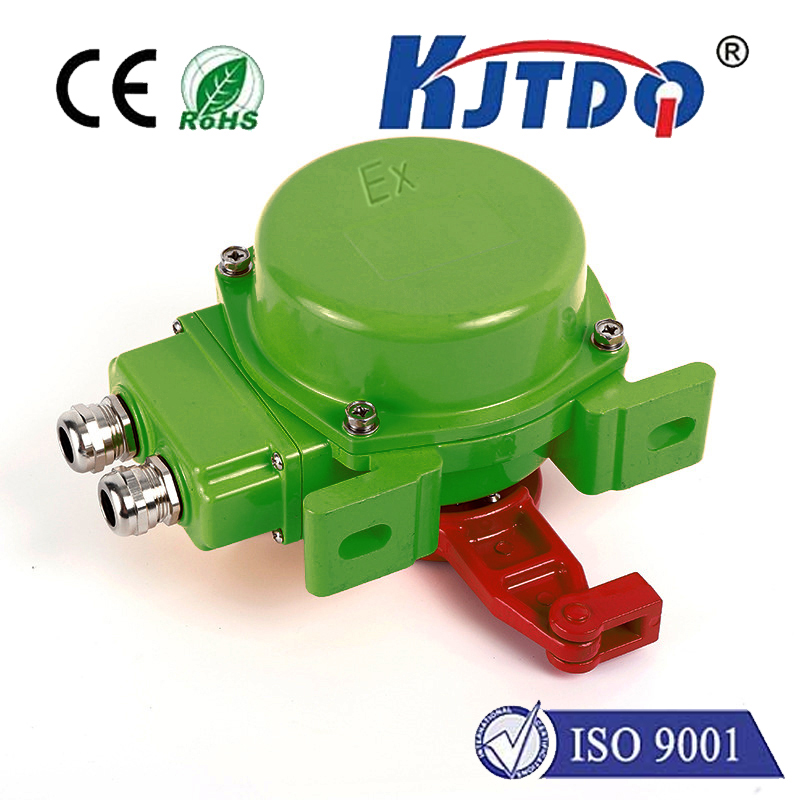
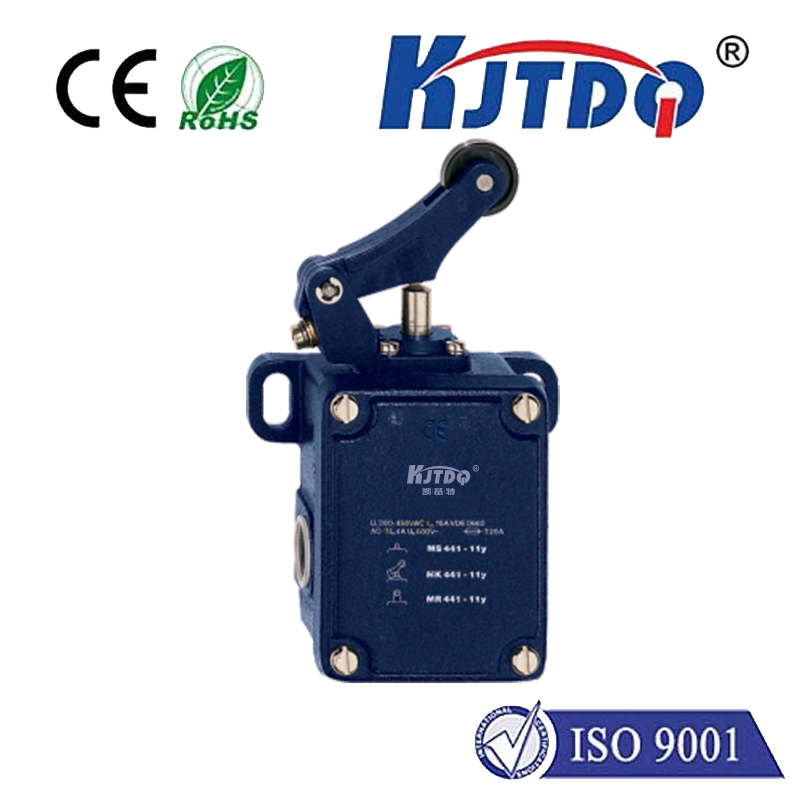
In the demanding environments of industrial facilities, mining operations, and large-scale machinery, ensuring operator safety and enabling immediate equipment shutdown is paramount. The JSB/HDJ-Ⅲ pull cord switch, often categorized under the broad industrial safety component umbrella like KJTDQ, stands as a critical line of defense. This robust emergency stop device is engineered to provide a reliable and highly visible means of halting conveyor belts, processing lines, or other extended machinery from any point along their length.
The fundamental principle of the JSB/HDJ-Ⅲ pull cord switch is straightforward yet effective. Installed at regular intervals along both sides of a conveyor or machine runway, the switch is connected to a steel wire rope that runs parallel to the equipment. In the event of an emergency, such as a material spill, equipment jam, or personnel hazard, any operator can quickly pull this cord. This action mechanically actuates the switch, instantly cutting power to the drive motor and bringing the system to a controlled stop. This "fail-safe" design typically requires a manual reset at the location of the pull, ensuring the issue is addressed before operations resume, thereby preventing further damage or injury.
What distinguishes the JSB/HDJ-Ⅲ model are its enhanced durability and operational features tailored for harsh conditions. Constructed with a heavy-duty, corrosion-resistant enclosure, often meeting IP65 or higher ratings, it is protected against dust, water jets, and impacts. The internal mechanism is designed for high mechanical life, withstanding thousands of actuations without failure. Many models feature a highly visible, brightly colored housing and a large, easy-grip pull handle or a clearly marked toggle, ensuring it can be identified and operated quickly even in low-visibility or high-stress situations. The switch provides a clear binary signal—either normal operation or emergency stop—integrating seamlessly into the plant's control and safety relay system.
The applications for the JSB/HDJ-Ⅲ pull cord switch are extensive. Beyond the obvious use in bulk material handling on belt conveyors in mining, aggregates, and ports, they are vital in packaging lines, automotive assembly conveyors, airport baggage handling systems, and large agricultural processing equipment. Any long, linear machinery where operators work alongside it requires this type of accessible emergency intervention. Its role is not just regulatory compliance with safety standards like ISO 13850 or ANSI B11.19, but a fundamental component of a responsible safety culture, putting a reliable "stop" command within arm's reach of every worker.
Proper installation and maintenance are crucial for optimal performance. The pull wire must be installed at a recommended height and tension, allowing for easy operation while avoiding accidental snagging. Regular testing schedules, as part of a facility's overall safety protocol, are mandatory. This involves simulating a pull to verify the switch activates, the machinery stops promptly, and the reset function works correctly. Keeping the mechanism free from debris and ensuring the enclosure integrity is maintained are simple yet vital routine checks.
Choosing the right safety component, such as the JSB/HDJ-Ⅲ pull cord switch, is a direct investment in operational continuity and, most importantly, personnel protection. It represents a simple, physical solution to a critical need: providing an immediate and unambiguous way to prevent accidents. In the complex ecosystem of industrial automation, devices like these form the indispensable, reliable backbone of workplace safety, ensuring that human oversight can always override automated processes when necessary. For engineers and safety managers specifying equipment for conveyor systems or extended machinery, integrating this proven emergency stop technology is a non-negotiable aspect of responsible design and operation.