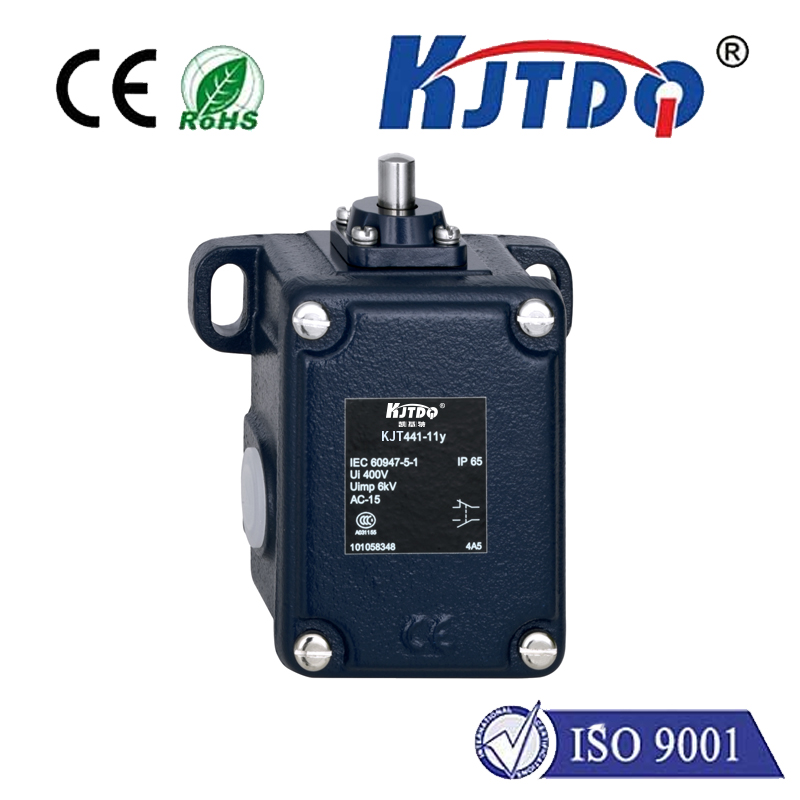
In industrial and outdoor settings, electrical components face constant threats from dust, moisture, and extreme conditions. Equipment failure due to environmental factors can lead to costly downtime, safety hazards, and compromised performance. This is where the reliability of a sealed micro switch becomes non-negotiable. The Micro Switch with an IP67 rating stands as a critical defense, engineered specifically to operate flawlessly where standard switches would falter.
An IP67 rating is a definitive international standard. The "IP" stands for Ingress Protection, followed by two digits. The first digit, "6," signifies complete protection against dust ingress; no dust can enter the enclosure. The second digit, "7," indicates protection against the effects of temporary immersion in water—up to 1 meter for 30 minutes. This dual protection ensures the switch's internal mechanism remains uncontaminated and fully functional in environments filled with particulate matter or exposed to water splashes, rain, or occasional submersion.
The construction of an IP67-rated micro switch involves several key design elements. A robust, sealed housing, typically made from durable materials like thermoplastics or stainless steel, forms the primary barrier. Critical seams, the actuator shaft, and cable entry points are sealed using high-quality gaskets, O-rings, or potting compounds. This hermetic sealing preserves the integrity of the internal snap-action mechanism, which is the heart of the switch, providing precise and reliable actuation. The sealing must be maintained without compromising the tactile response or the electrical performance of the contacts.
The applications for such resilient components are vast and varied. In the automotive industry, IP67 micro switches are found in door latch sensing, brake pedal positions, and in electric vehicle charging ports, resisting road spray, dust, and cleaning fluids. Agricultural machinery relies on them for implement position sensing, enduring dust clouds and mud. Food and beverage processing lines utilize them for container positioning and safety door interlocks, where they withstand frequent high-pressure washdowns with caustic cleaners. Outdoor telecommunications equipment, marine controls, and construction machinery all depend on the unwavering performance of these sealed switches to maintain operational continuity.
Selecting the right IP67 micro switch requires careful consideration beyond just the ingress protection code. Engineers must evaluate the electrical specifications—voltage, current rating (both AC and DC), and contact configuration (SPDT, SPST). The mechanical characteristics are equally vital: actuator type (lever, roller lever, plunger), operating force, pre-travel, and over-travel. The physical size and mounting style must fit the design constraints. Furthermore, for extreme environments, additional factors like a wide operating temperature range, resistance to oils and chemicals, and high mechanical life expectancy (often millions of cycles) become paramount.
The long-term benefits of integrating IP67-rated micro switches are substantial. The most significant advantage is the dramatic reduction in unplanned maintenance and replacement costs. By preventing internal corrosion and contact contamination, these switches ensure consistent signal integrity and switching accuracy over their entire lifespan. This reliability directly translates to increased system uptime, enhanced safety by preventing false signals or failures in critical circuits, and overall lower total cost of ownership. While the initial unit cost may be higher than a standard switch, the avoidance of just one instance of production stoppage or repair labor can justify the investment many times over.
Installation and handling, however, demand attention to preserve the IP67 seal. The switch must be mounted on a clean, flat surface to prevent distortion of the housing. Conduit or cable glands used at entry points must be properly torqued and compatible with the switch's sealing system. It is crucial to avoid damaging the sealing elements during installation, such as nicking an O-ring or over-tightening a mounting screw, which can compromise the seal. Following the manufacturer's specified mounting procedures and torque values is essential to maintain the certified protection level.
In conclusion, the IP67 micro switch is not merely an accessory but a fundamental engineering component for robust system design. It represents a proactive approach to reliability, building environmental resistance directly into the control interface. For any application where exposure to dust, dirt, or liquids is a certainty, specifying an IP67-rated micro switch is a decisive step toward achieving durability, safety, and long-term operational efficiency. It transforms an environmental challenge into a managed variable, ensuring that the simplest command—the opening or closing of an electrical circuit—is executed with certainty, regardless of the surrounding conditions.