Проверка
Проверка
Проверка
Проверка
Проверка
Проверка
In industrial automation and machinery control, the end limit switch plays a critical role in ensuring operational safety, precision, and system reliability. Often referred to as a limit switch or positional switch, this device is designed to detect the presence or absence of an object, or to monitor the limits of movement in mechanical systems. Its primary function is to act as a sentinel, providing a control signal when a machine part reaches a predetermined point, thereby preventing over-travel, collisions, or damage to equipment.
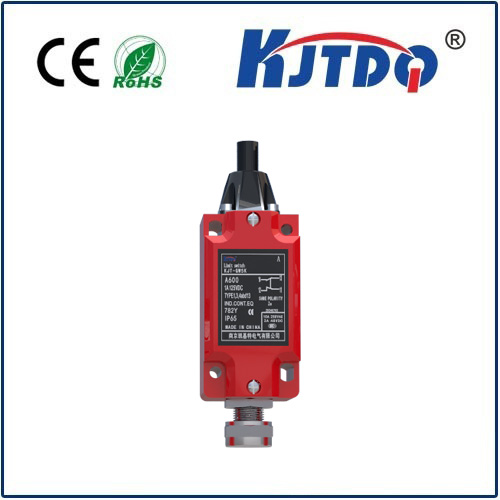
The fundamental working principle of an end limit switch is straightforward yet robust. Typically, it consists of an actuator mechanism—such as a lever, roller, or plunger—linked to a set of electrical contacts. When an external machine component or moving part makes physical contact with the actuator, it triggers the internal contacts to change state. This transition either opens or closes an electrical circuit, sending a signal to the control system, such as a programmable logic controller (PLC), to initiate a specific action. Common actions include stopping a motor, reversing direction, activating a warning alarm, or sequencing the next step in an automated process. This simple electromechanical operation makes it a cornerstone in safety interlocks and motion control.
Various types of end limit switches are deployed to suit different environmental conditions and application demands. Basic mechanical switches are cost-effective and suitable for general-purpose use in clean, low-impact environments. For harsh settings involving dust, moisture, or corrosive substances, sealed or waterproof limit switches with high ingress protection (IP) ratings are essential. In scenarios requiring non-contact detection or high-speed operation, proximity sensors might be used, but traditional mechanical limit switches remain favored for their tactile feedback, durability, and direct physical confirmation of position. Industries such as manufacturing, material handling, packaging, and automotive assembly rely heavily on these devices to safeguard personnel and optimize production line efficiency.
Selecting the appropriate end limit switch involves several key considerations. The operating environment dictates the required housing material and protection level; stainless steel or thermoplastic housings may be necessary for corrosive or washdown areas. Electrical specifications, including voltage, current rating, and contact configuration (normally open or normally closed), must match the control circuit requirements. The actuator style is chosen based on the direction and nature of the mechanical interaction—roller levers are ideal for sideways cam movements, while plunger types suit direct linear pushes. Additionally, mechanical life expectancy, expressed in millions of cycles, should align with the application’s duty cycle to ensure longevity and reduce maintenance downtime.
Proper installation and regular maintenance are vital for sustained performance. Mounting must be secure and precise to ensure consistent actuator engagement. Adjustable mounting brackets or brackets with slotted holes can facilitate fine-tuning during setup. Periodic inspection for wear on the actuator mechanism, checking for loose connections, and verifying electrical continuity help prevent unexpected failures. In high-vibration environments, using switches with robust construction and locking fasteners can mitigate loosening. Keeping the actuator and contact area free from debris and lubricating moving parts as per manufacturer guidelines also extends service life.
The integration of end limit switches with modern industrial control systems enhances overall functionality. When connected to a PLC, these switches provide critical input for logic-based decision-making, enabling complex automated sequences. For instance, in a conveyor system, limit switches can detect when a product reaches the end of a line, triggering a diverter arm or stopping the belt. In robotics, they define safe travel boundaries for articulated arms. This integration not only prevents mechanical damage but also contributes to energy savings by ensuring machines operate only within necessary parameters, reducing unnecessary motion and wear.
Despite the advent of advanced sensor technologies, the end limit switch remains indispensable due to its simplicity, reliability, and cost-effectiveness. It offers a tangible safety backup in emergency stop circuits and provides fail-safe positioning data that is less susceptible to electrical noise compared to some electronic sensors. For engineers and maintenance teams, understanding its selection, application, and upkeep is fundamental to designing and maintaining safe, efficient, and productive industrial operations. As automation evolves, these devices continue to be a trusted component in the foundational layer of machine control and protection.