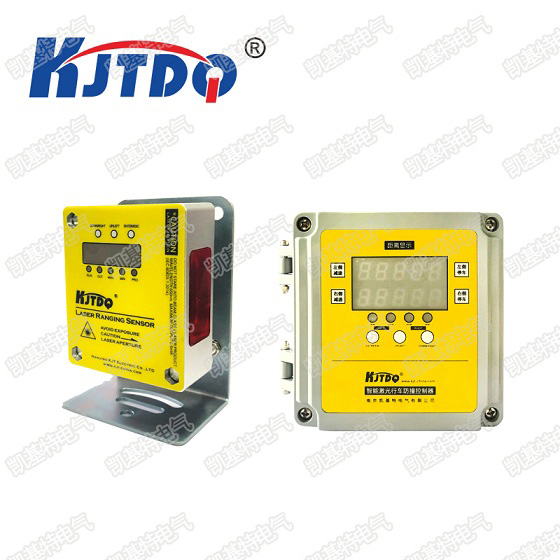
In the realm of precision engineering and industrial automation, the quest for accurate, reliable, and non-contact measurement is paramount. Among the various technologies available, the displacement laser sensor stands out as a cornerstone tool. This advanced instrument utilizes laser triangulation or time-of-flight principles to measure distance, position, thickness, or vibration with exceptional accuracy, often down to the sub-micron level. Its applications span across diverse sectors, from manufacturing and aerospace to research and development, making it an indispensable component in modern quality control and process monitoring systems.
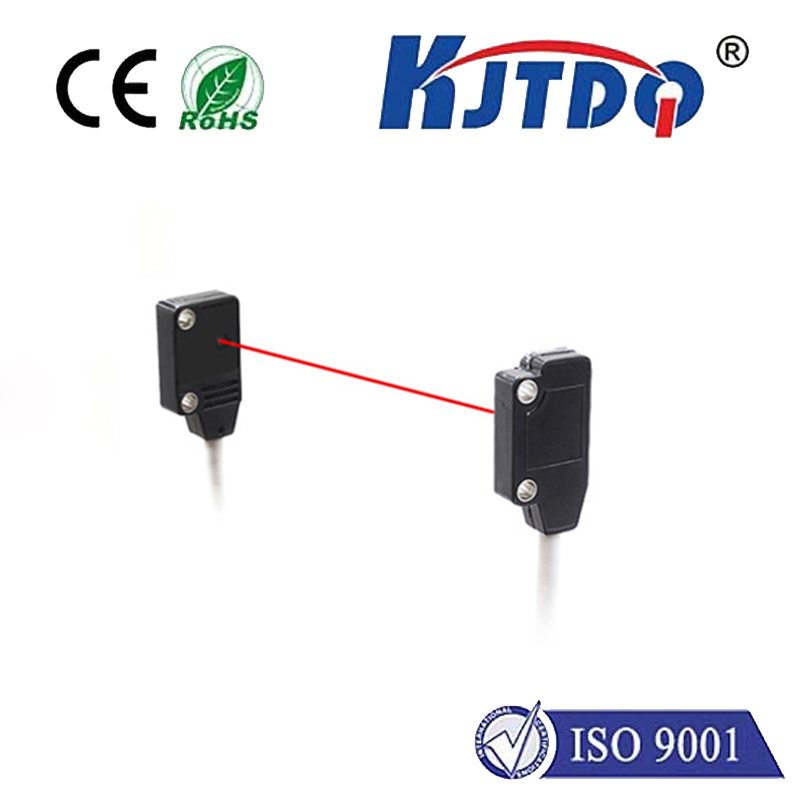
The core principle behind a typical displacement laser sensor involves projecting a focused laser beam onto the target surface. The reflected light is then captured by a receiving lens and focused onto a position-sensitive detector, such as a CCD or PSD. Any change in the distance to the target causes a shift in the position of the light spot on the detector. By precisely calculating this shift, the sensor determines the displacement with high resolution. This non-contact method eliminates the risk of surface damage or measurement errors caused by mechanical force, a significant advantage over traditional contact probes.
When selecting a displacement laser sensor for a specific application, several critical factors must be considered. Resolution and accuracy are primary concerns, defining the smallest detectable change and the closeness to the true value, respectively. The measuring range dictates the minimum and maximum distances over which the sensor can operate effectively. Furthermore, the target surface properties—such as color, material, texture, and reflectivity—profoundly influence performance. Modern sensors often incorporate advanced algorithms and automatic gain control to compensate for varying surface conditions, ensuring stable readings on shiny metals, dark absorptive surfaces, or even transparent materials.
The versatility of laser displacement sensors is demonstrated in countless real-world scenarios. In automotive manufacturing, they are used to inspect engine block dimensions, measure piston positions, and ensure the precise gap in spark plugs. In the electronics industry, they verify the coplanarity of chip leads and the thickness of wafer substrates. They also play a crucial role in monitoring vibration in rotating machinery, controlling robot arm positioning, and inspecting the profile of rolled steel or plastic films. The ability to provide high-speed, real-time data makes them ideal for integration into automated production lines for 100% inline inspection.
Integration of these sensors into larger systems is facilitated by various analog and digital output options, including voltage, current, USB, Ethernet, and fieldbus protocols like PROFINET or EtherCAT. This connectivity allows for seamless data acquisition and process control. Proper installation is key; factors like mounting stability, environmental vibrations, ambient light, and temperature must be managed to achieve optimal performance. Regular calibration against known standards is also essential to maintain long-term measurement integrity.
Looking ahead, the evolution of displacement laser sensor technology continues. Trends include miniaturization for integration into tighter spaces, enhanced robustness for harsh industrial environments with dust, oil, or extreme temperatures, and the development of multi-point or profile sensors that capture entire cross-sections in a single scan. The integration with AI and machine vision systems for smarter, adaptive inspection is another frontier. As industries push for greater precision and efficiency, the displacement laser sensor remains a critical enabler, transforming how we measure and interact with the physical world in manufacturing and beyond. Its role in driving quality, reducing waste, and enabling complex automation is undeniable, solidifying its status as a fundamental tool for engineers and technicians worldwide.