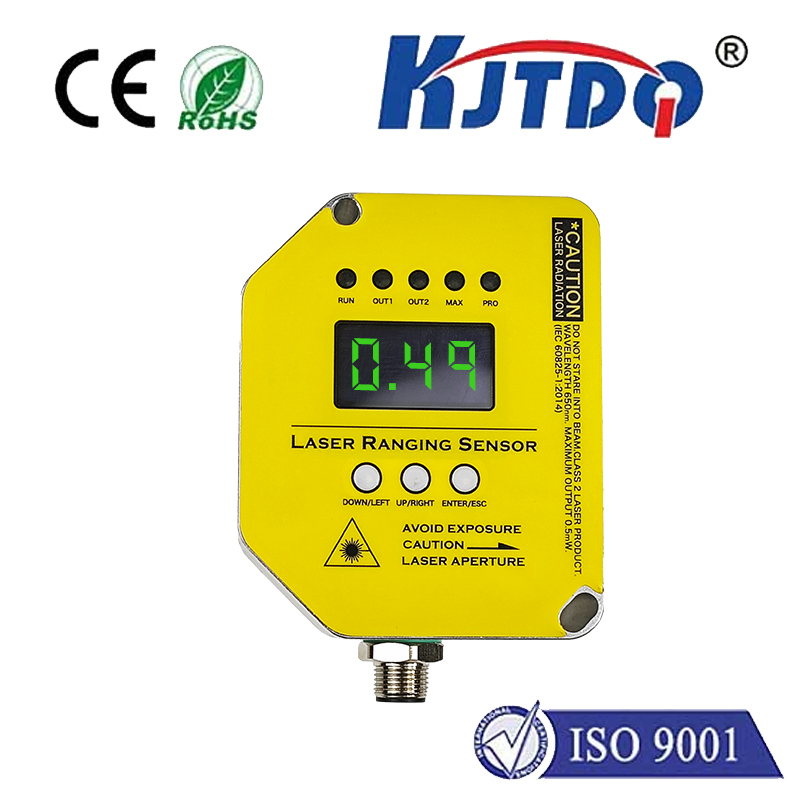
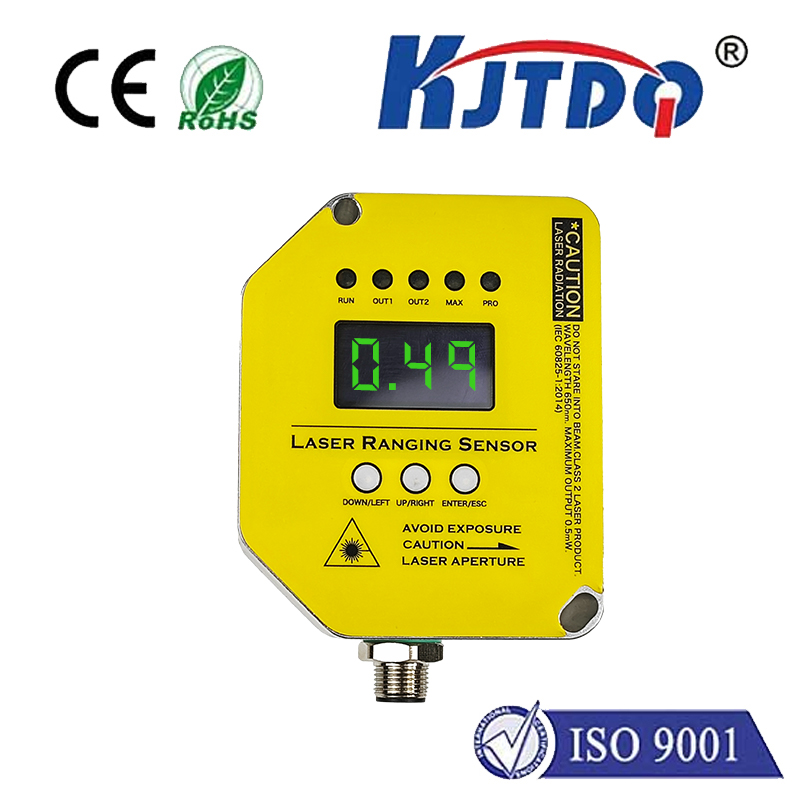
In the rapidly evolving landscape of industrial automation, robotics, and smart infrastructure, the demand for reliable and precise distance measurement has never been greater. The KJTDQ Laser Ranging Sensor, engineered for a robust 100-meter measurement range, emerges as a pivotal tool for professionals seeking accuracy, durability, and seamless integration. This technology transcends traditional measurement limitations, offering a non-contact solution that delivers consistent performance even in challenging environmental conditions.
At the core of the KJTDQ sensor is advanced time-of-flight (ToF) laser technology. It operates by emitting a modulated laser beam towards a target. The sensor's sophisticated photodetector then captures the reflected light. By calculating the precise time difference between the emission and reception of the laser pulse, the sensor determines the distance with exceptional accuracy. This principle allows for measurements up to 100 meters with minimal error margins, often within a few millimeters, depending on the specific model and target surface. This high level of precision is critical for applications where safety and operational efficiency are paramount.
The versatility of the 100-meter laser rangefinder is one of its most compelling attributes. In construction and civil engineering, it facilitates accurate land surveying, volume calculations for stockpiles, and monitoring structural deformations over long distances. For logistics and warehouse automation, these sensors enable precise inventory management, automated guided vehicle (AGV) navigation, and pallet positioning, streamlining operations and reducing manual errors. In the realm of security and perimeter protection, they serve as an invisible tripwire, detecting intrusions across vast areas with high reliability. Furthermore, in forestry and agriculture, they assist in terrain mapping and growth monitoring, contributing to sustainable resource management.
Durability and adaptability are engineered into every KJTDQ Laser Ranging Sensor. Designed to meet IP67 or higher ingress protection ratings, these units are resistant to dust, water jets, and can withstand significant vibrations and temperature fluctuations commonly found in industrial settings. The robust housing ensures long-term operation without degradation in performance. Integration is straightforward, thanks to multiple output options such as analog voltage (0-10V/4-20mA), RS485, Modbus, or Ethernet interfaces. This allows for easy connectivity with Programmable Logic Controllers (PLCs), industrial PCs, and broader data acquisition systems, making them a future-proof component in any IoT or Industry 4.0 framework.
Beyond raw specifications, the true value of this sensor lies in its ability to solve real-world problems. It eliminates the need for physical contact with targets, preventing wear and tear and enabling measurement of hazardous, moving, or inaccessible objects. Its fast response time supports dynamic applications like robotic arm positioning or vehicle speed detection. The laser's narrow beam allows for precise targeting, even in cluttered environments, reducing the chance of erroneous readings from background objects.
Selecting the right laser ranging sensor requires careful consideration of several factors alongside the 100-meter range. Key parameters include measurement resolution, update frequency, laser safety class (typically Class 1 or Class 2, which are eye-safe), the minimum measuring distance, and the type of target surface. For highly reflective or dark, absorbent surfaces, some sensors offer automatic gain control or specific algorithms to compensate and maintain accuracy. The KJTDQ series provides various models to cater to these diverse needs, ensuring there is an optimal solution for every specific application scenario.
In conclusion, the KJTDQ Laser Ranging Sensor with a 100-meter capability is more than just a measuring device; it is an enabler of innovation, precision, and automation. By providing trustworthy, long-distance, non-contact measurement data, it empowers engineers, system integrators, and project managers to build smarter, safer, and more efficient systems. As industries continue to push the boundaries of what's possible, tools like this laser sensor will remain indispensable for turning complex challenges into measurable, manageable tasks, driving progress and operational excellence across countless fields.