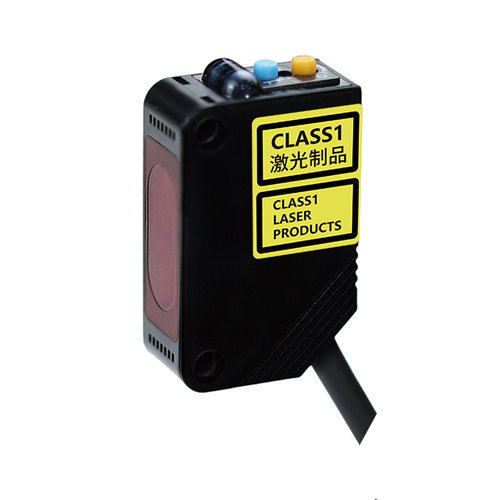
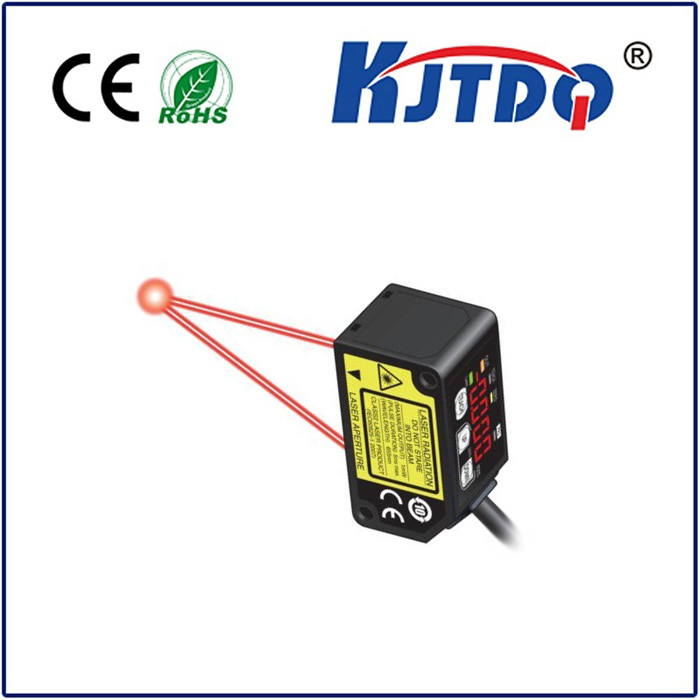
In today's fast-paced industrial and construction environments, accuracy and speed are non-negotiable. The laser measuring sensor has emerged as a transformative tool, redefining how professionals approach distance measurement, alignment, and quality control. Unlike traditional tape measures or ultrasonic sensors, laser measuring sensors utilize focused light beams to deliver pinpoint accuracy over both short and long ranges. This technology minimizes human error, enhances productivity, and integrates seamlessly with digital systems for real-time data analysis.
The core principle behind a laser measuring sensor is time-of-flight or phase-shift measurement. The device emits a laser pulse towards a target, and a high-speed receiver detects the reflected light. By calculating the time difference or phase shift between the emitted and returned signals, the sensor determines the distance with remarkable precision, often within millimeters. This method remains reliable even in challenging conditions, such as low light or environments with varying temperatures.
Industries leveraging laser measuring sensors span from manufacturing and automotive to archaeology and interior design. On a factory floor, these sensors are integral to robotic guidance systems, ensuring automated arms place components with exactitude. In construction, professionals use them for quick site surveys, verifying room dimensions, and aligning structural elements without physical contact, which is crucial for safety and efficiency. The logistics sector employs them for warehouse inventory management, precisely measuring package dimensions to optimize storage space and shipping costs.
Key advantages of adopting laser measuring sensors include their non-contact nature, which prevents damage to delicate surfaces, and their ability to measure moving objects. Modern sensors often come equipped with Bluetooth or Wi-Fi, allowing measurements to be instantly transferred to smartphones, tablets, or cloud-based platforms. This connectivity supports Building Information Modeling (BIM) and other digital workflows, facilitating better project management and documentation.
When selecting a laser measuring sensor, considerations such as measurement range, accuracy class, environmental protection rating (like IP54 for dust and water resistance), and data output options are paramount. For outdoor use, models with robust housing and visible laser beams in bright light are essential. Additionally, features like continuous measurement, area calculation, and memory storage can significantly boost on-site productivity.
Despite their sophistication, laser measuring sensors are designed for user-friendly operation. Many models feature intuitive interfaces with backlit displays, simple button controls, and companion mobile apps that provide advanced functionalities. Regular calibration and proper handling, such as avoiding direct exposure to extreme sunlight or impacts, ensure long-term reliability and consistent performance.
As technology advances, future iterations of laser measuring sensors are expected to incorporate artificial intelligence for predictive analytics and enhanced automation. Integration with augmented reality (AR) devices could allow measurements to be superimposed directly onto a user's field of view, further streamlining complex tasks. The ongoing miniaturization and cost reduction of components will likely make high-precision laser measurement accessible to even more applications and smaller businesses.
In conclusion, the laser measuring sensor stands as a cornerstone of modern measurement technology, offering unparalleled precision, efficiency, and versatility. Its adoption drives quality improvements, reduces operational costs, and supports innovation across diverse fields. By understanding its capabilities and selecting the right model for specific needs, professionals can unlock new levels of performance and accuracy in their daily work.