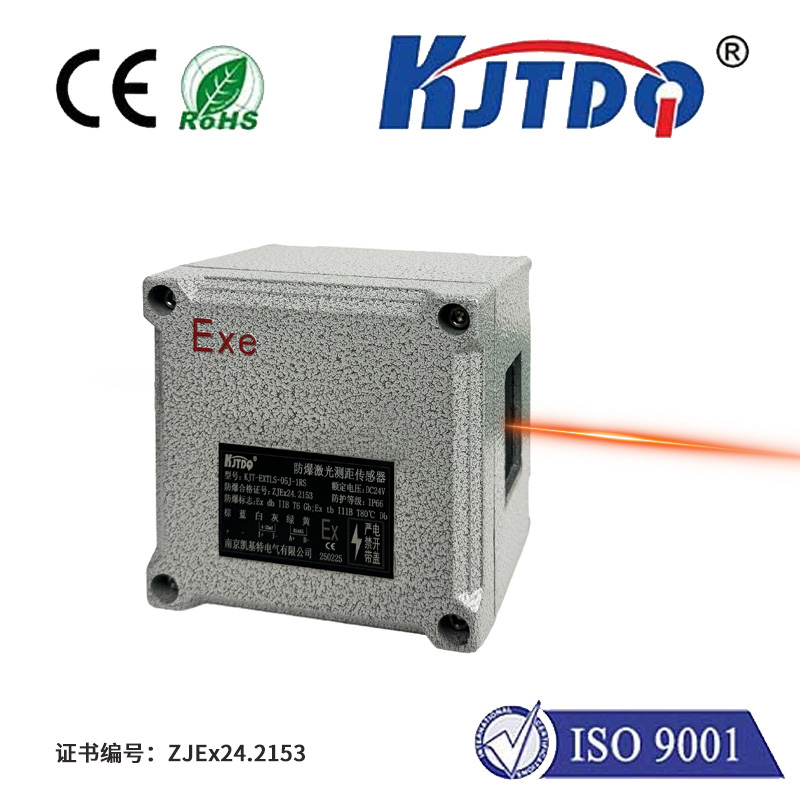
In the realm of precision measurement, the convergence of CMOS technology and laser sensing has catalyzed a significant evolution. The CMOS laser sensor for distance measurement represents a leap forward, offering a blend of high accuracy, speed, and integration that traditional methods struggle to match. Unlike conventional laser triangulation or time-of-flight sensors that may rely on more complex or discrete components, this technology embeds the photodetector array and signal processing circuitry on a single CMOS chip. This integration is pivotal.
The core principle involves emitting a laser beam towards a target. The reflected light is then captured by a CMOS imaging sensor. The position of the laser spot on the pixel array shifts precisely in correlation with the target's distance. Sophisticated algorithms embedded within the sensor's processor analyze this shift in real-time to calculate the exact distance. This method, often a refined form of laser triangulation, benefits immensely from the CMOS architecture. The CMOS sensor provides high frame rates, excellent sensitivity, and on-chip functionality that reduces noise and external component count.
The advantages of using a CMOS-based laser distance sensor are manifold. First is its remarkable precision, capable of micron-level resolution in controlled environments, making it indispensable for industrial automation, robotics, and quality control on production lines. Second, the inherent speed of CMOS technology allows for high-frequency measurements, enabling real-time feedback for dynamic systems. Third, the high level of integration leads to more compact, robust, and cost-effective sensor modules. They are less prone to misalignment and easier to incorporate into space-constrained designs, from consumer electronics to advanced driver-assistance systems (ADAS) in vehicles.
Furthermore, the power efficiency of CMOS chips translates to lower operational power consumption, a critical factor for portable and battery-operated devices. Reliability is enhanced as the monolithic design minimizes failure points compared to systems with separate detectors and processors. Applications span a diverse spectrum: from precise focus aiding in smartphone cameras and lidar modules for autonomous navigation to monitoring wafer alignment in semiconductor fabrication and ensuring proper gap tolerances in automated assembly.
Deployment, however, requires careful consideration. Environmental factors like ambient light, surface reflectivity, and transparency of the target material can influence performance. Highly reflective or absorbent surfaces may require sensor calibration or specific laser wavelengths. Manufacturers address these challenges by incorporating adaptive algorithms, optical filters, and multi-echo evaluation techniques to ensure stable readings across various conditions.
The development trajectory for CMOS laser distance sensors points towards even greater miniaturization, enhanced algorithmic intelligence for handling complex surfaces, and lower costs driven by economies of scale in CMOS production. Integration with other sensing modalities, such as RGB imaging or inertial measurement units, is also emerging, creating multi-functional perception systems. This technology is not merely an incremental improvement but a foundational enabler for the next generation of smart machines and interactive devices, where accurate, fast, and reliable spatial awareness is paramount. Its role in facilitating automation and precision across industries continues to expand, solidifying its position as a key component in modern electro-optical systems.