In the rapidly evolving landscape of industrial automation, robotics, and consumer electronics, precise distance measurement is a cornerstone of functionality. Among the various technologies enabling this, CMOS laser sensor distance measurement stands out for its unique blend of accuracy, speed, and cost-effectiveness. This technology, often abbreviated in contexts like KJTDQ, represents a significant leap from traditional methods, offering solutions that are both sophisticated and accessible.
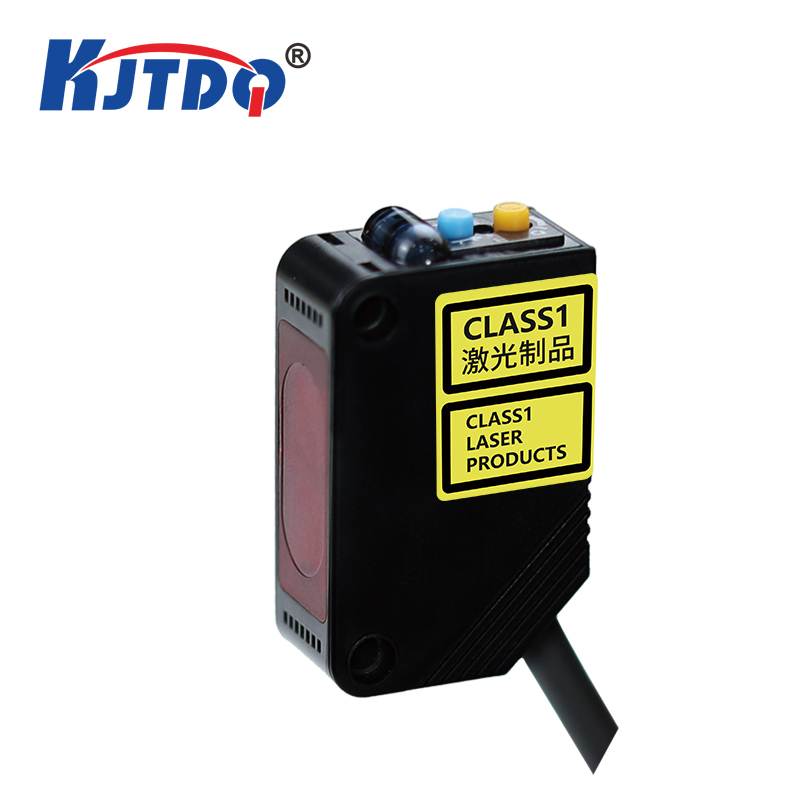
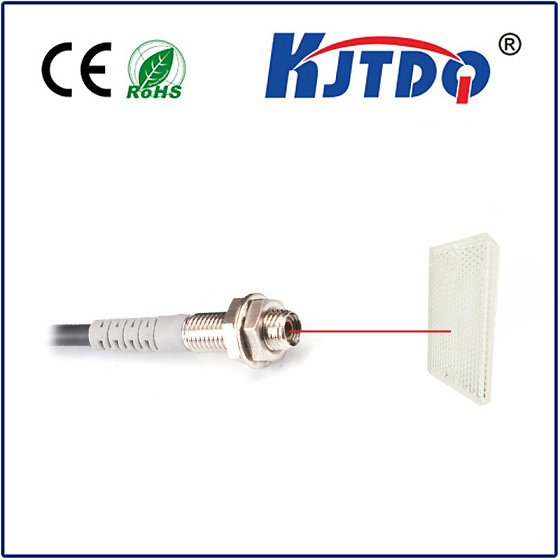
At its core, a CMOS (Complementary Metal-Oxide-Semiconductor) laser sensor operates by emitting a laser beam towards a target. The beam reflects off the surface and returns to a CMOS image sensor. Unlike simple photodiodes, the CMOS sensor is an array of pixels. By analyzing the position where the reflected laser spot lands on this pixel array, the sensor can calculate the distance to the target with high precision through triangulation or time-of-flight principles, depending on the design. This marriage of laser emission and CMOS reception creates a system that is remarkably robust against ambient light interference and capable of high-speed data acquisition.
The advantages of using CMOS laser sensors for distance measurement are multifaceted. First and foremost is precision. These sensors can achieve sub-millimeter accuracy, which is critical in applications like semiconductor wafer alignment, precision assembly, and dimensional inspection. Speed is another key benefit. The CMOS sensor can capture and process the laser data at frame rates high enough for real-time monitoring and control on fast-moving production lines or in autonomous navigation systems. Furthermore, the integration of the sensor element into a CMOS chip allows for miniaturization, lower power consumption, and reduced overall system cost compared to more complex setups like scanning LiDAR. This makes the technology viable not only for heavy industry but also for integration into smartphones (for autofocus and AR applications), drones, and service robots.
Typical applications span a wide spectrum. In industrial settings, they are used for object detection, level monitoring, robot guidance, and thickness measurement. In the consumer realm, they enable features like gesture recognition, face ID depth mapping, and improved photographic capabilities. The automotive industry leverages them for parking assistance and initial steps in driver-assist systems. The versatility of the KJTDQ-type CMOS laser sensors is a testament to their fundamental engineering strengths.
When implementing this technology, several practical considerations come into play. The effective range is a primary factor, varying from a few centimeters to several meters based on laser power and sensor sensitivity. The reflectivity and color of the target surface can influence performance; highly reflective or dark, absorbent surfaces may require sensor calibration or specialized models. Environmental factors such as dust, fog, or extreme temperatures must also be accounted for in the design of the housing and signal processing algorithms. Choosing the right sensor involves balancing these parameters with the specific needs of the application.
Looking ahead, the future of CMOS laser sensor distance technology is intertwined with advancements in semiconductor fabrication and computational algorithms. Trends point towards even smaller form factors, higher resolutions, and the integration of multi-sensor data fusion—combining distance data with 2D visual information from the same CMOS platform. This evolution will further solidify the role of these sensors as indispensable components in the smart, automated systems of tomorrow, continuing to push the boundaries of what is measurable and controllable in both virtual and physical spaces.