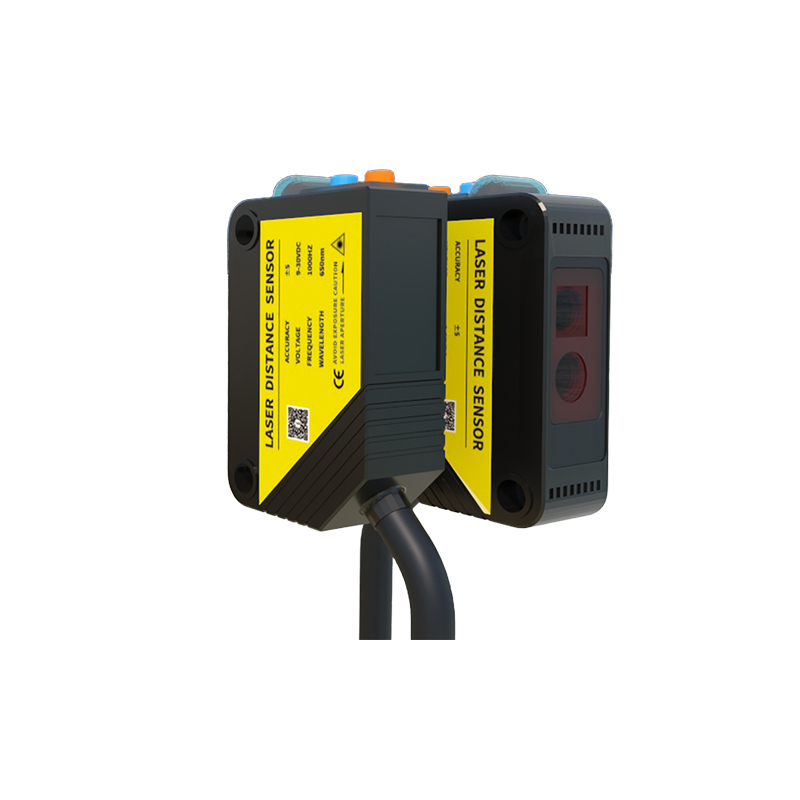
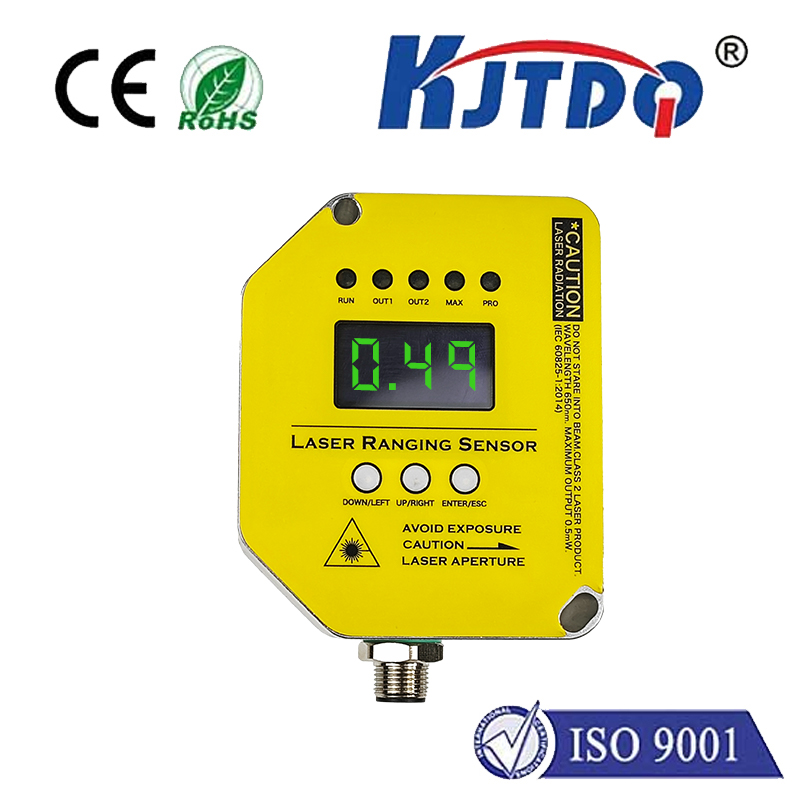
In today's fast-paced world of automation, robotics, and smart technology, the demand for accurate, reliable, and instantaneous distance measurement has never been greater. At the heart of this capability lies a critical component: the laser range finder sensor. This sophisticated device has evolved from specialized industrial tools to become integral in a vast array of applications, from consumer electronics to advanced scientific research. Understanding how it works, its various types, and its practical uses is key to leveraging its full potential.
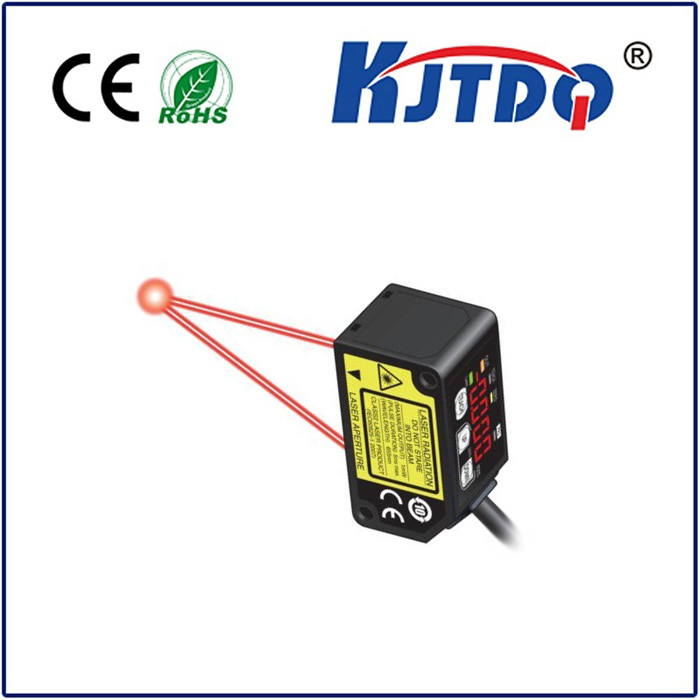
Fundamentally, a laser range finder sensor operates on the principle of Time-of-Flight (ToF). It emits a focused pulse of laser light towards a target. The sensor then precisely measures the time it takes for that light pulse to reflect off the target and return to the sensor's receiver. Since the speed of light is a known constant, the sensor's internal processor can calculate the distance to the target with remarkable accuracy using a simple formula: Distance = (Speed of Light × Time of Flight) / 2. This method allows for non-contact measurement, which is crucial for measuring moving objects, hazardous materials, or delicate surfaces without risk of damage or contamination.
There are several primary types of laser range finder sensors, each suited for different ranges and precision requirements. Short-range sensors, often using phase-shift measurement for higher accuracy, are perfect for applications like industrial automation, where robotic arms need precise positioning, or in construction for interior layout and alignment. Medium-range sensors find their home in fields like forestry, agriculture for land surveying, and unmanned aerial vehicles (UAVs) for terrain mapping and obstacle avoidance. Long-range sensors, capable of measuring distances of several kilometers, are indispensable in topography, meteorology, and defense systems.
The advantages of using a laser range finder sensor are numerous. The most prominent is its exceptional accuracy and precision, often down to the millimeter or even sub-millimeter level. They offer high-speed measurement, providing thousands of data points per second, which is vital for dynamic applications like autonomous vehicle navigation or real-time 3D scanning. Their non-contact nature ensures safety and prevents wear on both the sensor and the target. Furthermore, modern sensors are becoming increasingly compact, energy-efficient, and robust, able to function in challenging environmental conditions involving dust, vibration, or variable lighting.
The practical applications are virtually limitless. In the industrial sector, they are used for level monitoring in silos, dimensional inspection of manufactured parts, and guiding automated guided vehicles (AGVs) in warehouses. The construction and civil engineering industries rely on them for building information modeling (BIM), volume calculations, and monitoring structural deformations. Consumer electronics have embraced miniature versions for smartphone camera autofocus and augmented reality experiences. Perhaps most visibly, they are the core enabling technology for Light Detection and Ranging (LiDAR) systems, which are essential for the development of self-driving cars, creating high-definition 3D maps of the environment in real-time.
When selecting a laser range finder sensor, several key specifications must be considered. The measuring range defines its operational limits. Accuracy and resolution determine how precise the readings are. The response time or measurement rate is critical for high-speed processes. Environmental ratings like IP (Ingress Protection) codes indicate resilience to dust and water. Finally, the output interface (e.g., analog voltage, digital serial communication like RS-485 or Ethernet) must be compatible with the existing control system.
As technology advances, we are witnessing trends towards even greater miniaturization, reduced power consumption, and enhanced data fusion. Sensors are now being integrated with inertial measurement units (IMUs) and cameras to provide richer contextual data. The cost of these sensors continues to decrease, making high-precision measurement accessible to more industries and hobbyist projects. The future points towards smarter, networked sensors that can not only measure distance but also interpret the point cloud data to identify objects and make autonomous decisions.
In conclusion, the laser range finder sensor is far more than a simple measuring tool; it is a foundational technology driving innovation across multiple domains. Its ability to deliver fast, accurate, and reliable distance data empowers machines to perceive and interact with the physical world intelligently. Whether optimizing a manufacturing line, enabling an autonomous vehicle to navigate safely, or bringing new features to consumer gadgets, the laser range finder sensor remains a pivotal component in the ongoing technological revolution, quietly shaping a more automated and precise future.