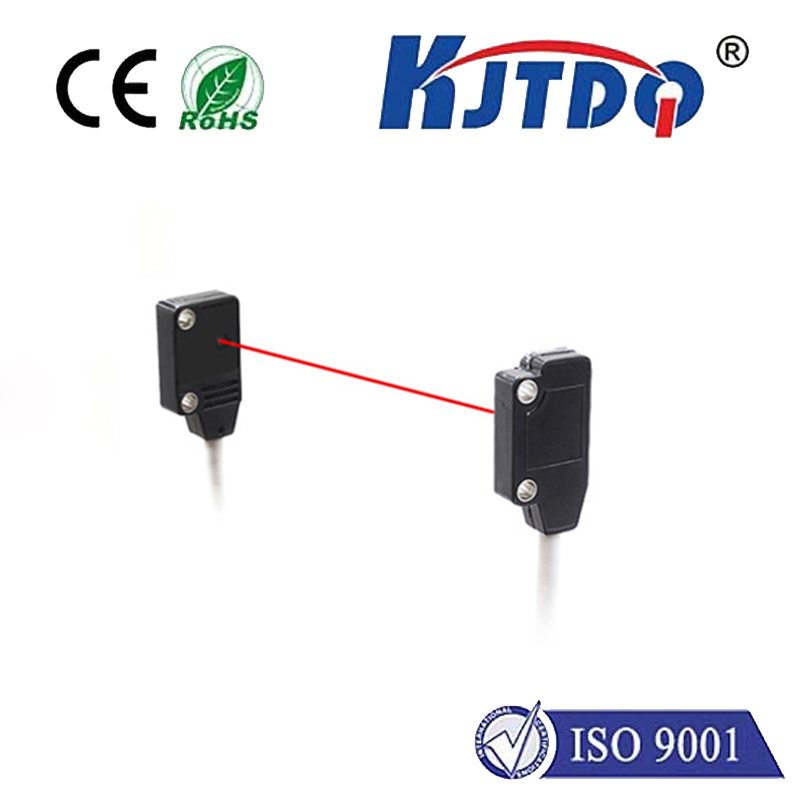
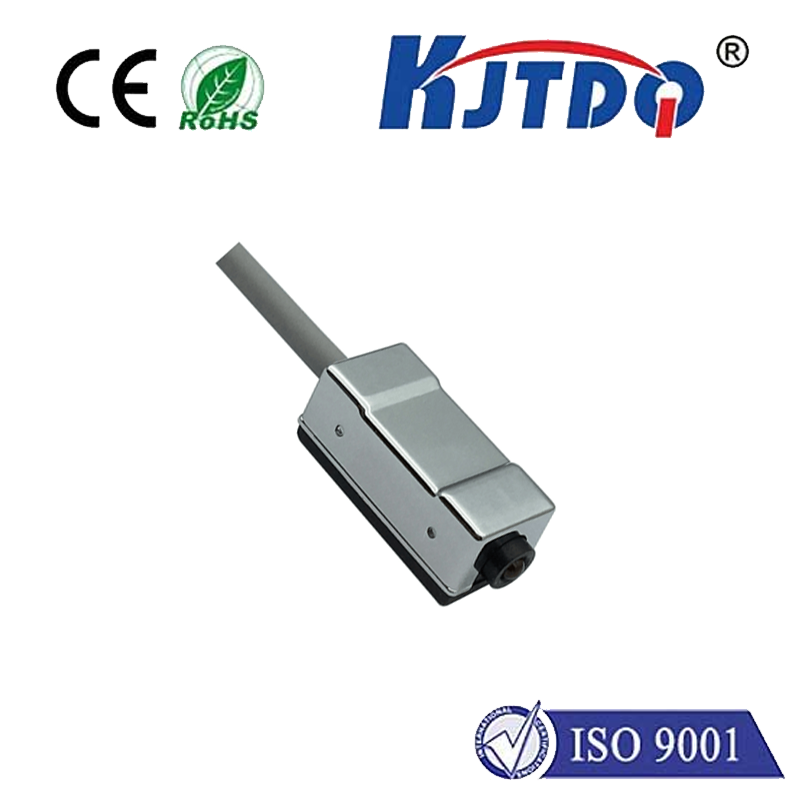
In the realm of precision measurement and sensing, CMOS laser sensor distance technology stands as a pivotal innovation, driving advancements across industries from manufacturing automation to consumer electronics. Unlike traditional measurement methods that rely on mechanical contact or basic optical triangulation, CMOS (Complementary Metal-Oxide-Semiconductor) laser sensors integrate laser emission with high-sensitivity CMOS imaging arrays. This fusion enables non-contact, high-speed, and highly accurate distance detection, even in challenging environments with variable lighting or reflective surfaces. The core principle involves emitting a laser beam toward a target; the reflected light is then captured by a CMOS sensor. By analyzing the position or phase shift of the laser spot on the sensor array, the system calculates the distance with micron-level precision. This process, often enhanced by algorithms for noise reduction and signal processing, ensures reliable performance in real-time applications.
One of the key advantages of CMOS laser sensors is their versatility. They are employed in robotics for obstacle avoidance and navigation, where precise distance data allows machines to interact safely with their surroundings. In industrial settings, these sensors facilitate quality control by measuring dimensions of components on assembly lines, detecting minute defects that human eyes might miss. Additionally, the automotive sector leverages them for advanced driver-assistance systems (ADAS), such as adaptive cruise control and parking assistance, enhancing vehicle safety through accurate object detection. The compact size and low power consumption of CMOS technology further make these sensors ideal for portable devices, including smartphones with autofocus capabilities or drones requiring stable altitude maintenance.
Despite their benefits, implementing CMOS laser sensor distance systems requires careful consideration of factors like environmental interference. Dust, fog, or extreme temperatures can affect laser propagation, but modern designs incorporate protective housings and calibration mechanisms to mitigate such issues. Moreover, the integration of artificial intelligence and machine learning has expanded their functionality, enabling predictive maintenance and adaptive sensing in smart factories. As the demand for automation and IoT (Internet of Things) grows, CMOS laser sensors are evolving to offer higher resolution, faster response times, and enhanced connectivity. Industry leaders are continuously refining these technologies to reduce costs while improving accuracy, making them accessible for small-scale applications like home security systems or medical diagnostics.
Looking ahead, the convergence of CMOS laser sensors with 5G networks and edge computing promises to unlock new possibilities in remote monitoring and autonomous operations. For instance, in agriculture, they could be used for crop height mapping to optimize irrigation, while in logistics, they might streamline inventory management through precise spatial scanning. The ongoing research focuses on miniaturization and energy efficiency, aiming to extend battery life in wireless sensor networks. By addressing challenges like multi-target detection and signal cross-talk, future iterations will likely achieve even greater reliability. Ultimately, CMOS laser sensor distance technology is not just a tool for measurement but a cornerstone of the digital transformation, empowering smarter, more efficient systems worldwide. Its adoption underscores a shift toward data-driven decision-making, where real-time distance insights fuel innovation and operational excellence.