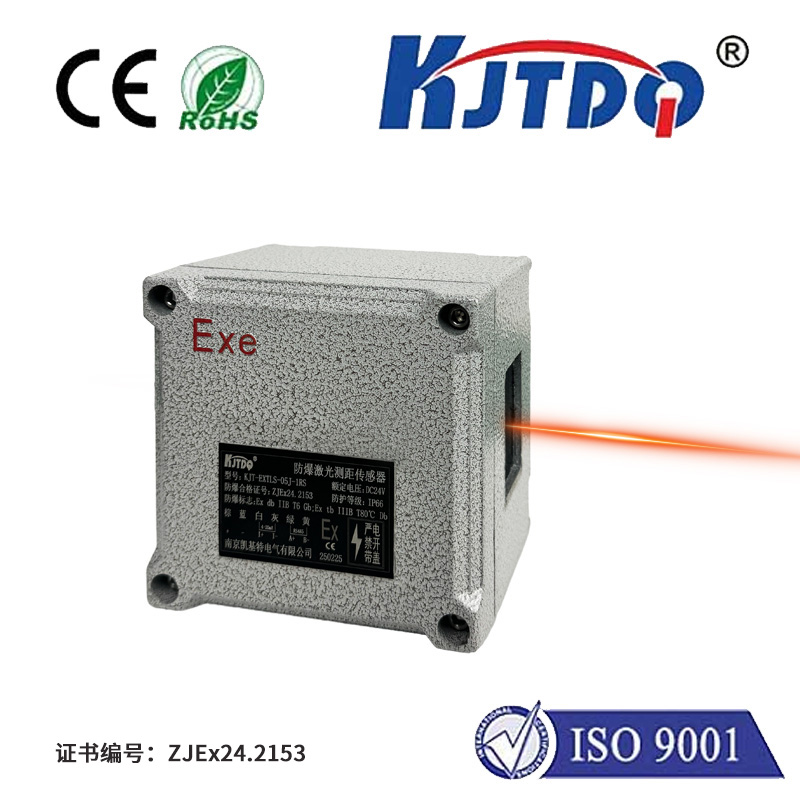
In the world of industrial automation, construction, and surveying, the ability to measure long distances with pinpoint accuracy is not just a convenience—it's a necessity. Enter the Laser Distance Sensor with a 200-meter range, a technological marvel that has revolutionized how professionals capture data. This device transcends the limitations of traditional measuring tapes and rudimentary optical tools, offering a blend of speed, reliability, and precision that was once the domain of specialized, high-cost equipment. At its core, this sensor operates on the time-of-flight principle. It emits a focused laser pulse towards a target, calculates the time it takes for the pulse to reflect back, and uses the constant speed of light to compute the exact distance. This process, completed in milliseconds, eliminates human error and delivers consistent, repeatable results.
The 200-meter capability is a game-changer for specific applications. In large-scale construction site planning, project managers can quickly map out foundations, verify grades, and ensure structural alignments over vast areas without physically traversing the terrain. Surveyors benefit immensely, using it for topographic surveys, volume calculations of stockpiles, and monitoring structural deformations on bridges or dams from a safe, stationary position. In forestry and agriculture, it aids in measuring tree heights, canopy density, and plot boundaries with remarkable efficiency. The industrial sector leverages these sensors for positioning automated guided vehicles (AGVs) in massive warehouses, controlling crane operations, and ensuring precise alignment in assembly lines over long spans.
When selecting a 200m laser distance sensor, several critical specifications demand attention. Accuracy and resolution are paramount; high-end models offer millimeter-level accuracy even at maximum range. The laser class (typically Class 2) is crucial for safety, ensuring eye-safe operation in most environments. Durability is another key factor. Look for sensors with high IP (Ingress Protection) ratings like IP65 or IP67, which guarantee resistance to dust and water jets, making them suitable for harsh outdoor or factory conditions. The design of the housing and the quality of optical components also directly impact performance in varying light conditions, from bright sunlight to low-light scenarios.
Modern 200m sensors are not isolated tools; they are integral components of the Internet of Things (IoT). They come equipped with various digital interfaces—RS232, RS485, Ethernet, or industrial fieldbuses like PROFINET and EtherCAT—allowing for seamless integration into larger control and data acquisition systems. This connectivity enables real-time data streaming to central servers for analysis, remote monitoring, and automated decision-making, paving the way for smarter infrastructure and Industry 4.0 applications.
Despite their robustness, optimal performance hinges on proper usage. The target surface plays a significant role; highly reflective or dark, absorbent surfaces can sometimes challenge the sensor. For difficult targets, using a dedicated reflector plate ensures a strong, consistent return signal. Regular lens cleaning and periodic calibration according to the manufacturer's schedule are essential maintenance practices to preserve long-term accuracy. Furthermore, understanding the sensor's beam divergence is important, as the laser spot size increases with distance, which can affect measurements on very small targets.
The evolution of laser ranging technology continues. Future iterations of the 200m laser distance sensor are expected to incorporate enhanced data fusion, combining distance data with inertial measurement units (IMUs) for orientation, or integrating camera vision for target identification. These advancements will further automate complex measurement tasks. For any professional tasked with large-scale spatial measurement, investing in a reliable 200-meter laser distance sensor is an investment in unparalleled efficiency, safety, and data integrity. It transforms a fundamental task into a strategic advantage, ensuring projects are built on a foundation of exact measurement.