In today's fast-paced technological landscape, achieving accurate and reliable measurements is paramount across countless industries. From construction and manufacturing to robotics and smart home systems, the demand for precise spatial data is ever-growing. This is where the laser measure sensor module emerges as a transformative tool, offering a compact, efficient, and highly accurate solution for distance measurement and object detection.
Unlike traditional measuring tapes or ultrasonic sensors, a laser measure sensor module operates on the principle of time-of-flight or phase-shift measurement using a focused laser beam. The module emits a laser pulse towards a target. By calculating the time it takes for the pulse to reflect back to the sensor, or by analyzing the phase shift of a modulated laser beam, the module can determine the distance to the target with remarkable precision, often within millimeters. This non-contact method eliminates physical wear and tear, allows for measurements of hard-to-reach objects, and provides significantly higher accuracy and resolution over longer distances compared to many alternative technologies.
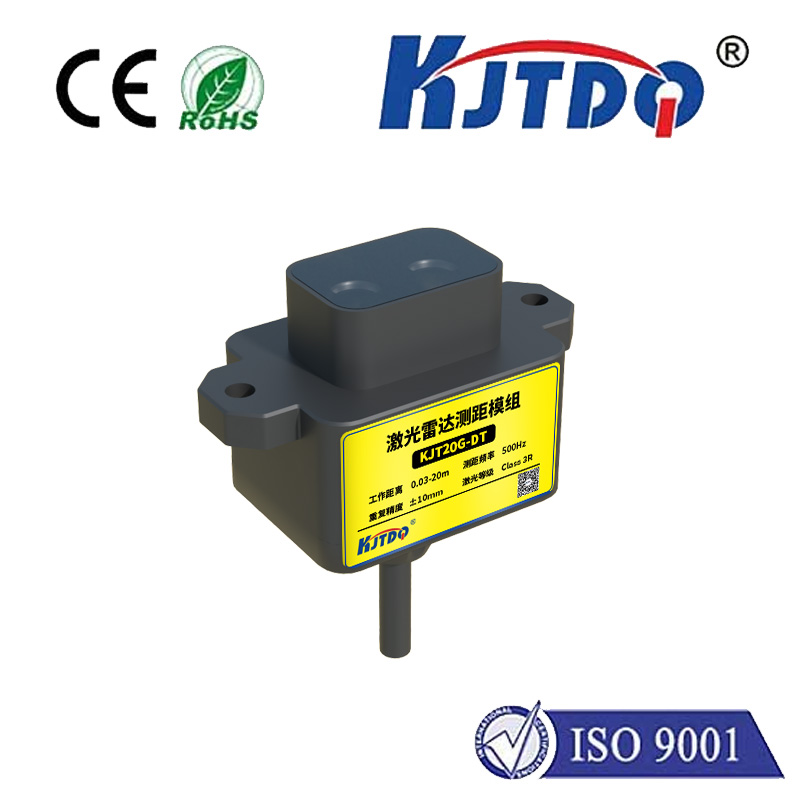
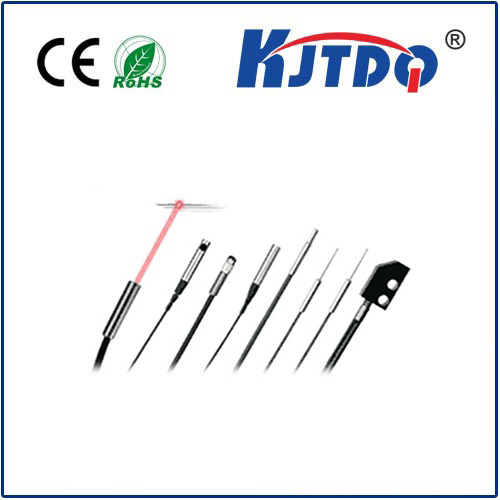
The core components of a typical laser distance sensor module include a laser diode for emission, a photodetector or sensor to capture the reflected light, and sophisticated onboard processing circuitry. Modern modules are highly integrated, often coming in a single, compact package that is ready for easy integration into larger systems. Key performance parameters to consider include measuring range, accuracy, measurement speed (update rate), laser class for safety, and environmental robustness against factors like ambient light and temperature fluctuations.
The applications for these versatile modules are vast and continually expanding. In the construction and architectural fields, they are integrated into handheld laser distance meters used for room dimensions, area, and volume calculations, streamlining surveying and planning. Within industrial automation and logistics, they are crucial for precise positioning of robotic arms, conveyor belt monitoring, pallet sizing, and warehouse inventory management systems. The automotive industry utilizes them in advanced driver-assistance systems (ADAS) for features like adaptive cruise control and collision avoidance. Furthermore, they are finding their way into drones for altitude control and obstacle detection, as well as into innovative consumer products and smart home devices for gesture recognition or liquid level sensing.
When selecting a laser measure sensor module for a project, several practical considerations come into play. First, clearly define the required measuring range and the necessary accuracy for your specific task. Consider the operating environment—will it be used indoors, outdoors, or in harsh industrial settings? The module's housing and ingress protection (IP) rating are critical for durability. The output interface is another key factor; most modules offer digital outputs like UART (serial), I2C, or analog voltage, which must be compatible with your host microcontroller or system. Power requirements and consumption are also essential, especially for battery-powered portable devices. Finally, always prioritize laser safety, ensuring the module complies with relevant laser class regulations (typically Class 2 or Class 1) to guarantee safe operation for users.
Integration is typically straightforward. Developers and engineers can connect the module to a platform like Arduino, Raspberry Pi, or an industrial PLC using the provided communication protocol. A wealth of libraries and example codes available from manufacturers and the open-source community can accelerate development, allowing teams to focus on application-specific logic rather than low-level driver development. This ease of integration significantly reduces time-to-market for new products incorporating precise measurement capabilities.
Looking ahead, the evolution of laser measure sensor modules points towards even smaller form factors, lower power consumption, higher accuracy, and enhanced intelligence. Future modules may incorporate more onboard processing for edge computing, filtering out environmental noise directly, or providing pre-processed data like presence detection. As the Internet of Things (IoT) and Industry 4.0 paradigms mature, these sensors will become even more ubiquitous, serving as the fundamental "eyes" for spatial awareness in an increasingly automated and data-driven world.
In conclusion, the laser measure sensor module is far more than a simple component; it is an enabler of precision and efficiency. By providing a reliable, non-contact method for obtaining accurate distance data, it empowers innovators and engineers to build smarter, safer, and more responsive systems across a breathtaking array of applications. Its continued development promises to unlock new possibilities in automation, safety, and data collection, solidifying its role as a cornerstone technology in modern engineering and design.