Проверка
Проверка
Проверка
Проверка
Проверка
Проверка
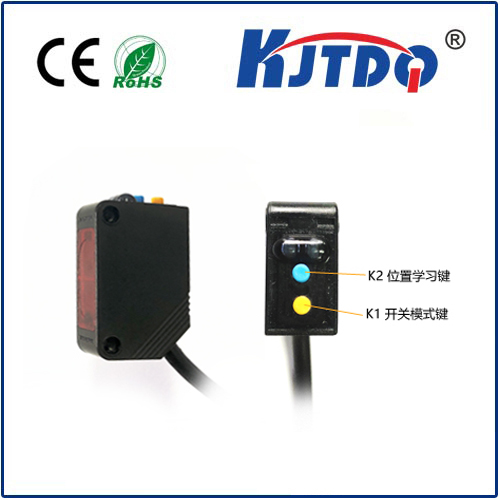
In the intricate world of automation and electronic control, the demand for reliable, non-contact sensing solutions is paramount. Among the diverse array of options available, the photoelectric 5mm sensor stands out as a remarkably versatile and compact component. This tiny yet powerful device has become a cornerstone in countless applications, from consumer electronics to complex industrial machinery. Its fundamental principle is elegantly simple: it emits a beam of light, typically from an LED, and detects changes in the received light intensity caused by the presence or absence of a target object.
The "5mm" designation refers to the sensor's compact cylindrical housing diameter, a form factor that allows for installation in extremely tight spaces where larger sensors simply cannot fit. This miniaturization does not come at the cost of performance. Modern 5mm photoelectric sensors are engineered to deliver surprising sensing ranges for their size, often capable of detecting objects several centimeters away. They are commonly available in three primary operational modes: through-beam, retro-reflective, and diffuse reflective. The through-beam type, with separate emitter and receiver units, offers the longest range and highest reliability. The retro-reflective version uses a single housing and a reflector, simplifying wiring while maintaining good performance. The diffuse reflective sensor, also a single-unit design, detects light reflected directly from the target itself, making it ideal for applications where installing a reflector is impractical.
The applications for a photoelectric 5mm sensor are virtually limitless. On factory assembly lines, they are the silent sentinels performing critical tasks such as object counting, jam detection, and precise positioning of miniature components. In the realm of consumer products, they enable features like paper detection in printers, liquid level sensing in appliances, and touchless interaction in various devices. The medical equipment industry relies on their precision for fluid monitoring and device positioning. Their immunity to non-metallic materials, fast response time, and long operational life—devoid of mechanical wear—make them superior to traditional mechanical limit switches in most scenarios.
When selecting a photoelectric 5mm sensor for a specific task, several key specifications must be considered. The sensing distance, light source type (often red or infrared LED), output configuration (NPN or PNP transistor, normally open or closed), and supply voltage compatibility are crucial parameters. Environmental factors pose significant challenges. Dust, fog, or ambient light can interfere with the light beam, potentially causing false triggers. Manufacturers address these issues through modulated light signals, which allow the sensor to distinguish its own emitted light from background interference, and through various ingress protection (IP) ratings for the housing.
Looking ahead, the evolution of the photoelectric 5mm sensor continues. Integration of advanced features like IO-Link communication is becoming more common, enabling smart sensors that can report diagnostic data and allow for remote parameter adjustment. The push for even lower power consumption aligns with the growth of battery-operated and IoT-connected devices. Furthermore, enhanced resistance to harsh industrial environments—including washdown conditions, extreme temperatures, and intense vibration—ensures their relevance in next-generation automation.
In conclusion, the photoelectric 5mm sensor is a testament to the principle that great capability can come in small packages. Its blend of compact design, reliable non-contact operation, and adaptability solidifies its role as an indispensable tool for engineers and designers. By providing a precise and efficient means of detection, this sensor acts as a fundamental enabler of automation, contributing to increased efficiency, safety, and intelligence in systems both large and small. Understanding its operating principles and selection criteria is essential for leveraging its full potential in any project requiring accurate and dependable object sensing.