Проверка
Проверка
Проверка
Проверка
Проверка
Проверка
In the world of industrial automation and control systems, photoelectric sensors stand as a cornerstone technology. These devices, often simply called photo sensors, use light to detect the presence, absence, or distance of objects. Their operation is elegantly simple yet profoundly effective. A photoelectric sensor typically consists of an emitter, which projects a light beam, and a receiver, which detects the light. When an object interrupts or reflects this beam, the sensor's output state changes, triggering a control action in a machine or process.
The versatility of photoelectric sensors stems from their three primary operating modes: through-beam, retro-reflective, and diffuse. Through-beam sensors, also known as opposed mode sensors, have separate emitter and receiver units placed opposite each other. An object is detected when it breaks the beam traveling from the emitter to the receiver. This mode offers the longest sensing range and highest reliability, as it is largely immune to the object's color, surface finish, or angle. They are ideal for precise detection over long distances or in challenging environments with dust or dirt.
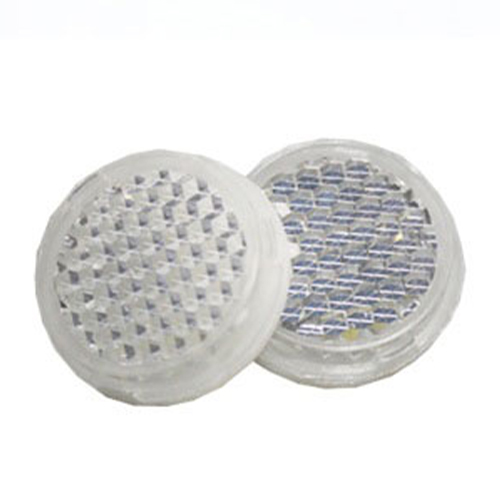
Retro-reflective sensors house both the emitter and receiver in a single housing. They rely on a reflector, typically a specialized tape or prism, placed opposite the sensor. The emitted light beam travels to the reflector and bounces back to the receiver. Detection occurs when an object interrupts this return path. This design simplifies installation compared to through-beam sensors while still offering a good sensing range. However, it's crucial to note that highly reflective or shiny objects might sometimes be mistaken for the reflector, a phenomenon known as "false reflection."
The third type, diffuse or proximity mode sensors, also integrate the emitter and receiver. They detect an object when the target itself reflects the emitted light back to the receiver. The sensing distance depends heavily on the object's size, color, and surface texture. Light-colored, matte surfaces reflect better than dark, shiny ones. Diffuse sensors are the most compact and easiest to install, as they require no separate reflector or receiver unit, making them perfect for close-range applications where space is limited.
Beyond these core types, advanced photoelectric sensors incorporate features like background suppression and foreground suppression. Background suppression sensors use triangulation to measure distance, allowing them to detect an object within a precise range while ignoring anything beyond a set background limit. This is invaluable for detecting objects on a conveyor belt while ignoring the belt itself or objects further behind. Foreground suppression performs the opposite function, ignoring close objects to detect those at a specific farther distance. Furthermore, the light source itself has evolved. While early sensors used incandescent bulbs, modern photoelectric sensors predominantly use Light Emitting Diodes (LEDs) for their long life, fast response times, and reliability. Common LED colors include red, which is versatile and visible; infrared, for discreet operation and immunity to ambient light; and specialized blue or green LEDs for detecting specific colors or materials.
The applications for photoelectric sensors are virtually limitless across manufacturing, packaging, material handling, and automotive industries. They count bottles on a production line, detect the position of a robotic arm, ensure a box flap is folded correctly, verify the presence of a label, and guard safety perimeters. Their non-contact nature means no physical wear from touching the target, leading to exceptional longevity and minimal maintenance. They can detect a wide variety of materials—metal, plastic, wood, glass, and liquids—unlike proximity sensors which are typically limited to metals.
Selecting the right photoelectric sensor requires careful consideration of several factors. First, define the application: What needs to be detected? At what distance? What are the environmental conditions (presence of dust, moisture, vibration, or ambient light)? The object's properties—size, color, material, and surface finish—directly influence the choice of sensor type and light source. For instance, detecting a clear glass bottle might require a polarized retro-reflective sensor or a through-beam sensor, as a standard diffuse sensor might struggle with the transparent material. The required sensing range is paramount; always choose a sensor with a rated sensing distance greater than your actual need to account for real-world variables like dirt accumulation on the lens or voltage fluctuations.
Electrical output is another key decision point. Sensors come with digital outputs like NPN or PNP (sourcing or sinking), which are standard for programmable logic controller (PLC) inputs, or analog outputs (4-20 mA or 0-10V) for reporting distance measurements. The housing material, typically metal or plastic, must withstand the industrial environment, with ratings like IP67 indicating protection against dust and temporary immersion in water. Finally, consider features like built-in timers, logic functions, or teach-in capabilities for easy setup.
In conclusion, photoelectric sensors are indispensable, flexible tools for modern automation. From the robust through-beam sensor guarding a warehouse door to the miniature diffuse sensor verifying a component on a circuit board, they provide the essential "eyes" for automated systems. Understanding the fundamental differences between their operating modes—through-beam, retro-reflective, and diffuse—along with advanced features like background suppression, empowers engineers and technicians to select the optimal sensor. This ensures reliable, maintenance-free operation, maximizing efficiency and productivity in countless applications. As technology advances, these sensors continue to become smarter, smaller, and more integrated, solidifying their role as a fundamental pillar of industrial sensing.