Проверка
Проверка
Проверка
Проверка
Проверка
Проверка
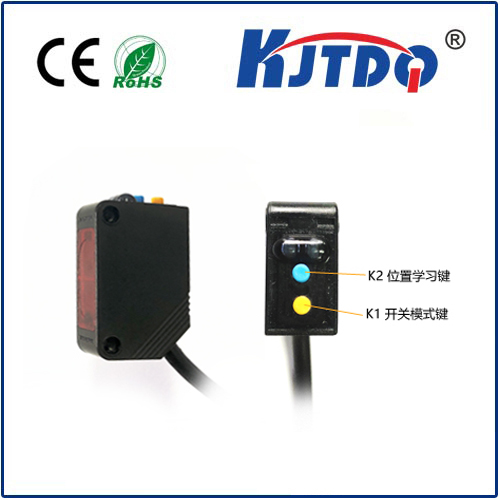
In the intricate world of industrial automation, where space is at a premium and precision is paramount, miniature photoelectric sensors have emerged as indispensable components. These compact devices, often no larger than a fingertip, perform the critical task of object detection, positioning, and counting with remarkable accuracy and reliability. Their small footprint belies their significant impact, enabling smarter, more efficient, and more flexible machine designs across countless sectors, from intricate semiconductor manufacturing to high-speed packaging lines and collaborative robotics.
The core principle behind these sensors is elegantly simple: they emit a beam of light—visible red, infrared, or laser—and detect changes in the received light signal. This interaction falls into three primary operational modes. Through-beam sensors, consisting of separate emitter and receiver units, offer the longest sensing ranges and highest reliability by detecting the interruption of a direct beam. Retro-reflective sensors house both elements in one unit, bouncing light off a reflector, making them ideal for setups where wiring both sides is challenging. Finally, diffuse reflective sensors detect light reflected directly from the target object itself, providing a versatile, single-unit solution for proximity detection, though their range is typically shorter.
The miniaturization of these sensors is a triumph of engineering, packing advanced optical systems, stable circuitry, and robust housings into a tiny form factor. This achievement unlocks a host of practical advantages. Design engineers can now integrate sensing capabilities into extremely tight spaces, leading to more streamlined and compact machinery. The reduced size and weight also simplify mounting and alignment, cutting down on installation time and complexity. Furthermore, their low power consumption aligns perfectly with the growing trend towards energy-efficient and portable automated systems.
Modern miniature photoelectric sensors are far from simple on/off switches. They incorporate sophisticated features that enhance their utility. Advanced models offer background suppression technology, which allows them to ignore objects beyond a set distance, ensuring detection is only triggered by the intended target. Polarization filters are used in retro-reflective models to ignore shiny surfaces that could cause false triggers. Many now come with built-in IO-Link communication, transforming them into smart devices that can transmit not just a detection signal, but also operational parameters, health status, and diagnostic data, facilitating predictive maintenance and seamless integration into Industry 4.0 frameworks.
The applications are as diverse as industry itself. In electronics assembly, they precisely detect and position tiny circuit boards and components. In pharmaceutical packaging, they verify the presence of pills in blister packs at incredible speeds. On automated guided vehicles (AGVs), they serve as non-contact safety bumpers. Within cleanrooms, their compact, sealed designs prevent contamination. They are the unseen eyes ensuring robotic arms grip objects correctly, conveyor systems track items accurately, and automated doors operate safely.
Selecting the right miniature photoelectric sensor requires careful consideration of several factors. The sensing distance needed, the size and material of the target object, the required response speed, and the environmental conditions (such as dust, moisture, or ambient light interference) are all critical. Housing material, typically stainless steel or rugged plastics like PBT, must withstand the application's physical and chemical demands. Understanding the specific detection task is key to choosing the optimal sensing mode and feature set.
As automation trends push toward greater density, flexibility, and intelligence, the role of miniature photoelectric sensors will only expand. Their ability to deliver robust, precise sensing in a minimal package makes them a foundational technology for the next generation of smart factories and intelligent machines. By providing reliable data from the very edge of the production process, these small but mighty devices form a crucial link in the chain of digitalization, driving efficiency, quality, and innovation forward.