Проверка
Проверка
Проверка
Проверка
Проверка
Проверка
Sensor photoelectric technology represents a critical advancement in modern automation and control systems. At its core, this technology involves devices that use light to detect the presence, absence, or distance of objects. Unlike mechanical or proximity sensors, photoelectric sensors offer non-contact detection, which translates to less wear and tear, higher reliability, and the ability to sense a wide variety of materials, including glass, plastic, metal, and liquids. The fundamental principle is straightforward: a light emitter, typically an LED or laser diode, sends out a beam of light. This beam is then either received directly by a receiver, reflected off a target, or reflected back from a dedicated reflector, depending on the sensor's operating mode.
There are three primary operating modes for photoelectric sensors: through-beam, retro-reflective, and diffuse. Through-beam sensors, also known as opposed-mode sensors, consist of separate emitter and receiver units placed opposite each other. An object is detected when it interrupts the light beam traveling from the emitter to the receiver. This mode offers the longest sensing range and highest reliability, as it is largely immune to the object's color, reflectivity, or surface finish. They are ideal for precise detection in demanding industrial environments like packaging and material handling.
Retro-reflective sensors house both the emitter and receiver in a single housing. They use a specialized reflector, often a corner-cube reflector, to bounce the light beam back to the receiver. Detection occurs when an object breaks this reflected beam. This mode provides a good balance of range and convenience, as it requires wiring only on one side. However, highly reflective objects can sometimes cause false triggers, a challenge mitigated by sensors with polarization filters that only accept light reflected in a specific orientation.
Diffuse or proximity-mode sensors also have co-located emitter and receiver components. They detect an object when the emitted light reflects off the object's surface and scatters back to the receiver. The sensing distance depends heavily on the object's size, color, and surface texture—lighter, more reflective objects are detected from farther away. This mode is highly versatile for applications where mounting a reflector or a separate receiver is impractical, such as detecting objects on a conveyor belt or monitoring fill levels in transparent containers.
The applications of sensor photoelectric technology are vast and integral to Industry 4.0. In manufacturing, these sensors are the eyes of automated assembly lines, counting products, verifying component placement, and ensuring precise positioning for robotic arms. In logistics and warehousing, they facilitate automated sorting, palletizing, and inventory management by detecting packages on conveyors and guiding automated guided vehicles (AGVs). The food and beverage industry relies on them for bottle cap inspection, liquid level control, and label verification. Beyond heavy industry, they are found in everyday life, from automatic doors in supermarkets and elevators to paper detection in printers and touchless faucets in public restrooms.
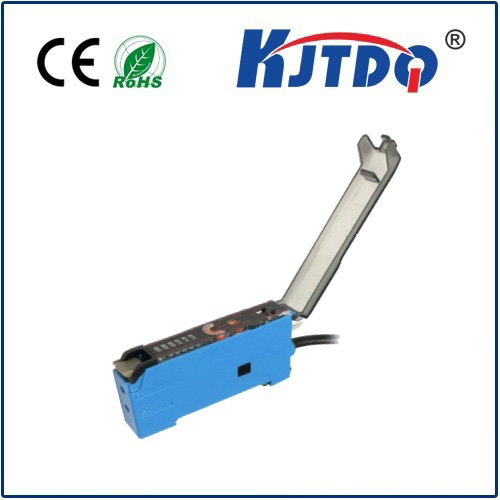
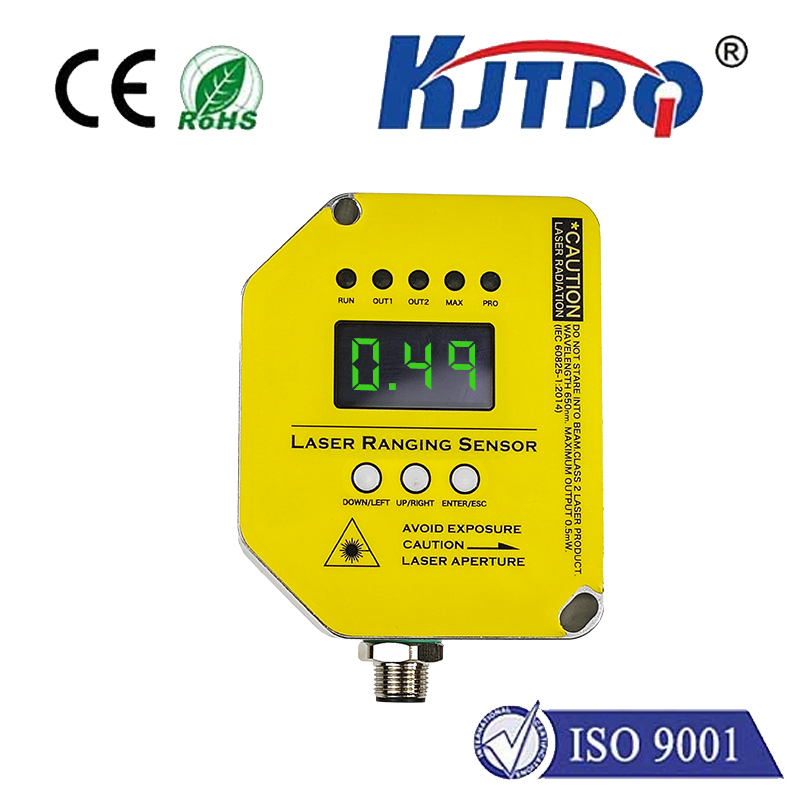
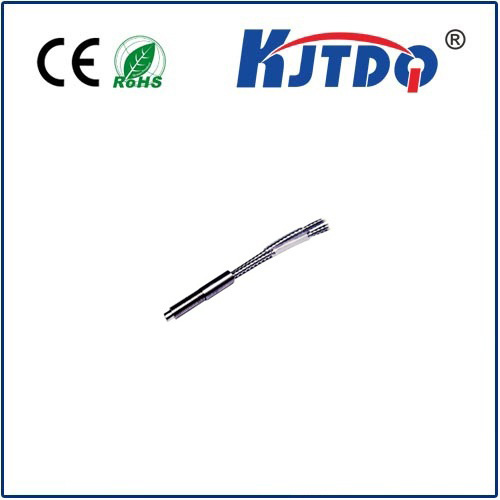
Recent innovations continue to expand their capabilities. Background suppression sensors use triangulation principles to detect objects only within a precise, defined range, ignoring objects and surfaces beyond it, which is crucial for reliable detection against variable backgrounds. Color sensors can distinguish between different colors or shades, enabling quality control based on color coding. Fiber optic photoelectric sensors use flexible light guides to deliver light to and from hard-to-reach, hot, or hazardous locations, protecting the core electronics. Furthermore, the integration of IO-Link communication allows for advanced diagnostics, parameter setting on-the-fly, and seamless data exchange with control systems for predictive maintenance.
Selecting the right photoelectric sensor requires careful consideration of several factors. The key parameters include sensing range, required response time, light source type (visible red, infrared, or laser), environmental conditions (exposure to dust, moisture, or temperature extremes), and the electrical output type needed to interface with a PLC or other controller. Understanding the specific application—what needs to be detected, its material properties, and the operating environment—is paramount to choosing between through-beam, retro-reflective, or diffuse sensing modes.
In conclusion, sensor photoelectric technology provides a robust, flexible, and non-contact solution for object detection across countless sectors. Its evolution from simple presence detection to sophisticated, intelligent sensing with background suppression and communication features underscores its vital role in enabling smarter, more efficient, and reliable automated systems. As industries strive for greater precision and connectivity, the demand for advanced photoelectric sensing solutions will undoubtedly continue to grow.