Проверка

Проверка
Проверка
Проверка
Проверка
Проверка
In industrial automation and process control, two critical components often drive efficiency and precision: optical diffuse sensors and photoelectric sensors. While these terms are sometimes used interchangeably, they represent distinct technologies with unique operational principles and application scenarios. This article delves into the core functionalities, differences, and practical uses of these essential sensing devices.
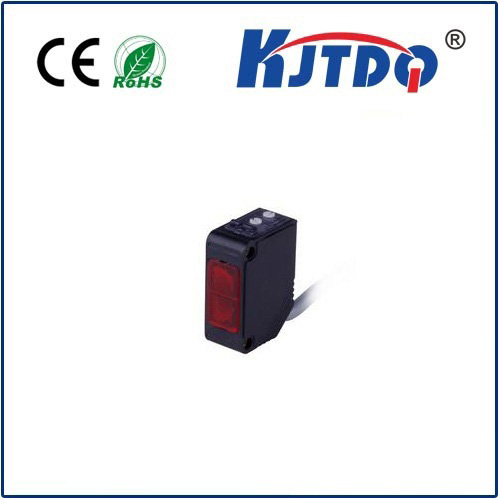
An optical diffuse sensor, also known as a diffuse reflective sensor, operates on a straightforward principle. It contains both a light emitter (typically an LED) and a receiver within a single housing. The emitter projects a light beam, usually infrared, visible red, or laser, onto a target object. Instead of relying on a separate reflector, the sensor detects the light that is diffusely reflected back from the object's surface itself. The receiver analyzes the intensity of this returned light. When an object is present within the sensing range, a sufficient amount of light is scattered back to trigger a switching signal. The key characteristic of this sensor type is its dependence on the color, texture, and distance of the target. Light-colored, matte surfaces reflect more light and are detected at greater ranges, while dark, shiny, or absorbent surfaces can significantly reduce the effective sensing distance or cause detection failures. This makes them ideal for applications like detecting the presence of boxes on a conveyor belt, counting objects, or monitoring fill levels of opaque materials where the background is distant or inconsistent.
On the other hand, a photoelectric sensor is a broader category that encompasses several operating modes, with the diffuse mode being one of them. The other primary modes are through-beam and retro-reflective. A through-beam sensor consists of separate emitter and receiver units placed opposite each other. Detection occurs when an object interrupts the light beam traveling from the emitter to the receiver. This mode offers the longest sensing range and highest reliability, as it is largely unaffected by the object's surface properties. Retro-reflective sensors house the emitter and receiver together but use a dedicated reflector. The light beam is sent to the reflector and bounced back to the receiver. An object is detected when it breaks this beam. This mode provides a good compromise between range and installation simplicity compared to through-beam systems.
Therefore, while an optical diffuse sensor is a specific type of photoelectric sensor, not all photoelectric sensors are diffuse. The choice between them hinges on the application's demands. Diffuse sensors excel in scenarios requiring a compact, single-unit design where mounting a reflector or a separate receiver is impractical. They are cost-effective for object presence detection where environmental conditions and object surface are controlled. However, for long-range detection, harsh environments with dust or mist, or when detecting transparent or highly variable surfaces, a through-beam or retro-reflective photoelectric sensor is often superior.
Modern advancements have led to the development of background suppression and foreground suppression diffuse sensors. These sophisticated versions use triangulation or time-of-flight principles to measure distance, allowing them to detect an object only within a very specific range, ignoring objects or surfaces beyond (background) or before (foreground) the set point. This is invaluable for precise positioning or detecting objects on a known background plane.
In practical terms, you will find optical diffuse sensors in packaging machinery, material handling systems, and assembly lines for part verification. Photoelectric sensors in through-beam mode are crucial for safety curtains, high-speed counting, and detecting small or transparent items. Retro-reflective models are common in door control, palletizing, and automated storage systems.
Selecting the right sensor requires careful analysis of the target object (size, material, color), required sensing distance, environmental conditions (ambient light, contaminants), desired response time, and electrical output needs. Understanding the fundamental difference between a standard optical diffuse sensor and the wider array of photoelectric sensing modes is the first step toward optimizing automation processes, reducing downtime, and ensuring reliable operation. By matching the sensor technology to the specific challenge, engineers can build more robust, efficient, and intelligent systems.