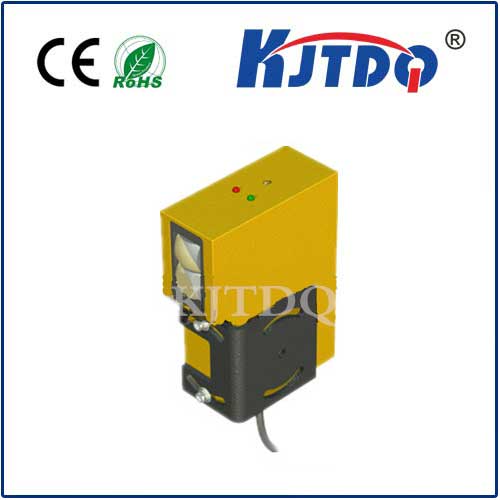
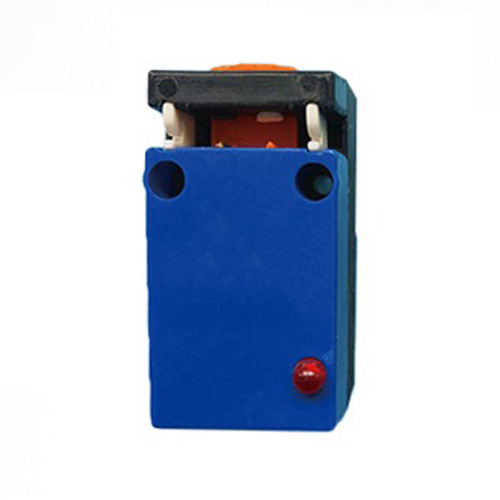
In the dynamic landscape of industrial automation, precision, reliability, and adaptability are non-negotiable. The integration of advanced sensing technologies forms the backbone of efficient production lines, quality control systems, and material handling operations. Among these critical components, the square photoelectric sensor, particularly those utilizing retro-reflective technology, has emerged as a cornerstone for numerous detection and positioning tasks. This design offers a robust solution for applications demanding consistent performance in challenging environments.
The fundamental principle behind a square photoelectric sensor is its ability to detect the presence, absence, or distance of an object using a light beam, typically infrared, visible red, or laser. The "square" designation refers to the housing shape, which is often favored for its ease of mounting, standardized dimensions, and the ability to house a larger lens area compared to cylindrical models. This form factor contributes to a more stable installation and can offer a wider sensing beam in some configurations. When combined with retro-reflective operation, the sensor's capabilities are significantly enhanced for specific use cases.
Retro-reflective photoelectric sensors operate by emitting a light beam towards a specialized reflector, often called a retro-reflector or corner-cube reflector. This reflector is designed to return the light beam directly back to the sensor along the same path, regardless of the angle of incidence within a specified range. The sensor's receiver detects this returned beam. An object passing between the sensor and the reflector interrupts this beam, triggering a change in the sensor's output signal. This mode stands distinct from through-beam (which uses a separate emitter and receiver) and diffuse-reflective (which relies on light reflected directly off the object itself).
The synergy of the square housing and retro-reflective technology delivers distinct advantages. First is the significant simplification of installation and alignment. Only one device needs to be wired and mounted on one side of the detection point, with the passive reflector placed opposite. This reduces cabling costs, installation time, and complexity compared to through-beam systems. The square housing often provides clear visual indicators or alignment aids, making setup more intuitive. Secondly, these sensors offer a longer sensing range than diffuse-reflective models. Since the retro-reflector efficiently returns the light, the effective range can be several meters, making it suitable for detecting objects on wide conveyors, at gate entries, or across large machinery.
Furthermore, reliability in detecting various objects is a key strength. Retro-reflective sensors are excellent for detecting transparent or translucent objects, such as glass bottles, plastic films, or clear packaging materials, which might be challenging for diffuse sensors. The high-intensity return signal from the reflector creates a strong baseline, and even a slight interruption by a clear object is detectable. Modern versions incorporate advanced features like background suppression and polarization filters. A polarization filter is crucial for retro-reflective models to prevent false triggers from highly reflective surfaces like shiny metal or plastic. The filter ensures the receiver only recognizes light that has been polarized and then correctly depolarized by the retro-reflector, ignoring direct glare from the target object itself.
Typical industrial applications are vast. In packaging lines, they count boxes, verify the presence of labels on transparent bottles, or detect the level of liquid in clear containers. In material handling, they monitor the position of pallets on conveyors, control automatic doors, or provide safety curtains for machinery access points. The robust square housing, often rated with high Ingress Protection (IP) ratings like IP67, ensures dependable operation despite exposure to dust, moisture, and mechanical vibrations common in factories and warehouses.
When selecting a square retro-reflective photoelectric sensor, engineers consider several parameters. Sensing range is primary, dictated by the specific application distance. Response time is critical for high-speed production lines. The type of output (e.g., NPN, PNP, analog, or IO-Link for digital communication) must integrate with the existing control system. Environmental durability, including temperature range and resistance to chemicals, is also vital. Leading manufacturers continue to innovate, offering models with teach-in functions for easy range setting, diagnostic LED indicators for health monitoring, and compact designs that save panel space without sacrificing performance.
In conclusion, the square photoelectric sensor employing retro-reflective technology represents a mature yet continually evolving solution. It strikes an optimal balance between installation efficiency, reliable long-range detection, and versatility in object recognition. By providing a stable, precise, and durable means of non-contact detection, it empowers automation systems to achieve higher levels of efficiency, safety, and quality control. As industries strive for greater connectivity and intelligence within the Industrial Internet of Things (IIoT), these sensors remain fundamental physical-layer components, delivering the critical data upon which smart decisions are built.