Проверка
Проверка
Проверка
Проверка
Проверка
Проверка
In the world of industrial automation, precision and reliability are non-negotiable. The M18 diffuse photoelectric switch sensor stands as a cornerstone technology for countless applications, from packaging lines to material handling systems. Unlike through-beam or retro-reflective sensors, the diffuse type operates with a single unit, emitting a light beam and detecting the reflection from the target object itself. This self-contained design simplifies installation and reduces costs, making it a preferred choice for object detection, counting, and positioning tasks.
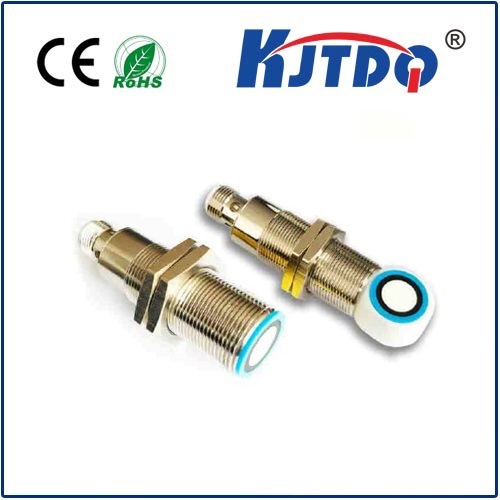
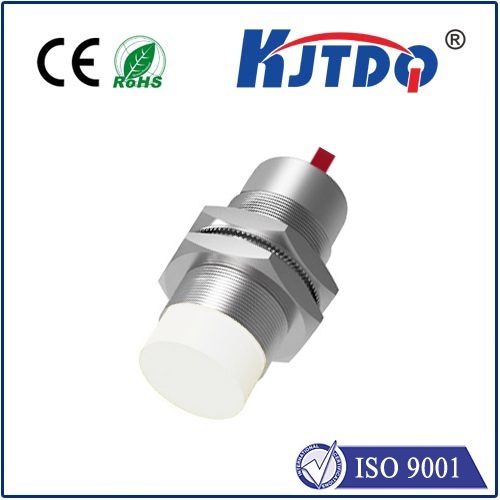
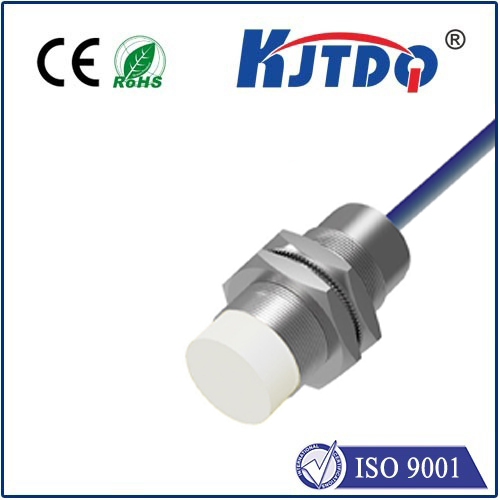
The "M18" designation refers to the sensor's 18mm cylindrical threaded housing, a standardized size that offers robust mechanical protection and easy mounting in standard fixtures. This compact form factor allows it to fit into tight spaces on machinery without compromising durability. The heart of its operation lies in its modulated LED light source, typically infrared or visible red, and a phototransistor receiver. The sensor's electronic circuitry is finely tuned to recognize the specific modulated signal reflected from an object, effectively ignoring ambient light interference. This ensures stable performance even in environments with fluctuating light conditions, a common challenge in factories and warehouses.
One of the key advantages of the diffuse photometric sensor is its versatility in sensing a wide range of materials. It can reliably detect objects regardless of color, although the sensing distance may vary slightly depending on the surface reflectivity. A highly reflective white surface will be detected at a longer range compared to a matte black surface. Modern M18 diffuse sensors often come equipped with potentiometers or teach-in buttons for easy range adjustment and sensitivity setting, allowing technicians to fine-tune the device for specific applications without complex tools. This adjustability is crucial for handling different object sizes, colors, and background conditions.
When selecting an M18 diffuse photoelectric switch, several technical specifications demand attention. The sensing range is paramount; typical models offer ranges from a few centimeters up to one meter or more. The response time, measured in milliseconds, determines how fast the sensor can detect a passing object, which is critical for high-speed production lines. Output configurations are another vital consideration. These sensors commonly provide discrete outputs such as NPN (sinking) or PNP (sourcing) transistor outputs, compatible with programmable logic controllers (PLCs) and other control systems. Some advanced models feature analog outputs or IO-Link communication for detailed diagnostics and parameterization, enabling predictive maintenance and smarter factory integration.
Installation and environmental robustness are where the M18 design truly shines. Built to withstand industrial harshness, high-quality sensors boast ingress protection ratings like IP67, making them resistant to dust and temporary immersion in water. They can endure significant vibration, shock, and temperature variations. Proper installation involves ensuring a stable mounting, aligning the sensor perpendicular to the target surface for optimal reflection, and maintaining a clean lens free from dust, oil, or debris that could scatter the light beam. It is also essential to consider the background; placing the sensor too close to highly reflective surfaces behind the target can cause false triggers, a scenario where models with background suppression technology excel.
The applications for the M18 diffuse photoelectric sensor are virtually limitless. In automotive assembly, they verify the presence of components. In food and beverage packaging, they count bottles on a conveyor. In printing, they detect paper jams. In automated storage and retrieval systems, they confirm bin occupancy. Their role in enabling efficiency, safety, and quality control is indispensable. For engineers and maintenance professionals, understanding the operating principles, selection criteria, and installation best practices for these sensors is fundamental to designing and maintaining resilient automated systems. By choosing the right sensor and configuring it correctly, businesses achieve higher uptime, reduced waste, and seamless operation, proving that this compact M18 device is a giant in the realm of industrial sensing.