Проверка
Проверка
Проверка
Проверка
Проверка
Проверка
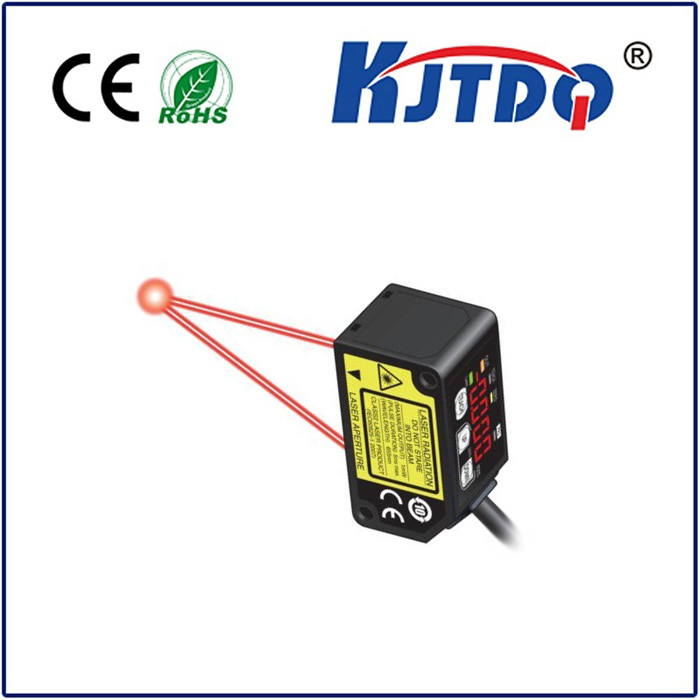
In the realm of industrial automation, the demand for reliable, non-contact detection solutions is paramount. Photoelectric proximity sensors have emerged as a cornerstone technology, offering unparalleled accuracy and versatility across diverse applications. Unlike mechanical switches or capacitive sensors, these devices operate by emitting a beam of light—typically infrared, visible red, or laser—and detecting changes in the received light signal. This fundamental principle allows for the precise sensing of objects regardless of material composition, color, or surface texture, making them indispensable in modern manufacturing, packaging, and material handling systems.
The core operation hinges on three primary modes: through-beam, retro-reflective, and diffuse reflective. Through-beam sensors, consisting of separate emitter and receiver units, provide the longest sensing ranges and highest immunity to environmental interference. They are ideal for detecting small objects or ensuring precise positioning on high-speed assembly lines. Retro-reflective models utilize a single housing that contains both the emitter and receiver, relying on a reflector to bounce the light beam back. This design offers a convenient installation process while maintaining a substantial sensing distance, commonly used in automated guided vehicle (AGV) systems and door control. Diffuse reflective sensors, also known as proximity-mode sensors, detect objects by measuring the light reflected directly from the target's surface. Their compact size and ability to sense at short ranges make them perfect for counting, sorting, and level detection tasks where space is constrained.
A significant advantage of photoelectric sensors is their adaptability to challenging conditions. Advanced models feature background suppression technology, which allows them to ignore objects beyond a programmed distance, and foreground suppression, which focuses on close-range targets. This capability is crucial in logistics for accurately detecting parcels on a conveyor belt while ignoring the belt itself or distant backgrounds. Furthermore, the development of fiber optic photoelectric sensors has extended their utility to extreme environments—such as high-temperature zones, sterile cleanrooms, or areas with strong electromagnetic interference—by using flexible light guides to transmit the beam, keeping the sensitive electronics safely remote.
The integration of smart features and connectivity through IO-Link and industrial Ethernet protocols has transformed these sensors from simple detection devices into intelligent data points. They can now communicate detailed diagnostic information, such as lens contamination levels, signal strength, and operating temperature, enabling predictive maintenance and reducing unplanned downtime. This data-driven approach aligns seamlessly with Industry 4.0 initiatives, fostering smarter, more responsive production environments.
Selecting the appropriate photoelectric sensor requires careful consideration of several factors. The sensing range must match the application's physical constraints, while the light source type (modulated LED or laser) influences precision and range. Environmental factors like ambient light, dust, fog, or vibrations can affect performance, necessitating models with robust housings (often IP67 or IP69K rated) and specialized filters. The response time, typically in microseconds, is critical for high-speed bottling or pharmaceutical packaging lines where every millisecond counts.
From ensuring the correct fill level in beverage containers to verifying the presence of electronic components on a printed circuit board, photoelectric proximity sensors deliver consistent, repeatable results. Their non-contact nature eliminates mechanical wear and tear, leading to longer service life and lower maintenance costs compared to traditional limit switches. As automation complexity grows, these sensors continue to evolve, offering finer resolution, enhanced environmental resistance, and deeper system integration. Their role in enabling efficient, safe, and precise automated processes solidifies their status as a fundamental component in the technological infrastructure of advanced manufacturing and beyond, driving productivity and quality assurance to new heights.