Проверка
Проверка
Проверка
Проверка
Проверка
Проверка
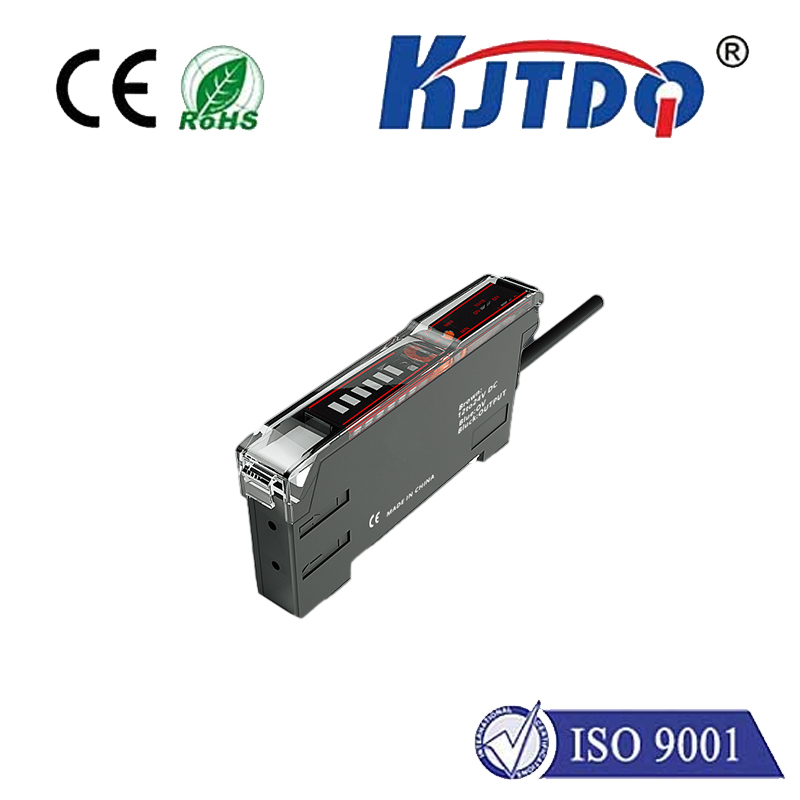
In the intricate world of industrial automation and smart systems, a silent yet pivotal component operates tirelessly, often unnoticed. This is the micro photoelectric sensor, a marvel of miniaturized optoelectronics. Far from being just another electronic part, these sensors are fundamental enablers, transforming light into precise electrical signals to detect, measure, and control with remarkable accuracy. Their role is critical across a spectrum of applications, from high-speed production lines and intricate robotic arms to everyday consumer electronics and advanced security systems.
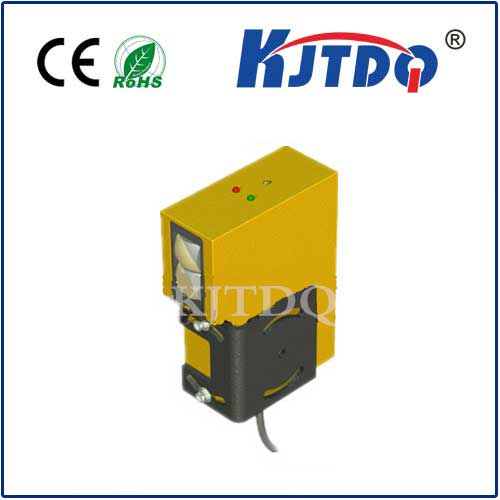
The core principle behind a micro photoelectric sensor is elegantly straightforward. It typically consists of a light emitter, usually an LED or laser diode, and a photodetector, such as a phototransistor or photodiode. The emitter projects a beam of light—often infrared, visible red, or laser—towards the detector. An object's presence, absence, or specific characteristics are determined by how it interacts with this light beam. This interaction primarily falls into three sensing modes: through-beam, retro-reflective, and diffuse reflective. Through-beam sensors offer the longest sensing range and highest reliability, with separate units for emitting and receiving light. Retro-reflective types use a single unit and a reflector, bouncing the beam back. Diffuse reflective sensors, the most common for proximity detection, rely on light reflecting directly off the target object itself.
What truly sets the modern micro photoelectric sensor apart is its sophisticated integration and intelligent features. Advanced models incorporate microprocessors and digital signal processing. This allows for functionalities like background suppression, which ignores distant objects or reflective backgrounds, and precise teach-in programming for setting sensitivity thresholds on the fly. Their housing, often made from robust polymers or stainless steel, is designed to withstand harsh industrial environments—resisting dust, moisture, vibrations, and extreme temperatures. The miniaturization trend has led to sensors so small they can be embedded in devices where space is at an absolute premium, without compromising on performance or sensing range.
The practical applications are vast and transformative. In manufacturing, these sensors are the eyes of automation. They count bottles on a filling line at blinding speeds, verify the correct placement of components on a circuit board, and ensure packaging is sealed properly. In logistics and warehousing, they read barcodes from meters away, manage inventory on high-speed sortation systems, and guide autonomous mobile robots (AMRs) safely through dynamic environments. Beyond industry, they enhance daily life: ensuring your smartphone screen turns off when held to your ear, detecting paper jams in office printers, and enabling touchless faucets and soap dispensers for improved hygiene.
Selecting the right micro photoelectric sensor requires careful consideration of several factors. The key parameters include sensing distance, the type and size of the target object, its surface color and reflectivity, the required response speed, and the environmental conditions. For instance, detecting a clear glass bottle demands a sensor with a focused beam and high sensitivity, while a dusty warehouse might necessitate a sensor with a high IP rating for dust protection. The output type—whether NPN, PNP, analog, or a digital IO-Link connection for advanced diagnostics and parameterization—must also match the control system's requirements.
Looking ahead, the evolution of micro photoelectric sensors is intertwined with the growth of the Industrial Internet of Things (IIoT) and Industry 4.0. The next generation of sensors is becoming smarter and more connected. Integrated IO-Link communication allows for remote monitoring, predictive maintenance alerts, and seamless data exchange with higher-level control systems. This turns raw detection data into actionable intelligence, optimizing entire production processes. Furthermore, advancements in laser technology and spectral sensitivity are expanding their capabilities to detect finer details and a wider range of materials.
In conclusion, the micro photoelectric sensor is far more than a simple switch. It is a sophisticated, intelligent, and indispensable component that forms the sensory foundation of modern automation. By providing reliable, non-contact detection of objects with precision and speed, it drives efficiency, ensures quality, and enables innovation across countless fields. As technology continues to advance, these invisible guardians will become even more capable, compact, and connected, solidifying their role as a cornerstone of an increasingly automated and intelligent world.