Проверка
Проверка
Проверка
Проверка
Проверка
Проверка
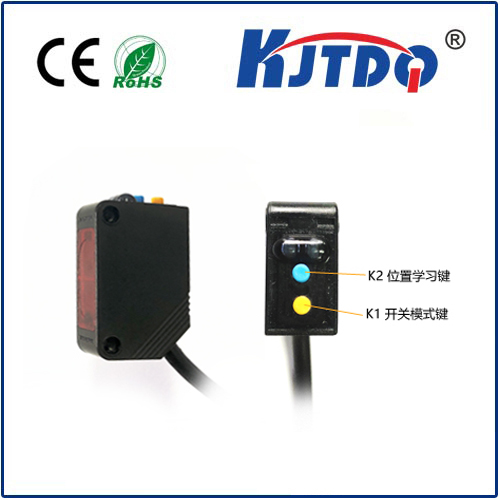
In today's fast-paced industrial landscape, efficiency and precision are non-negotiable. Enter the digital photoelectric sensor—a cornerstone of modern automation that bridges the gap between mechanical processes and intelligent control. Unlike traditional mechanical switches or analog sensors, digital photoelectric sensors offer unparalleled accuracy, reliability, and adaptability, making them indispensable in sectors ranging from manufacturing and packaging to logistics and automotive assembly.
At its core, a digital photoelectric sensor operates by emitting a light beam—typically infrared, visible red, or laser—toward a target object. The sensor then detects changes in the light pattern, such as reflection, interruption, or absorption, and converts these changes into a clear digital signal. This binary output (e.g., ON/OFF or high/low) is instantly transmitted to control systems like PLCs (Programmable Logic Controllers), enabling real-time decision-making without the noise or drift associated with analog alternatives. This seamless integration simplifies wiring, reduces setup complexity, and enhances system responsiveness.
One of the standout features of digital photoelectric sensors is their versatility. Available in three primary configurations—through-beam, retro-reflective, and diffuse reflective—they can tackle diverse applications. Through-beam sensors, with separate emitter and receiver units, excel in long-range detection (up to several meters) and harsh environments, ideal for conveyor belt monitoring or object counting. Retro-reflective models use a reflector to bounce light back to the receiver, offering a balanced range for mid-distance tasks like pallet positioning. Diffuse reflective sensors, which detect light scattered directly from the target, are perfect for short-range proximity sensing, such as detecting transparent bottles or small components on assembly lines.
Durability is another key advantage. Built to withstand industrial rigors, these sensors often feature rugged housings (e.g., IP67-rated for dust and water resistance), wide operating temperature ranges, and immunity to electrical interference. Advanced models incorporate smart functions like background suppression, which ignores distant objects, and teach-in modes for easy calibration. For instance, in food packaging, a digital photoelectric sensor with background suppression can reliably detect shiny wrappers while ignoring conveyor belt reflections, minimizing false triggers and downtime.
The shift toward Industry 4.0 and IoT (Internet of Things) has further elevated the role of digital photoelectric sensors. Many now come with IO-Link connectivity, allowing for remote configuration, diagnostics, and data exchange. This enables predictive maintenance—sensors can alert operators to lens contamination or alignment issues before failures occur, boosting overall equipment effectiveness (OEE). In automotive plants, such sensors ensure robotic arms precisely weld or assemble parts, while in logistics, they guide autonomous vehicles by detecting aisle markers or obstacles.
Despite their sophistication, digital photoelectric sensors are designed for user-friendly deployment. Modern units often include LED indicators for status feedback, plug-and-play compatibility, and intuitive software tools. For example, a technician can quickly adjust sensing ranges via a smartphone app, reducing training time and operational costs. This accessibility makes them suitable for both large-scale enterprises and small workshops seeking to automate processes.
However, selecting the right sensor requires careful consideration. Factors like sensing distance, target material (e.g., opaque, translucent, or metallic), environmental conditions (e.g., ambient light, dust), and output requirements (e.g., NPN/PNP) must align with application needs. Consulting with technical experts or referring to manufacturer datasheets can prevent common pitfalls, such as signal interference from glossy surfaces or misalignment in vibrating setups.
In summary, digital photoelectric sensors represent a leap forward in automation technology. By delivering consistent, noise-free signals and adapting to complex industrial challenges, they empower businesses to achieve higher productivity, reduced waste, and enhanced safety. As industries continue to embrace digital transformation, these sensors will remain vital tools for building smarter, more responsive operations—proving that sometimes, the smallest components drive the biggest innovations.