Проверка
Проверка
Проверка
Проверка
Проверка
Проверка
In the world of industrial automation and precision control, the ability to reliably detect objects, measure distances, or monitor processes is fundamental. Among the array of sensing technologies available, the mirror reflection photoelectric sensor stands out for its unique operational principle and robust performance in specific challenging environments. Unlike through-beam sensors that require separate emitter and receiver units, or diffuse reflection sensors that rely on light bouncing directly off the target, the mirror reflection type utilizes a specialized reflector to complete its detection circuit. This design offers distinct advantages that make it indispensable in modern manufacturing, packaging, logistics, and safety systems.
The core principle of a mirror reflection photoelectric sensor is elegantly simple. The sensor unit itself houses both a light emitter, typically an LED (often infrared for immunity to ambient light), and a photoelectric receiver. This unit is aimed at a precisely engineered retro-reflective target or mirror. This mirror is not a standard glass mirror but a corner-cube retro-reflector, designed to reflect incoming light directly back to its source regardless of the angle of incidence, within a specific range. The emitter sends a continuous or modulated beam of light towards this reflector. When the path is clear, the light beam travels to the reflector and is efficiently bounced back to the receiver within the same housing. The sensor's electronics interpret this returned signal as a "clear" or "no object" state. When an opaque object interrupts the beam between the sensor and the reflector, the light path is broken, and the receiver no longer detects the signal. This change in state triggers the sensor's output, signaling an "object present" condition.
This operational method confers several critical benefits. First, it offers a much longer sensing range compared to a standard diffuse reflection sensor, as the efficient retro-reflector ensures a strong return signal. Ranges of several meters or more are common, making it suitable for large machinery or warehouse applications. Second, installation and wiring are significantly simplified because only one device needs to be mounted and powered at the detection point, with the passive reflector placed opposite. This reduces cost and complexity compared to through-beam systems that require wiring at both ends. Third, these sensors exhibit high reliability for detecting transparent objects, such as glass or clear plastic bottles. Special polarized versions are available where the emitter sends out polarized light, and the receiver has a polarizing filter. The retro-reflector is designed to twist the polarization. Ambient light and reflections from shiny surfaces (which do not twist the polarization) are filtered out, allowing the sensor to reliably detect the presence of a transparent object that breaks the specially conditioned beam.
When selecting and applying a mirror reflection photoelectric sensor, several key specifications must be considered. The sensing range is paramount and must accommodate the required distance between the sensor and reflector in the application. The type of light source (infrared, red, laser) affects visibility for alignment and performance in different environments. Environmental ratings, such as IP67 for dust and water resistance, are crucial for harsh industrial settings. The output type (PNP/NPN, NO/NC) must be compatible with the controller (PLC, relay). Additionally, features like adjustable sensitivity, a built-in timer function, or a teach-in mode for easy setup can greatly enhance usability.
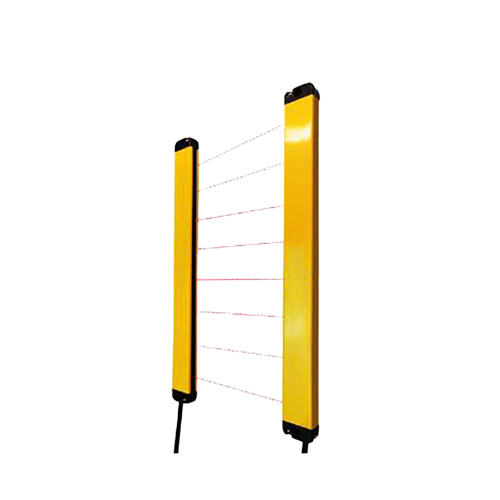
Practical applications are vast. In packaging lines, they count boxes on conveyors or verify the presence of products in cartons. In automated storage systems, they detect the position of shuttles or the presence of pallets. On assembly lines, they ensure components are in place before a robotic arm operates. A critical safety application is as a perimeter guard or light curtain on dangerous machinery; if the beam to any reflector is broken by a person, the machine is instantly stopped. For liquid level detection in clear tanks, a sensor and reflector placed on opposite sides can detect the presence or absence of liquid based on the refraction of the beam.
To ensure optimal performance, correct installation is vital. The sensor and reflector must be aligned precisely within the specified angular tolerance. The mounting should be rigid to prevent vibration from misaligning the beam. The lens should be kept clean from dust, oil, or debris. It is also essential to consider the target object's characteristics; while excellent for opaque and many transparent objects, highly reflective or mirror-like surfaces can sometimes cause false triggers if they accidentally reflect the beam back to the receiver. Using sensors with modulated light or the polarized filter option mitigates this risk.
In conclusion, the mirror reflection photoelectric sensor is a versatile and powerful tool in the automation engineer's arsenal. Its combination of long range, single-point wiring, and exceptional reliability for detecting both solid and transparent objects makes it a preferred solution for countless detection tasks. By understanding its principle of operation, key features, and application best practices, engineers and technicians can leverage this technology to build more efficient, reliable, and safe automated systems, ensuring smooth operations and high-quality outputs in demanding industrial environments.