Проверка
Проверка
Проверка
Проверка
Проверка
Проверка
In the intricate world of industrial automation, ensuring reliable object detection is paramount for efficiency, safety, and process control. Among the diverse array of sensing technologies available, the retro-reflective photoelectric sensor stands out as a versatile and robust solution for a wide range of applications. This guide delves into the operational principles, key advantages, and practical considerations for implementing these essential sensors.
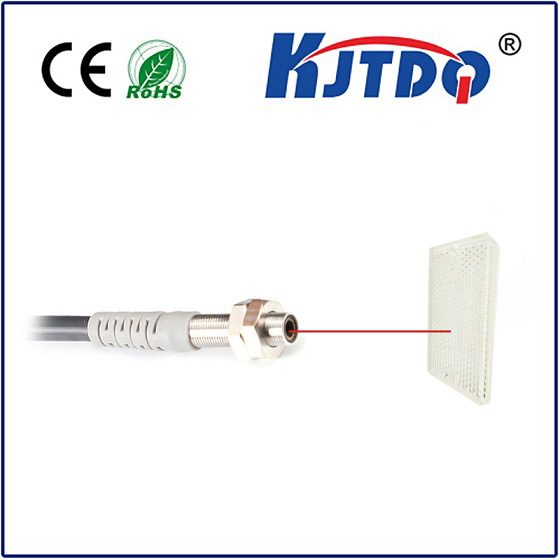
At its core, a retro-reflective photoelectric sensor operates on a simple yet effective principle. The sensor unit itself houses both a light emitter, typically an LED producing a modulated infrared or visible light beam, and a receiver. Instead of requiring a separate receiver unit opposite the emitter, this sensor type projects its light beam towards a specialized reflector, known as a retro-reflector or corner-cube reflector. This reflector is designed to return the incoming light beam directly back to its source along the same path, regardless of the angle of incidence. The sensor's receiver detects this returned beam. When an object interrupts the path between the sensor and the reflector, the beam is broken, and the receiver notes the absence of light, triggering a state change in the sensor's output signal.
This design confers several significant benefits over other photoelectric sensing modes. Compared to through-beam sensors, which require precise alignment of separate emitter and receiver units, retro-reflective models simplify installation and reduce wiring complexity, as only one device needs to be mounted and connected. They also offer a longer sensing range than diffuse (proximity) sensors, which rely on light reflecting directly off the target object. The use of a modulated light source allows the sensor to distinguish its own signal from ambient light, enhancing stability and reliability in environments with variable lighting conditions.
The applications for retro-reflective photoelectric sensors are extensive. They are commonly used for presence detection on conveyor lines, monitoring package flow, counting objects, and detecting the position of doors, pallets, or machinery guards. In packaging machinery, they ensure cartons are in the correct position for sealing or labeling. Within the automotive industry, they verify part placement on assembly lines. Their ability to detect a wide variety of materials, including opaque, translucent, and even some reflective objects (with specialized filters), makes them exceptionally flexible.
However, successful deployment requires careful consideration of several factors. The primary consideration is the nature of the target object. Highly reflective or shiny objects can sometimes mimic the reflector, causing the sensor to fail to detect the interruption. For such challenging targets, sensors with polarization filters are available. These filters ensure that only light reflected from the specific retro-reflector is recognized, ignoring light bounced directly off a glossy object. Sensing range is another critical specification; it must be chosen to accommodate the maximum required distance while accounting for potential environmental contaminants like dust or fog that can attenuate the light beam.
Environmental robustness is a key strength of modern retro-reflective sensors. Many are housed in rugged, sealed enclosures with ingress protection ratings like IP67 or IP69K, making them resistant to water, oils, and chemical splashes. This durability is crucial for harsh industrial settings in food processing, pharmaceuticals, and heavy manufacturing. When selecting a sensor, evaluating the required output type (e.g., NPN/PNP transistor, analog, or relay) and connection method is also essential for seamless integration with existing control systems, such as PLCs.
Maintenance is generally minimal but important. Keeping the sensor's lens and the surface of the retro-reflector clean from dirt, grime, or buildup ensures consistent performance. Regular verification of the alignment between the sensor and reflector is recommended, especially in environments subject to vibration or mechanical shock. Modern sensors often feature built-in diagnostic LEDs that provide visual confirmation of power status, output activation, and signal strength, aiding in quick troubleshooting.
In summary, retro-reflective photoelectric sensors offer an optimal balance of performance, ease of use, and reliability. Their self-contained design, combined with long sensing ranges and immunity to ambient light, makes them a go-to choice for engineers and system integrators designing automated systems. By understanding their operating principle and carefully matching the sensor's specifications—such as range, filter type, and environmental rating—to the application's demands, these sensors become indispensable components for creating smarter, more responsive, and more efficient industrial operations. Their continued evolution, incorporating features like longer ranges, enhanced diagnostics, and IO-Link communication for digital data exchange, ensures they will remain vital in the future landscape of industrial automation and the Industrial Internet of Things (IIoT).