Проверка
Проверка
Проверка
Проверка
Проверка
Проверка
In the rapidly evolving landscape of industrial automation, precision, reliability, and adaptability are non-negotiable. Traditional sensing solutions often struggle to meet the stringent demands of modern manufacturing, logistics, and robotics. Enter the next generation of sensing technology: the square laser photoelectric proximity sensor. This innovative device represents a significant leap forward, offering unparalleled performance in a robust, versatile package.
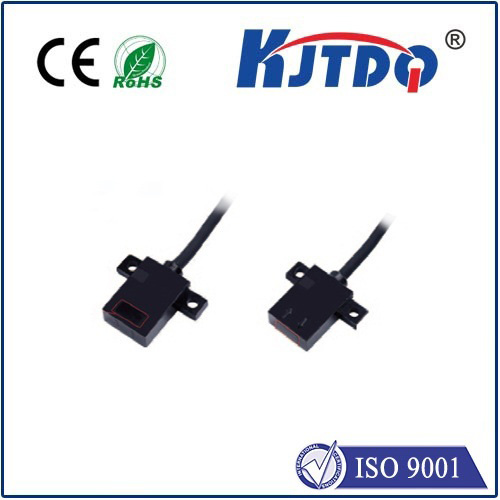
Unlike conventional cylindrical sensors, the square laser photoelectric proximity sensor features a compact, square housing. This design is not merely aesthetic; it provides distinct practical advantages. The flat surfaces allow for easier and more secure mounting in tight spaces, often eliminating the need for additional brackets. This streamlined installation reduces setup time and minimizes potential points of failure. The housing is typically constructed from high-grade materials like stainless steel or ruggedized plastics, ensuring exceptional resistance to dust, moisture, oils, and mechanical impacts commonly found in harsh industrial environments.
The core of its superiority lies in the use of a focused laser beam. Standard photoelectric sensors often employ diffuse or through-beam methods with LED light sources, which can be susceptible to environmental interference like ambient light or target color variations. The laser-based system emits a highly concentrated, visible red beam. This focused light spot enables precise detection of extremely small objects or precise edges, achieving sensing distances that are consistently longer and more stable than those of LED-based counterparts. The visible beam also simplifies alignment and commissioning, as technicians can easily see where the sensor is pointed, drastically reducing calibration time.
The "proximity" function, often based on a background suppression or time-of-flight principle, allows these sensors to detect objects within a specific range regardless of their surface color, texture, or reflectivity. A dark, matte object and a shiny, reflective one can be detected with equal reliability at the same set distance. This makes square laser photoelectric sensors incredibly versatile for applications involving mixed materials or unpredictable product lines.
The integration of these features—square design, laser technology, and precise proximity sensing—unlocks a wide array of applications. In packaging machinery, they excel at detecting the precise position of labels, flaps, or transparent films on high-speed lines. In electronic assembly, they can verify the presence of tiny components on circuit boards. Robotic arms use them for accurate pick-and-place positioning, especially in bin-picking scenarios where object orientation varies. In logistics and warehousing, they ensure precise parcel dimensioning and sorting. Their ability to ignore background objects makes them ideal for controlling stack height on pallets or detecting objects on conveyor belts without being triggered by the belt itself.
Furthermore, modern iterations come equipped with advanced programmability. Users can often set sensing windows, adjust sensitivity, and configure output modes (e.g., light-on/dark-on) via teach-in buttons or intuitive software interfaces. Many models offer IO-Link connectivity, enabling seamless integration into Industry 4.0 frameworks. This allows for remote configuration, real-time monitoring of sensor health and operating parameters, and predictive maintenance data collection, transforming the sensor from a simple switch into a smart data point on the network.
When selecting a square laser photoelectric proximity sensor, key specifications to evaluate include sensing distance, repeat accuracy, response time, light source type (typically Class 2 laser for safety), housing material rating (IP67/IP69K for washdown areas), and output type (PNP/NPN analog or digital). Leading manufacturers continuously refine these parameters, pushing the boundaries of speed and precision.
In conclusion, the square laser photoelectric proximity sensor is no longer a niche product but a cornerstone of efficient and intelligent automation. Its robust construction, exceptional precision granted by laser technology, and immunity to challenging object surfaces address the core pain points of countless industries. By enabling more reliable detection, reducing downtime, and facilitating easier integration into digital ecosystems, this sensor technology is actively driving productivity gains and paving the way for more flexible, data-driven manufacturing processes. For engineers and system integrators seeking to future-proof their automation projects, understanding and leveraging the capabilities of these advanced sensors is a critical step toward operational excellence.