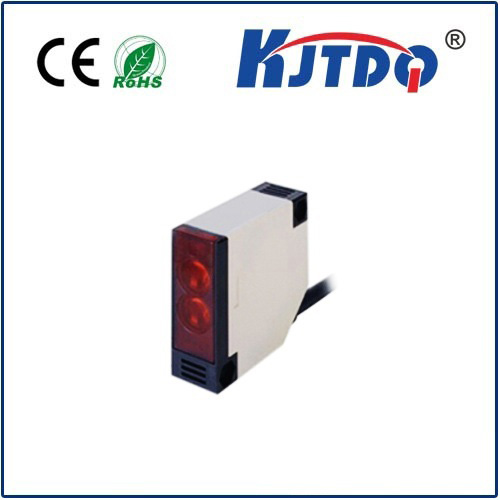
In the realm of industrial automation and precision machinery, the reliability of position detection is paramount. The optical endstop switch, specifically the photoelectric sensor light C variant, stands as a critical component in ensuring operational accuracy and safety. This technology utilizes a light source, typically an LED, and a photodetector to create an invisible beam. When an object interrupts this beam, the sensor triggers a signal, effectively acting as an "endstop" to define a precise limit or home position for a moving part.
The core advantage of the photoelectric sensor lies in its non-contact nature. Unlike mechanical limit switches that require physical contact and are prone to wear, the optical endstop switch offers a longer operational lifespan and consistent performance without mechanical degradation. The "Light C" designation often refers to specific characteristics such as the light source type (e.g., specific wavelength), housing configuration, or output signal type, tailored for particular environmental conditions or integration requirements. These sensors are engineered to deliver high repeatability, meaning they can consistently detect an object at the exact same position cycle after cycle, which is essential for processes demanding micron-level precision, such as in CNC machining, 3D printing, and automated assembly lines.
Environmental robustness is a key design consideration. High-quality optical endstop switches are built to withstand common industrial challenges like dust, oil mist, and ambient light interference. Many models feature modulated infrared light, which allows the sensor to distinguish its own signal from background light, ensuring false triggers are minimized. This makes them suitable for harsh environments where reliability cannot be compromised. The output signal is typically a clean digital switch signal (e.g., NPN or PNP transistor output), easily interfaced with programmable logic controllers (PLCs), microcontrollers, or motor drivers to halt or reverse a motion axis accurately.
Integration into a system is straightforward. The sensor is mounted at a predetermined limit point. As a machine component, like a gantry or tool head, moves into position, it passes through or reflects the light beam. The instant the beam is broken, the sensor's output state changes, sending an immediate signal to the machine's control unit. This rapid response is crucial for preventing over-travel, which could lead to mechanical damage, product spoilage, or safety hazards. In complex multi-axis systems, multiple optical endstops work in concert to define the machine's working envelope, ensuring synchronized and safe operation.
Beyond basic limit detection, applications are vast. In the packaging industry, they ensure precise cutting and sealing positions. In semiconductor manufacturing, they guide wafer handling robots with extreme accuracy. For hobbyists and engineers in the 3D printing community, reliable optical endstops are vital for accurate bed leveling and print head homing, directly impacting print quality. The photoelectric principle also allows for the detection of very small or transparent objects that might challenge other sensor types, expanding its utility.
Selecting the right optical endstop switch involves evaluating factors like sensing distance, response time, light source type, power requirements, and housing material. The "Light C" models often represent a balance of these factors for general-purpose industrial use. Regular maintenance is minimal but should include periodic lens cleaning to prevent dust buildup from attenuating the light beam. As automation trends toward smarter and more interconnected systems (Industry 4.0), these sensors continue to evolve, with some offering advanced diagnostics and IO-Link communication for predictive maintenance data.
In conclusion, the optical endstop switch photoelectric sensor light C is more than just a simple switch; it is a fundamental enabler of precision, efficiency, and safety in automated motion control. Its non-contact operation, environmental durability, and high accuracy make it an indispensable component across countless industries, from heavy manufacturing to delicate electronics production, ensuring machines operate within their intended boundaries reliably and consistently.