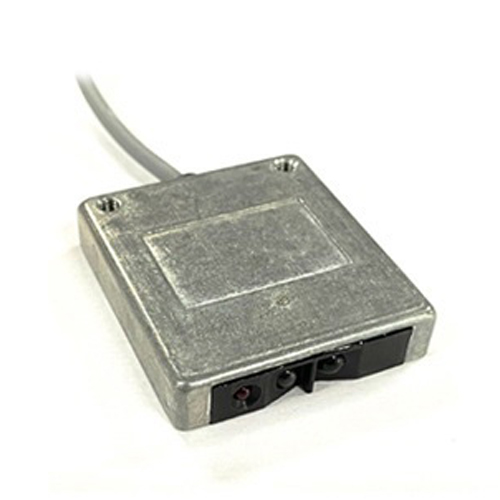
In modern industrial automation, achieving precise detection and control is essential for maintaining high productivity and quality standards. Color mark photoelectric sensors have emerged as a critical solution in this domain, offering unparalleled accuracy in identifying color contrasts and marks on various surfaces. These sensors utilize advanced photoelectric technology to detect specific color marks or differences, enabling seamless integration into production lines for tasks such as labeling, packaging, and sorting.
The core functionality of color mark photoelectric sensors lies in their ability to distinguish between colors based on light reflection and absorption. Unlike standard photoelectric sensors that detect presence or absence, these sensors are calibrated to recognize particular hues or contrasts, making them ideal for applications where visual cues are paramount. For instance, in printing and packaging industries, they ensure that labels are correctly aligned, while in textile manufacturing, they verify color patterns with consistency. This precision reduces errors, minimizes waste, and enhances overall operational efficiency.
One of the key advantages of color mark photoelectric sensors is their adaptability to diverse environments. Designed to withstand harsh industrial conditions, including dust, moisture, and temperature fluctuations, they provide reliable performance without frequent recalibration. Many models feature adjustable sensitivity settings, allowing users to fine-tune detection based on material types and lighting conditions. This flexibility ensures that the sensors can be deployed across multiple sectors, from food processing to automotive assembly, without compromising on accuracy.
Integration with existing automation systems is straightforward, thanks to compatibility with common industrial protocols. Color mark photoelectric sensors often come with digital outputs and connectivity options, facilitating real-time data transmission to controllers or PLCs. This enables automated adjustments in production lines, such as triggering actuators or halting machinery when a color mark is misaligned. By providing instant feedback, these sensors contribute to proactive maintenance and reduce downtime, ultimately lowering operational costs.
In practice, the application of color mark photoelectric sensors extends beyond basic detection. They are instrumental in quality assurance processes, where even minor color deviations can indicate defects. For example, in pharmaceutical packaging, sensors verify that pill blister packs have correct color codes, ensuring compliance with safety standards. Similarly, in recycling facilities, they sort materials based on color-coded labels, promoting sustainability efforts. The sensors' high-speed response makes them suitable for fast-paced production environments, where milliseconds matter.
Looking ahead, advancements in sensor technology are poised to enhance the capabilities of color mark photoelectric sensors further. Innovations such as integrated AI algorithms and enhanced spectral analysis may enable even finer color discrimination and adaptive learning. As industries continue to prioritize automation and smart manufacturing, these sensors will play a pivotal role in driving efficiency and innovation. By investing in reliable color mark detection solutions, businesses can future-proof their operations and stay competitive in a dynamic market.
In summary, color mark photoelectric sensors represent a vital tool for modern industrial automation, offering precise, reliable, and versatile detection. Their ability to improve accuracy, reduce waste, and integrate seamlessly into automated systems makes them indispensable across various sectors. As technology evolves, these sensors will continue to support the growing demand for smarter, more efficient production processes.