Проверка
Проверка
Проверка
Проверка
Проверка
Проверка
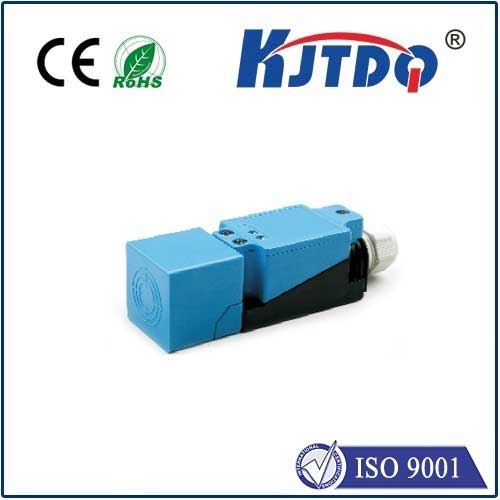
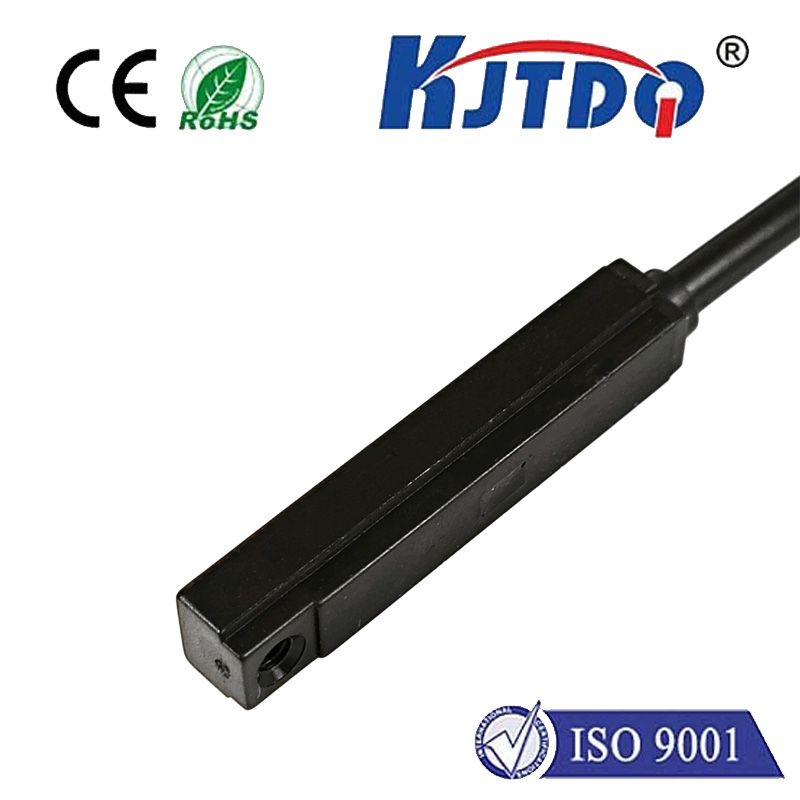
In the rapidly evolving landscape of industrial automation, efficiency and simplicity in installation are paramount. Proximity sensors, the silent sentinels of modern machinery, have long been essential for detecting the presence or absence of objects without physical contact. However, the traditional process of wiring these sensors—stripping cables, connecting to terminal blocks, and ensuring secure connections—can be time-consuming and prone to human error. This is where the innovation of proximity sensors with integrated plug connectors, often referred to in industry shorthand, revolutionizes the game.
The core advantage of a proximity sensor with a plug is its plug-and-play capability. Imagine receiving a sensor where the cable is pre-assembled and terminated with a robust, standardized industrial connector. This design eliminates the need for on-site wiring from scratch. Technicians simply mount the sensor in its designated location and connect the pre-fitted plug into a corresponding socket on the machine's junction box or controller. This process drastically reduces installation time, often by more than fifty percent, allowing production lines to be commissioned or modified with unprecedented speed. The risk of wiring mistakes—such as incorrect polarity, loose connections, or damaged cores—is virtually eliminated, leading to higher system reliability from the moment of power-up.
Beyond installation ease, these sensors offer significant benefits in maintenance and replacement. In a high-vibration industrial environment, cable connections can loosen over time. A locked plug-and-socket connection provides a more secure and vibration-resistant interface than traditional screw terminals. When a sensor reaches the end of its lifecycle or fails, replacement is a matter of minutes. The maintenance crew unplugs the old unit and plugs in the new one, without any tools required for electrical connection. This minimizes machine downtime, a critical factor in maintaining overall equipment effectiveness (OEE) and production throughput. The standardized connector also simplifies inventory management, as cables and sensors can sometimes be stocked separately yet compatibly.
When selecting a proximity sensor with a plug, several technical specifications demand attention. First is the sensing technology: inductive sensors for detecting metals, capacitive for non-metals and liquids, or ultrasonic for distance measurement. The choice depends entirely on the application material. Next, consider the connector type. Common standards include the ubiquitous M8 and M12 circular connectors, with 3-pin or 4-pin configurations for different output types (e.g., PNP, NPN, analog, IO-Link). The IP (Ingress Protection) rating is crucial; a rating of IP67 or higher ensures the sensor and its plug connection are protected against dust and temporary immersion, making them suitable for harsh washdown environments in food and beverage or pharmaceutical industries.
The integration of smart communication protocols like IO-Link into sensors with plug connectors represents the next level of utility. An IO-Link enabled proximity sensor doesn't just send a simple on/off signal. Through its standard M12 plug, it can transmit detailed parameter data, such as operating temperature, signal strength, or device health status, to the controller. This allows for predictive maintenance, remote configuration, and easier device replacement with automatic parameter restoration. The physical simplicity of the plug belies the sophisticated data exchange happening through it.
From automotive assembly robots and packaging machinery to material handling systems and automated storage solutions, the applications are vast. Any scenario demanding rapid deployment, reliable operation, and easy maintenance is an ideal candidate for a plugged proximity sensor. They are particularly valuable in modular machine designs, where entire sections can be pre-wired with sockets, and sensors are plugged in during final assembly.
In conclusion, the shift toward proximity sensors with integrated plug connectors is more than a mere convenience; it is a strategic move toward leaner, more agile, and more reliable automation infrastructure. By decoupling complex wiring from sensor installation and maintenance, they empower engineers and technicians to focus on optimization and innovation rather than basic connectivity. As industries push for greater digitalization and flexibility, the humble plug-equipped sensor stands as a fundamental enabler, proving that sometimes, the most powerful advancements are those that make complex systems profoundly simple to manage.