Проверка
Проверка
Проверка
Проверка
Проверка
Проверка
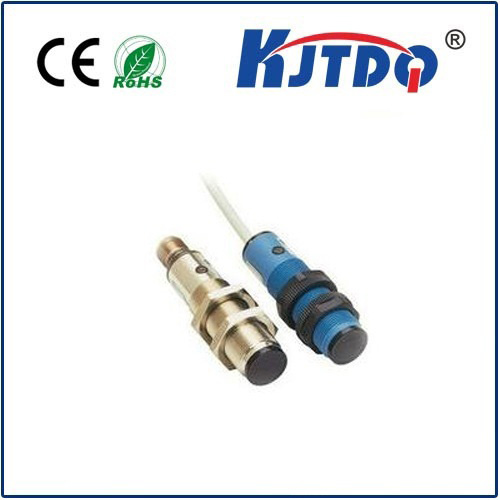
In the intricate world of industrial automation and smart systems, a silent yet critical component works tirelessly to ensure precision, safety, and efficiency. This component is the photoelectric sensor, a versatile device that has become indispensable across countless applications. Unlike mechanical switches or proximity sensors, photoelectric sensors operate by emitting a beam of light—visible, infrared, or laser—and detecting changes in the received light signal. This fundamental principle allows them to sense the presence, absence, distance, or even the surface characteristics of an object without any physical contact.
The core operation involves three primary elements: an emitter, a receiver, and associated control circuitry. The emitter projects a light beam towards a target. The receiver, positioned to capture this light, monitors its intensity. When an object interrupts or reflects this beam, the change in light pattern is instantly detected by the receiver. This signal is then processed by the sensor's electronics to produce a clear, digital output—typically a switch signal that triggers an action in a connected system, such as stopping a conveyor belt, counting items, or initiating a robotic arm's movement.
Photoelectric sensors are broadly categorized into three main types based on their sensing modes. The through-beam type, also known as the opposed mode, uses separate units for the emitter and receiver. The beam travels directly from the emitter to the receiver, offering the longest sensing ranges and highest reliability for detecting opaque objects. The retro-reflective type employs a single housing containing both emitter and receiver, along with a specialized reflector. The sensor detects an object when it blocks the beam reflected back from this reflector. This type provides a good balance of range and ease of installation. Finally, the diffuse reflective type, or proximity mode, also houses both elements together. It detects an object by measuring the light scattered back from the object's own surface. While its range is shorter, it is highly versatile and requires no separate reflector, making it ideal for detecting objects of varying colors and textures.
The advantages of integrating photoelectric sensors into automated processes are substantial. Their non-contact nature eliminates mechanical wear and tear, leading to exceptional longevity and reduced maintenance costs. They can detect a vast array of materials, from metals and plastics to glass and liquids, with remarkable speed and accuracy. Modern sensors are engineered to be highly resistant to environmental challenges. Features like robust housings protect against dust and water ingress, while advanced optical filters and modulated light signals help them ignore ambient light interference, ensuring stable performance in harsh factory conditions.
Real-world applications are ubiquitous. In packaging lines, they precisely count bottles or verify label placement. In automotive assembly, they ensure components are correctly positioned before welding. They safeguard personnel by creating safety light curtains around dangerous machinery. In warehouse logistics, they guide automated guided vehicles (AGVs) and manage inventory on high-speed sorting systems. Even in everyday life, they operate automatic doors and regulate liquid levels in appliances.
Selecting the right photoelectric sensor requires careful consideration of several factors. The required sensing distance, the size and material of the target object, the environmental conditions (presence of dust, fog, or vibration), and the necessary response speed are all critical parameters. Furthermore, the choice of housing material, output configuration (NPN/PNP), and connection type must align with the electrical and mechanical requirements of the broader control system.
As Industry 4.0 and the Internet of Things (IoT) continue to evolve, photoelectric sensors are becoming smarter and more connected. Modern iterations can communicate detailed diagnostic data, such as lens contamination alerts or signal strength readings, directly to central controllers via IO-Link or Ethernet protocols. This predictive capability enables proactive maintenance, minimizing unplanned downtime and optimizing overall equipment effectiveness (OEE).
In conclusion, the photoelectric sensor is far more than a simple switch. It is a sophisticated, reliable, and adaptable eye for automated systems. Its ability to provide fast, accurate, and non-contact detection forms the foundational layer of data acquisition in modern manufacturing and beyond. By converting physical presence into actionable electronic signals, these sensors empower machinery with a crucial sense of awareness, driving productivity, enhancing quality control, and building safer, more intelligent operational environments for the future.