Проверка
Проверка
Проверка
Проверка
Проверка
Проверка
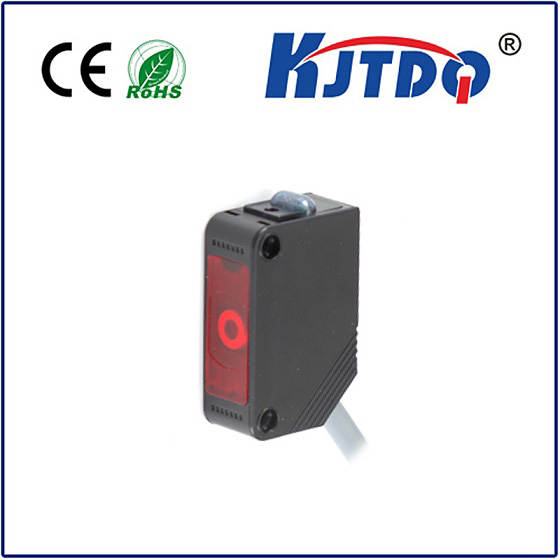
In modern industrial automation, precise object detection remains a critical component for ensuring seamless operations, safety, and productivity. Among the various sensing technologies available, retro-reflective photoelectric sensors have established themselves as a reliable and versatile solution. The KJTDQ series of retro-reflective photoelectric sensors exemplifies this technology, offering robust performance tailored for demanding environments. This article explores the operational principles, key advantages, and practical applications of these sensors, highlighting their role in optimizing automated systems.
At its core, a retro-reflective photoelectric sensor operates by emitting a beam of light—typically infrared or visible LED—towards a specialized reflector. This reflector, often a corner-cube or prismatic type, is designed to return the light beam directly to the sensor's receiver, regardless of the angle of incidence. The sensor constantly monitors this returned signal. When an object passes between the sensor and the reflector, it interrupts the light beam. The sensor detects this interruption and triggers an output signal, which can be used to count objects, control machinery, or initiate a safety sequence. This method provides a distinct advantage over through-beam sensors, which require separate emitter and receiver units on opposite sides of the detection area, simplifying installation and alignment.
The KJTDQ retro-reflective sensors are engineered with several features that address common industrial challenges. A primary benefit is their exceptional sensing range, capable of detecting objects over considerable distances with high accuracy. They incorporate advanced optics and circuitry to minimize the effects of ambient light interference, a common issue in facilities with variable lighting conditions. Furthermore, many models feature a polarization filter. This filter is crucial because it allows the sensor to distinguish the light returned from the genuine retro-reflector from random reflections off shiny surfaces like metal or plastic. Without this filter, a glossy object might reflect enough light back to the sensor, causing a false "clear" reading. The polarization filter ensures detection is reliable even when monitoring polished or reflective products.
Durability is another hallmark of the KJTDQ series. Housed in rugged, often IP67-rated enclosures, these sensors are resistant to dust, water jets, and vibrations. This makes them suitable for harsh environments such as automotive manufacturing plants, food and beverage processing lines, and outdoor material handling applications. Their compact design allows for easy integration into space-constrained machinery. Additionally, models with adjustable sensitivity or teach-in functions enable quick setup and calibration, reducing downtime during installation or process changes.
The applications for KJTDQ retro-reflective photoelectric sensors are vast and varied. In packaging and bottling lines, they are indispensable for detecting the presence or absence of containers, ensuring proper filling and capping. Within automated storage and retrieval systems (AS/RS), they provide precise positioning feedback for pallets and totes. On conveyor systems, they perform critical tasks like object counting, jam detection, and controlling sorting gates. In the automotive sector, they verify the correct placement of components on assembly lines. Their reliability also makes them ideal for safety curtains and access control systems, where they monitor protective doors or guard openings to prevent machine operation when personnel are present.
When selecting a sensor for a specific task, considering the target object's properties is essential. For detecting transparent materials like glass or clear plastic, sensors with a high-power emitter and specialized reflectors are necessary to ensure the light beam is sufficiently broken. For small or low-reflectivity objects, a sensor with a focused beam and high sensitivity is required. The KJTDQ range typically offers multiple options to cater to these diverse needs, providing engineers with flexible solutions.
In conclusion, the integration of KJTDQ retro-reflective photoelectric sensors into an automation framework significantly enhances system reliability and efficiency. Their combination of long-range detection, immunity to ambient light and surface reflections, and robust construction addresses the core demands of modern industry. By providing a dependable means of non-contact detection, they form a fundamental layer of control and safety, contributing to reduced waste, increased throughput, and lower operational costs. As automation continues to evolve, the role of precise, durable sensing technology like the KJTDQ retro-reflective sensor will only grow in importance.